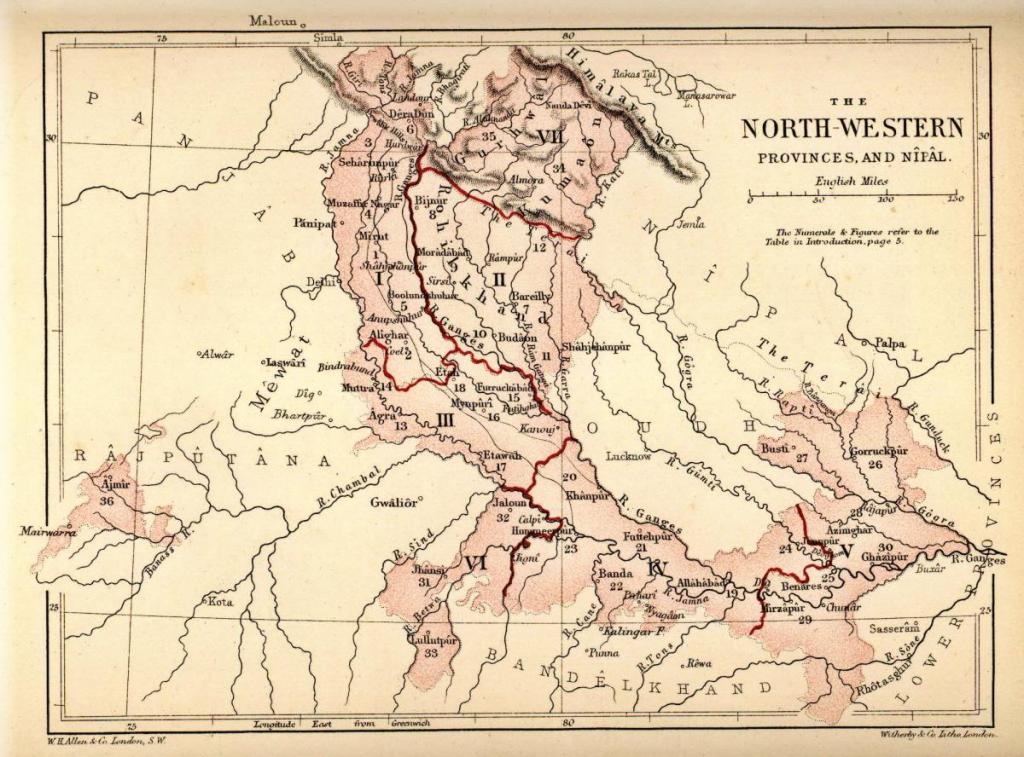
Since the mutiny at Aligarh in May, chaos had taken up the reins. Detachments of the mutinied regiments, those who had not ridden to Delhi, were making their presence felt, while at Coel a panchayat government was formed by the rebels, to preserve “order and save the city from the Mewatis.” However, even this effort was marred by disagreements. A pleader, Nasim-ullah who had been excluded from the committee decided the insult warranted action. He solicited the assistance of one Muhammad Ghaus Khan from Sikandra Rao to take up his case. With the support of Walidad Khan of Malagarh, Nasim-ullah was appointed naib nizam in the Bulandshahr District, putting an end to the panchayat. Muhammad Ghaus Khan took control of the Coel. For all his good intentions, Khan’s rule was hardly easy and he was unable to extend his control outside the city itself, even the collection of revenue had ceased. What raged now was internecine warfare between various factions – Hindus, Muslims, Rajputs, and Jats. However, some of the landholders in the district chose to side with no one but confined their interests to recovering lost estates; some used the times of relative lawlessness to settle old scores against their neighbours. Much of the damage done at Coel and Aligarh was caused by roving bands of miscreants and with no one to restrain them, plunder and destruction was the order of the day. As such, the district was not so much threatened by rebels against the British but by various factions who were waging intermittent skirmishes against each other.
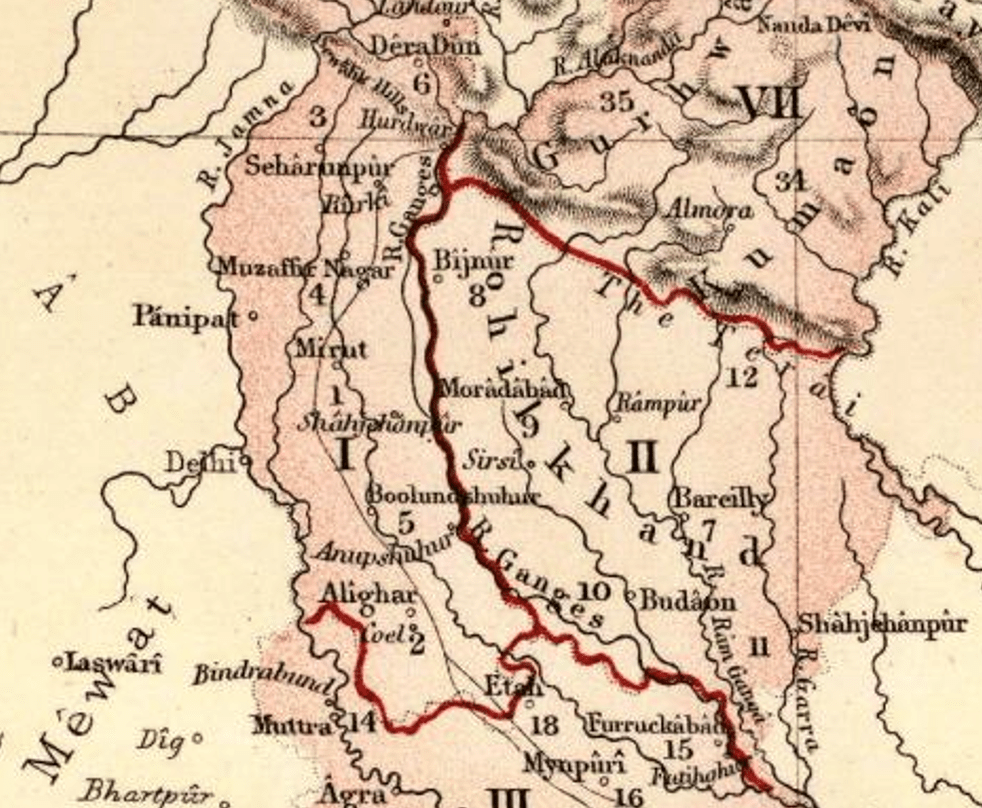
The main road connecting the Doab with Delhi ran through the Aligarh District. This route would, for most of 1857 be crossed and re-crossed by rebels at first unhindered and later with a “pursuing British Army at their heels.” Although there was no European force strong enough to hold Aligarh or, indeed retake the district in the first few months of the disturbances of 1857, it did eventually occur to the squabbling officers of Agra that they could, in fact, retake at least part of it and thus secure part of the Delhi road.
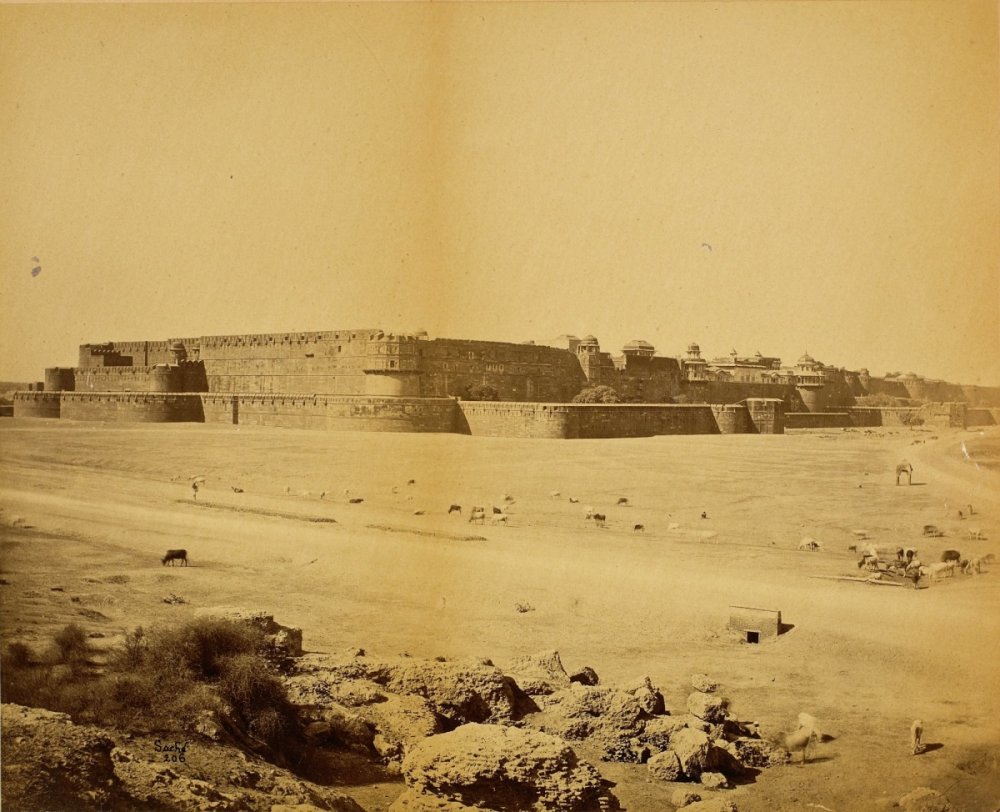
As we have seen, Agra Fort was not exactly being run with all cogs oiled. Constant bickering among the civilian and military officials had led to some disastrous decisions, which included the thrashing Polwhele’s force had endured on the 5th of July. The final loss of Muttra, their inability to provide even the meekest support to anyone outside their own walls, and even their reliance on rather questionable spies hardly speaks of an efficient administration, reluctant, as they were, to understand that the greatest danger Agra faced was from themselves. The constant messages to Delhi would become known as “bleating from Agra” as each officer found it his right to send missives to their friends, then engaged on the Delhi Ridge, complaining of the behaviour of others. However, Agra was by far one of the best fortresses to hold and practically impenetrable; there were sufficient arms and ammunition, and unlike other stations, there was one battery of Captain D’Oyley’s European Artillery (one horse and field battery) and the 3rd Regiment of European Infantry under Colonel Riddel. Agra would be successively reinforced by officers and civilians fleeing from their stations in the wake of the myriad of mutinies that occurred in the North Western Provinces, Haryana and Oudh during May, June, and July.
Above all, the Agra had valuable friends in the North Western Provinces among local landholders, who despite their miserable treatment at the hands of the British during the revenue surveys had chosen, in this time of chaos, to remain sided with the British. Gobind Singh, Raja Tikam Singh of Mursan and Tahsildar Chaube Ghansham Das had been holding their own against various bands of plunderers and rebels in and around Hathras, Kharag Singh of Beswan, Daryao Singh of Jawar and Bharat Sing of Nagla Dagar too would prove time and again they were in no way falling to the sway of the rebel cause. When, in later months, Murray’s Jat Horse would be raised, Murray would find most of his recruits would be put forward from the levies of these loyal men, among others. Besides providing assistance to the British, they were remarkable for supporting one another – when Gobind Singh required troops for his own expeditionary force, these came from his allies.
It must be understood, however, that much of the loyalty towards the British had little to do with their belief in the British form of government but with their reluctance to join with the rebel cause from which they felt they had more to lose than to gain. The men of the NWP were practical enough to see that should the British win, it would be their heads on the chopping block. From the start, the rebels did not have an agenda that was sufficiently convincing enough for many of the landholders and petty rulers to make them throw in their support. In the complexities of 1857, much of the support the British received from the Indians in NWP was garnered by the need for self-preservation and a genuine dislike of a cause that had, in the long run, little benefit for them or their people. The rebels had no plan of what was to happen after they had chucked the British into the sea, except the restoration of an empire, in some vague form or the other. At least the British, who, despite their myriad of failings, had managed to establish peace in districts that had known only decades of war, they knew, for the most part, what they could expect. Wild Marathas from Cawnpore and a powerless king in Delhi were hardly enough to evoke confidence in some of the independent men of the NWP. If their interests were best served by supporting the British, then so be it.
The Minature Army
Since the 5th of July, Agra Fort had been so closely shut off from the outside world, that the belief outside its walls was the British were quite incapable of any action at all. The danger perceived by the authorities tucked up in the Fort was more imaginary than real – while they expected any day to be attacked by rebels, these had in fact taken the obvious inaction of Agra as an invitation to make their way into the surrounding districts; those who had mutinied at Agra had gladly made their way towards Muttra “with the utmost possible dispatch” leaving even the sacking of Agra cantonment to others. There was a real threat from Gwalior, with the Contingent, though restrained by Scindia and Dinkar Rao, boasting openly that they planned to attack Agra. Being only 70 miles distant and possessing numerous field guns and a heavy battering train, they certainly had the power to put Agra to the sword. However, with the added encouragement of Major Macpherson – political agent to Scindia’s court – and the clever machinations of Dinkar Rao, Scindia managed to keep the Contingent squabbling safely at Gwalior. However, despite Macpherson’s reassurances, the Agra officials remained not only uncertain of Scindia’s loyalty but remained under the impression that they could be attacked at any moment.
Gradually, as Agra Fort was secured, the fortifications improved, and provisions were guaranteed with the valuable assistance of Lala Joti Pershad (who used his influence with local merchants to supply the Fort), and with no enemy in sight, the “general desire to go out and do something” was becoming apparent. Many felt they could do better than “fire wildly down on no one in particular” (in one case, cows in a field were mistaken for rebels) – all this sitting about waiting for something to happen was becoming intolerable.
Mr. Paterson Saunders of the Volunteer Horse was among the most vocal of the bored, and he finally persuaded Colonel Cotton that a force needed to be sent to Aligarh. Cotton, for his part in the complicated machinery of Agra, had no authority to send anyone anywhere – Mr. Reade and Mr. Arthur Cocks, the latter a man-of-action, finally convinced Lieutenant Governor Colvin that something needed to be done regarding not just Aligarh, but Hathras.
Intelligence had reached Agra that Muhammad Ghaus Khan, who was now in control of Aligarh, could potentially be a threat to the Fort. The very fact he had established a working government was something of a thorn in their sides, but more worrying was his army, said to be 5000 strong, which could at any moment decide to march on Agra. Besides this worry, as long as Aligarh remained out of British hands, Khan commanded the road to Delhi. With the officials convinced it was high time the men of Agra were allowed to proceed to the field, the intention of the expedition was thus made clear. They were to extend protection to Hathras, to instil confidence in the taluqdars in the vicinity of Hathras that had remained loyal to the British, establish authority in “this portion of Aligarh district”, and “frustrate the attempts of certain rebels” who were usurping the authority of the British Government. There was no mention as such, of meeting the rebels in the field.
Colonel Cotton appointed Major Montgomery (Brigade-Major of Agra and Muttra) to command the force, which left Agra on the 20th of August towards four in the afternoon. It consisted of the following detachment of troops – 237 men:
2nd Company 5th Battalion Artillery: 1 lieutenant, 2 sergeants, 1 corporal, 5 bombardiers, 1 bugler, 16 gunners, 1 saddler sergeant, 12 European drivers, 2 havildars, 15 native drivers, 1 havildar of gun lascars, 3 privates—total 61;
3rd Bengal (European) Light Infantry: 2 captains, 4 subaltern officers, 11 sergeants, 13 corporals, 3 drummers, 121 privates—total 154 ;
Militia: 2 sergeants, 20 troopers—total 22;
2 9-pounder guns, 1 24-pounder howitzer
Among the party were civilians who, it was optimistically believed, would take control of Aligarh.
Memorandum, Agra Fort, August 19th 1857
Mr. Arthur Cocks with full powers of the Revenue Board, Superintendent of Police, and Sessions’ Judge in the district of Allygurh; he will also exercise the powers of Special Commissioner, under Act XIV. and XVI. of 1857; and, under Act XVIII of 1857, he is further authorized to issue a Commission for the trial of mutineers and deserters, whenever this procedure may be preferred to the trial of such offenders before him, as Sessions’ Judge. Pending arrangements for the deputation of a magistrate and collector, Messrs. C. J. Daniell and E. Colvin are vested with the powers of joint magistrate and deputy collector within the same limits, and in subordination to Mr. A. Cocks, by whose advice and orders they will be guided. Mr. Cocks is empowered to invest Mr. P. Saunders and Mr. J. O’ B. Tandy with the powers of joint magistrate in such localities during such periods, and under such restrictions as he may deem fit.“
They were especially cautious in their dealings with the local taluqdars and eager to retain their continued support:
“The Government is desirous that the loyal Thalookdars, especially those through whose influence this portion of the country has been maintained in comparative quietness and security, should receive the full support and approbation of the Government; they should be encouraged to give the assistance of their tenants and armed retainers to lawful authority, and to enlist for the service of Government amongst them, a number of light horsemen, who, after inspection and approval by the Commissioner, will be formally enrolled and employed on such duties as he may direct: he will submit his recommendation of the pay to officers and men of such levies for the approval of Government.”
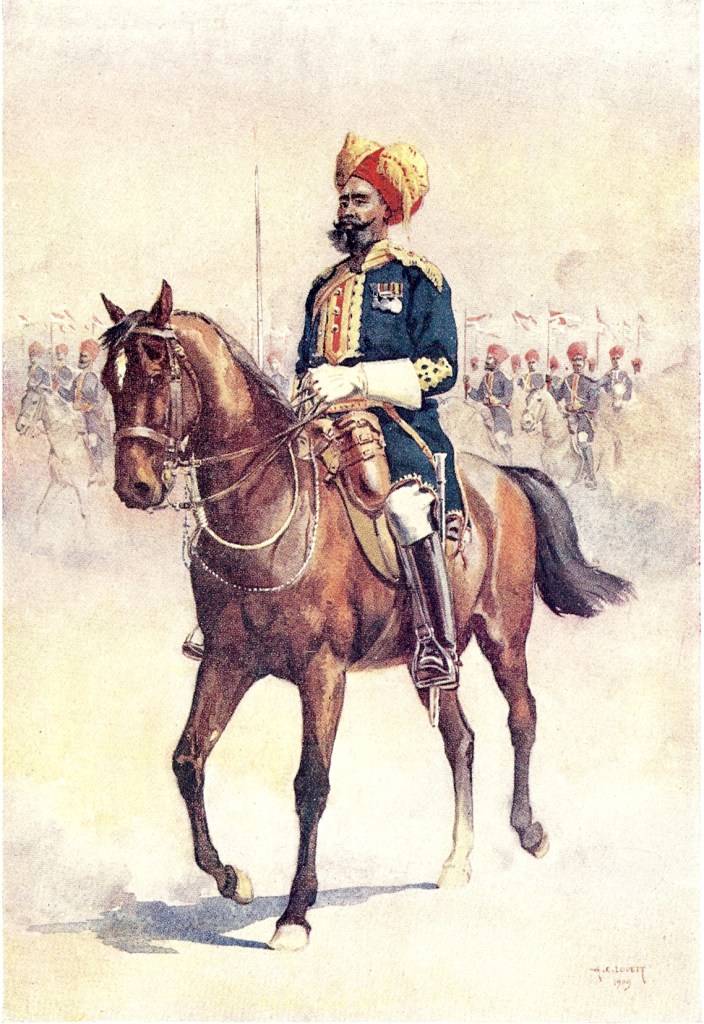
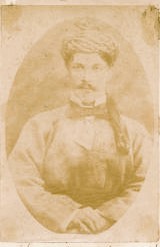
This can be said to be the first mention of raising the Jat Horse Yeomanry or Murray’s Jat Horse, (in 1861 – 14th Regiment of Bengal Cavalry and in 1903, 14th Murray’s Jat Lancers). They would be formed shortly after these events from 250 sepoys and 120 sowars recruited from the Jats in the areas of Aligarh, Hathras, Mathura, Bulandshahr, Khurja, Palwal and Hodal. Many of the men were offered by Thakur Gobind Singh for its formation, and they would become the first regiment to be manned completely by Jat troops.
“The Thesildar of Hattrass will be maintained in his position and authority and will proceed, under the directions of the Commissioner, to realize the balance of revenue due to Government and to arrange for the remittance of the same to Agra, reserving a sufficient sum to meet requisite expenses at Hattrass.“
The memorandum covers 12 points in all, including this one:
“Captain Nixon is directed to place the elephants, lent by the Bhurtpore State, with their establishment, at the disposal of the officer commanding the detachment. It is the particular wish of the Government that every possible care may be taken of these animals, which belong to a foreign State, and that the servants in charge of them may be uniformly treated with kindness and consideration. It will, no doubt, be practicable to assign to one of the militia the special duty of carrying out the wishes of Government in this respect.”
So it was into the field they went, well away from the stifling walls of Agra Fort.
With them went one rather odd young man named Samuel Dewé White. It appears his career was not what he had envisioned when he boarded a ship and sailed for India in 1844. While still a junior officer, White was court-martialled three times. His awkward religious beliefs (which included sending Bible verses to his commanding officer with the recommendation he read them for his salvation and openly trying the convert the men under his command) did not find him many friends and in his 30 years of service in India, White managed to argue with just about everyone he came across. He spends most of his book, ” Indian Reminiscences,” vindicating himself. Certainly, some of the observations he makes regarding the EICo army point out its failings – but if White is to be believed as a whole, then one would also have to believe every single one of his commanding officers was out to make his life a misery. In 1857, White was serving with the 3rd Europeans (having transferred from the 59th NI) at Agra and, as such, is one of the only first-hand accounts of the affair at Man Singh’s Garden that is not an official report, and we shall refer to it later.
Another man who rode out on the 20th of August was, as already mentioned, Arthur Herbert Cocks.
Born in 1819, the third son of the Honorable Philip James Cocks MP, Arthur received his nomination to the Indian civil service while still a very young man and left for India in 1837 upon completing his education at Haileybury. He was quick to make himself known as a talented civil officer, gaining the approval of Sir Charles Napier in Scind as one of the administrators for the new province and then, with Napier’s glowing recommendation, Lord Gough was pleased to have Cocks attached to his headquarters at the outbreak of the second Sikh War in 1848. Cocks actively fought his way through the Battle of Chilianwallah, the Ramnagar Affair and then with much gusto, into the Battle of Guzerat. In this final battle, Cocks took on a Sikh sowar in hand-to-hand combat, having shrewdly noticed the man intended to attack Gough himself. It cost Cocks a wound but Gough was so pleased with his gallantry he received the Punjab campaign medal. As soon things had been settled with the Sikhs, Cocks joined the Punjab Administration with others of Lawrence’s Young Men, but he does not feature as such in their ranks. During the mutiny, Cocks was the judge of Mainpuri and as we have seen, rode away from the station leaving Lieutenant de Kantzow and the station to their fate.
““The Sepoys were now approaching the station and firing off their muskets, and shouting like madmen. Mr. Powers seemed to hesitate what he would do. I considered it no time for hesitation. I fairly told him I did not consider anyone bound to remain; soon after, I ordered my buggy and, with the Rev. Mr. Kellner, drove leisurely away, having told the people about that I hoped to return in a day or two with a force.”
As such, Cocks and the rest of the men from Mainpuri ended up in Agra.
The 24th of August
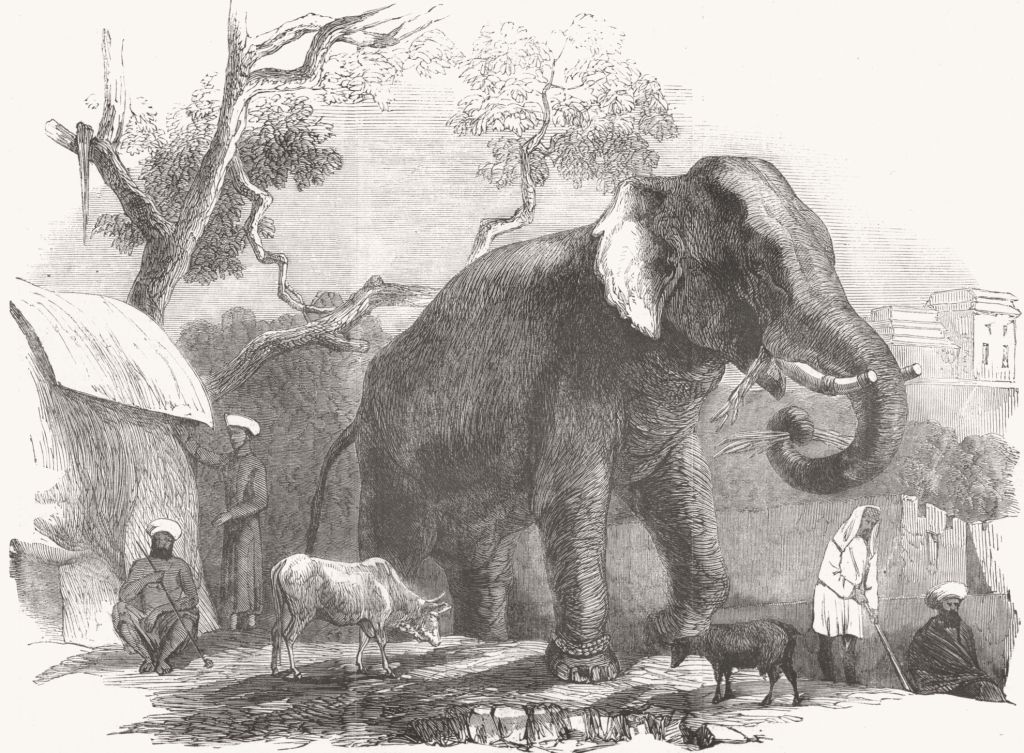
A party of the advanced guard of Montogomery’s small army was composed of men of the 3rd Europeans, under Lieutenant White, and all mounted on elephants. As White was hardly likely to look at anything with much optimism, his first complaint is with the quadrupeds, which, besides their uncomfortable, rambling gait, were only supplied with a rope for the men to hold onto as they sat on its back, instead of the customary seats or howdahs. For White, this part of the journey, which would take the force to Hathras, was “the most miserable one” he had ever endured. Suffering from ophthalmia and aching from his ride on the elephant, White opted to walk the remainder of the night, dodging the elephants the rest of the way. The next morning, the surgeon tried to have White removed from the force due to his inflamed eyes, but White insisted if he was sent back to Agra, he would most likely be murdered on the road! As an argument, it worked but does not explain why White was still allowed to participate in the battle, considering he could now hardly see anything at all.
White aside now, we turn our attention to Major George James Montgomery. Born in 1810 in Ceylon, Montgomery had done his service in the Bengal Native Infantry, first with the 2nd NI as an ensign in 1829, followed by a transfer to the 15th NI the same year. His next posting saw him in his first command, with the Sebundy Sappers in Darjeeling, from 1839 to 1840. He was back to the 15th NI as adjutant until 1845, but in the 1st Sikh War, he served as captain with the 33rd NI at Ferozashah. After a short stint at Barrackpore, he left India’s shores for Burma and the 2nd Burmese War. Eventually, his path took him from second in command of the Nasiri Battalion to Agra, whereas as Brigadier Major for Agra and Muttra, Montgomery would remain until 1858. This was, in effect, his first command of field force, and he would show that even though he was now 47 years old, there was still fight in the man.
Hathras was found to be in good order; the efforts of Thakur Gobind Singh had ensured the town had been spared from plunder. On the 22nd of August, Montgomery received intelligence that the insurgents in Aligarh numbered some 5000 – leading them was Muhammad Ghaus Khan, who had “assumed the offensive”, intending to attack Hathras. It was further surmised that his advance guard had pushed on to Madrak, only eight miles from Aligarh on the Hathras road. Another body was waiting at Sansi, only six miles from Aligarh, with Khan’s followers openly boasting they would soon take Hathras. Montgomery, wary of trusting intelligence of such importance blindly, requested volunteers to ride on towards Madrak. Mr. J. O’Brien Tandy ( an indigo planter), Mr. C. Daniell of the Civil Service and Lieutenant de Kantzow, lately of Mainpuri, jumped to the chance and rode off. Until they returned, Montgomery made the necessary arrangements at Hathras to ensure no one from Khan’s force would catch him off guard.
Towards midnight, the three riders returned. Khan’s guard had indeed been at Madrak, Tandy reported, but they had fallen back, leaving a party of cavalry, who were thought to be the 15th Irregulars, at that place, while Khan had taken up his position in what was locally known as Man Singh’s Garden, just outside Aligarh.
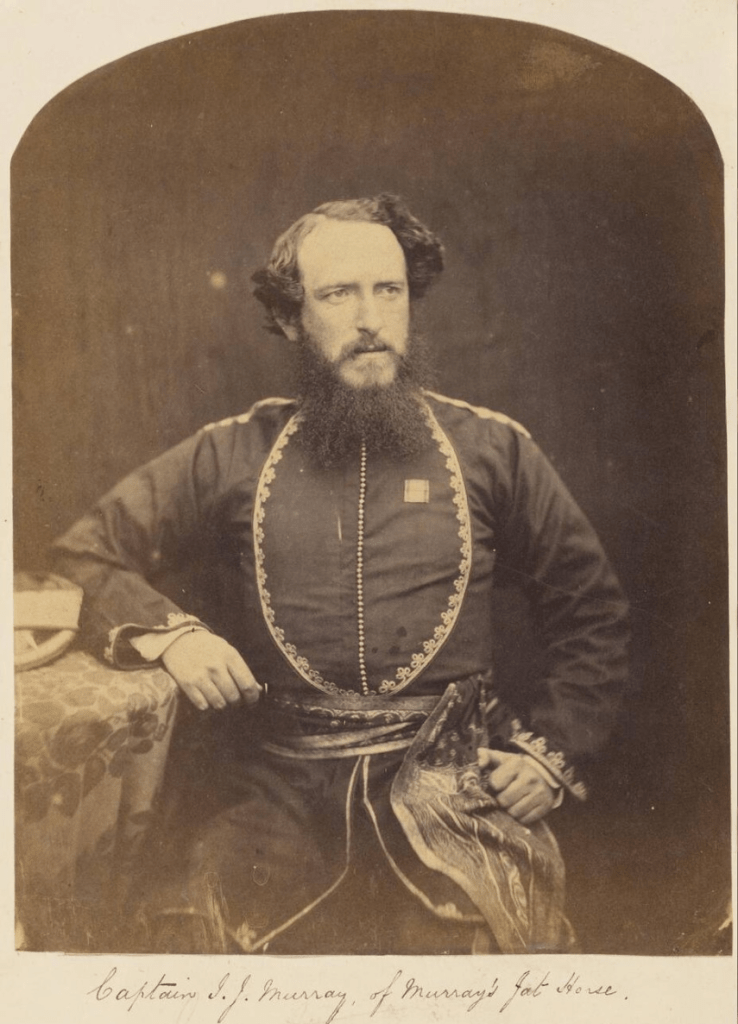
There was little for it now but to take the fight to Khan. In concurrence with Cocks, Montgomery decided to “attack their position at all hazards” and on Sunday the 23rd of August commenced his march on Aligarh. Being only light-equipped, the force made good time and arrived at Sasni late in the evening. Heavy rain had marred their progress for some of the distance, but fortunately, they found at Sasni an abandoned indigo factory which provided “tolerable shelter” for the officers and the men. The civil authorities authorised the lighting of bonfires to dry the men’s clothes, and everyone settled down for the night. It would prove to be a quiet one, once again only disturbed by the guards catching a young man near one of the guns. He had come from Aligarh, and Montgomery presumed he was a spy – he was first confined and then flogged before being released. Here Cocks placed, at Montogomery’s disposal, 70 Jat horse and matchlock men belonging to Thakur Gobind Singh – Captain J. F. Murray (late of the Gwalior Contingent) commanded the cavalry and Mr. Daniell of the C.S. took over the infantry.
“At daybreak, we resumed our march towards Allygurh in good heart, and elated with the prospect of meeting and chastising, with retributive vengeance, rebels and mutineers unequalled for their cruel fiendish malignity and cowardly atrocities to our helpless (in most instances) countrymen and their families, though so vastly superior in numbers; but still, fighting in a good cause, and with the fullest reliance on the Almighty’s aid, of the result, on closing with the enemy, there was but one feeling which animated and pervaded the minds of most composing the detachment.”
They were now on the road to Madrak when, seven miles from Aligarh, the advanced guard spotted a party of cavalry retreating a mile in front. They had seen the advanced guard on their elephants, but with the Agra Militia Cavalry and the Jat Horse and no distance behind, the cavalry decided it was wiser to avoid them for now. Keeping their distance, they suddenly sided off to the left, where they were joined by their compatriots from Khan’s army. Montgomery continued his advance.
At a quarter mile from Man Singh’s Garden – an enclosure surrounded by a high embankment – Montgomery swiftly organised for the protection of the baggage train which included 16 elephants and just as many camels, all the ammunition and stores. Considering he was now surrounded on all sides by the insurgents, it was certainly a wise precaution to take. Captain Fanshawe, who was in charge of the train, was given the Jat matchlock men and a few sowars under Mr. Daniell to keep any attacks at bay. Then Montgomery turned his attention back to the garden. Mr Saunders, a rather daring civilian, had ridden once around the enclosure and could report back to Montgomery he had been “potted at by the enemy lining two sides of the square,” and as such the Major made his plans.
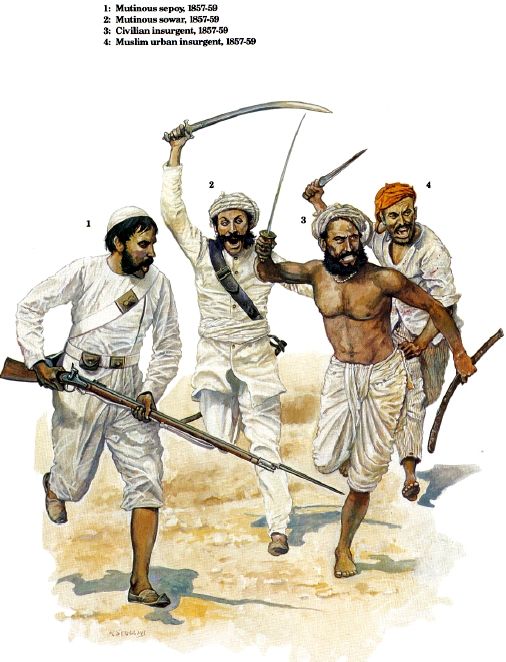
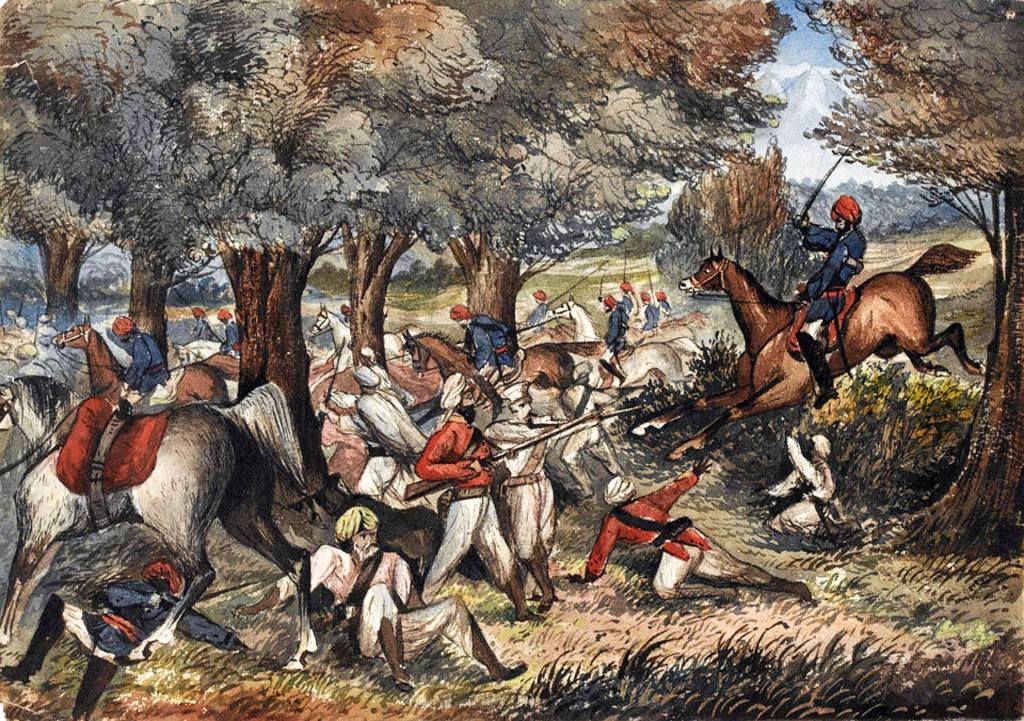
From here, things get a little confused and it is difficult to explain the battle itself with any accuracy as everything seemed to have happened at once. The force they were attacking, however, was not made up of trained, but mutinous sepoys – these were Ghatzis, loyal but fanatical Muhammedans known for their ferocious but haphazard tactics, and not the 15th Irregular Cavalry but a detachment of the dreaded 3rd Cavalry from Meerut. They were commanded by Khan himself, and amounted to nearly 5000 men. 150 cavalry were at his disposal with a further 200 Mohamedan Horse and 700, chiefly Mewati levies of horse and foot. The whole was headed by Moulvee Abdul Zuleel who was ably assisted by several other Moulvees. It was, in essence, madness what Montgomery did next.
Montgomery opened hostilities by sending in the Militia Cavalry under de Kantzow and Murray’s Jat Horse to take on a large body of cavalry that had suddenly appeared on Montgomery’s left and rear.
“De Kantzow did not require more explicit instructions. Addressing a few words to the volunteers, he placed himself at their head and led them straight at the enemy. The rebels watched the approach of this handful of Europeans without flinching till they were within shot. They then raised their carabines and fired. A second later, and without waiting to ascertain the result of their volley, they turned their horses’ heads and fled.”
Now the Ghazis emerged from the enclosure and attacked the infantry. The blind but determined Lieutenant White leading his company of 3rd Europeans saw them as “undisciplined armed insurgents” clad all in white and possibly high on bhang, flourishing their swords and crying out “Deen! Deen!” as they rushed at the infantry, like, “so many mad dogs.” White proved to be a rather poor leader.
“I had only about thirty men with me to the front, and one of these ran out a considerable distance in advance, apparently desirous of distinguishing himself by driving them back by his single-handed prowess; but the poor man paid dearly for his undisciplined act of valour, for he was cut to pieces in a few moments by the sharp swords of the Ghazees, and this appeared to have had a bad effect on my men. I purposed fighting the Ghazees then and there with the bayonet; but the soldiers, entirely of their own accord, and positively without any order from me, went to the right about, and ran to a sufficient distance to enable them to load and fire upon the Ghazees, most if not all of whom were killed, as it appeared to me.”
Under cover of skirmishers, Montgomery now brought his guns forward and let loose a veritable hell of shot and shell on the Ghazis’ heads as they rushed back to the enclosure. Unfortunately, the guns proved ineffective against the enclosure itself and were unable to silence the firing of the insurgents within it.
Mr. Saunders had continued to ride around the enclosure with good effect, and he quickly brought it to Montgomery’s notice that the main body was assembling to the right of the garden. The major immediately ordered Captain Murray to move around to the right with the Jat Horse and cut off the insurgents should they intend to escape during the general assault of the garden. At the same time, Lieutenant Griffin moved his guns up in the same direction. The movement occupied a little time and it caught the attention of the insurgents and, thus distracted by watching the guns and the Jat Horse, they had taken their eyes off of Montgomery.
“Leaving a sufficient number of men under Captain Strover to protect the gun on the left, and all being ready, I gave the word ‘Forward’ and went to the front accompanied by Lieutenant Clarke and followed by No. 8 Company of the 3rd European Regiment, under Lieutenant Blake. On reaching the garden wall, a large party of fanatical Mussulmans, headed by Moulvees, rushed forward, sword in hand, from the right corner, and there ensued a most desperate hand-to-hand encounter, which terminated in their total destruction, and where we met our chief loss, which might, in a great measure, have been avoided, had Captain Bacon’s company, attached to the two guns on the right, fired upon them as they debouched from the garden immediately on their front.”
Fortunately, Captain Murray, who, finding a large party of at least 800 men and 50 sowars drawn up
“in good order” on the right of the garden, requested Lieutenant Griffin to move up his guns and, “getting well up to the right, opened fire with terrible effect on their reserve, “ killed 150 of their number before the rest ran for it, while Murray, at the same time, taking advantage of a breach in the wall, dashed forward with a portion of the Jat Horse. Led by Kurruck Singh, who charged on ahead with only three sowars, was first through the breach and managed with his men, before he was wounded, to kill 7 insurgents before Murray raced in with several more sowars to cut up any remaining insurgents they found inside. At his side was young Mr Volunteer Hennessey, who picked off five men with his rifle and one with his revolver. He left the field with only a contusion caused by a Ghazi who missed his mark and cut into his ammunition pouch instead of him.
As for the baggage, Montgomery had certainly been a wise leader. Mr. Daniell, left in charge of the Jat matchlock men had moved back nearly a mile to the rear of the force from whence he could observe the enemy cavalry as they hovered off to the right, keeping parallel with the rear guard until they reached the main body. Daniell then received the order to dispose of the men in the rear to prevent an attack – he drew up the matchlock men on each side of the baggage in the fields off to the side of the road, and the cavalry left at his disposal, was sent to the rear on the road, thus completing the cordon and drawn up between two lines of infantry. “They kept this position until the order to return to Hattrass was given, when the horsemen marched in front of the main body, and the footmen in two lines on each side of the baggage. Thakoor Run- deer Sing’s activity was conspicuous. The order he preserved among his men was very creditable.”
All told, the battle had lasted 2 hours and the victory was Montgomery’s. The insurgents fled and dispersed in all directions, leaving behind 300 dead.
Possibly high on the rush of battle, Cocks most maddeningly insisted Montgomery follow up the success, “on political grounds” with an immediate assault on Aligarh. Montgomery was not a man easily swayed by words. He saw he had expended most of his grape and canister while on his way lay a perfect line of even more enclosures, each, all lined with armed men. The population of Aligarh he expected would hardly welcome him, and with his dead and wounded in tow and no possibility of any reinforcements from Agra or elsewhere, he decided the force would retire on Hathras. Cocks for his part, accepted Montgomery’s decision which he considered “most prudent” and the retreat was done “in a dignified manner.” They marched back to Sasni where arrangements were made to take the wounded back to Agra and then, three hours later, they continued to Hatras, which they reached by nightfall.
No one wasted any time bantering with Lieutenant White. He was shuffled off back to Agra with the wounded and some of the elephants he so loathed.
As for Montgomery, he ordered ammunition supplies from Agra, and on the 27th of August, he occupied Aligarh, which he took without a single shot fired. Khan and the insurgents had given the place up and fled. Mr. Cocks assumed charge of the district and as long as Montgomery remained, which he did until the 4th of September, when ordered to return to Agra, Cocks remained. The city was made over to Gobind Singh, and he, assisted by Tahsildar Aftab Rao, subordinate judge Sundar Lal, and Ram Prasad, deputy collector, held it until Delhi was taken on the 14th of September. Aided now by reinforcements of rebels marching through the Doab, Nasim-ulla was able to retake Coel from Singh, but his victory was short-lived. In the wake of the rebels came Greathed and his Moveable Column, who retook Coel without a fight on the 5th of October. As Greathed was called to Agra, he had to abandon the city again, but it was speedily retaken by Gobind Singh after the Battle of Agra, now supported by Major Eld and 150 Europeans, two guns and 100 Sikhs, set up a cantonment in the old fort. Mr. Cocks returned to his own as special commissioner.
We will take up the story again, but with a different army under another commander, Colonel Seaton, in December. For now, we leave Montgomery and his only victory in the field, that affair at Man Singh’s Garden.
Returns of the Killed and Wounded at Man Singh’s Garden
KILLED
J. O’B. Tandy, Esq., Indigo Planter. – “…fell whilst at tempting quite alone to enter the walled enclosures. This gentleman’s daring and gallantry could not be surpassed, and, possessing as he did every qualification that could adorn a soldier and a gentleman, his loss has been a matter of the deepest regret to the whole of the party.”
Ensign Marsh, 16th Grenadiers. “The son of an old cavalry officer behaved most gallantly, and, at last, overpowered by odds, fell, cut to pieces by the fanatic Ghazees.”
Lance Corporal Wm. Armstrong, 3 Co., 3rd European Regiment.
Private Nicholas Fitzgerald, 3 Co., 3rd European Regiment.
Private Patrick Laving, 8 Co., 3rd European Regiment.
WOUNDED
Lieutenant Clarke, late Gwalior Contingent, severely, 3 sword cuts.
Artillery.
Saddler Sergeant Robert McGill, severely, gunshot.
Gunner Robert Lockhart, mortally, since dead.
3rd European Regiment.
Private James Fitzgerald, 2 Co., very slightly.
Colour-Sergeant John Ryan, 3 Co., severely.
Sergeants
Patrick McCarthy, 3 Co., severely.
Nicholas Hand, 3 Co., very slightly sword cut.
Privates
James Leahey, 3 Co., dangerously, gun shot.
Alexander Nixon, 3 Co., very slightly, sword cut.
Isaac M. Culrooney, 3 Co., very slightly, sword cut.
Privates
Robert Adair, 8 Co., severely, sword cut.
John Browne, 8 Co., slightly, sword cut.
James Cochrane, 8 Co., severely, sword cut.
John Fitzsimmons, 8 Co., severely, sword cut.
Francis Macdonnell, 8 Co., severely, sword cut.
John Nesbitt, 8 Co., slightly, sword cut.
Patrick Quinn, 8 Co., very slightly, sword cut.
Charles Parker, 8 Co., very slightly, sword cut.
Militia Cavalry
Mr Byne, wounded accidentally.
Contused
Captain Murray, late Gwalior Contingent, received severe contusion from a sword cut.
Mr Volunteer Hennessey also received a contusion from a sword cut.
The Jat horse, under the command of Captain Murray, had Kurruck Sing, nephew of Thacoor Gobind Sing, very severely wounded, and 3 Sowars wounded.
Total killed, 5; wounded, 23; contused, 2; total 30.
(C. McKellar, Assist.-Surgeon, in Medical Charge of Detachment. Hattrass, August 25, 1857).
“It too often happens that in narratives of this kind the good deeds of humbler heroes of the hour find no record. One instance may be cited here. The telegraph wires had been recovered, by the activities of the boys of the Department, and a line had been laid between Agra and Aligarh; it being of high importance that all the movements of Montgomery’s force shoud be known at the Fort. One of these boys, named Nayler, sat in a palanquin carriage, close to the field of action, and coolly telegraphed back to Agra all the incidents of the battle as they occurred. There was great rejoicing when it was known the enemy had fled; and it is to be hoped that the youngster was rewarded.” (Kaye)
Sources:
Behan, T. L., ed. Bulletins and Other State Intelligence for the Year 1858. Part 1. London: Harrison & Sons, 1860.
Behan, T. L., ed. Bulletins and Other State Intelligence for the Year 1858. Part 2. London: Harrison & Sons, 1860.
Hodson, Major V.C.P. List of the Officers of the Bengal Army, 1758-1834. London: Phillimore & Co., Ltd., 1946.
Kaye, John William. A History of the Sepoy War in India, 1857–1858. Vol. 3. London: W.H. Allen & Co., 1876.
Malleson, George Bruce. History of the Indian Mutiny. Vol. 1. London: William H. Allen & Co., 1878.
Nevill, H.R. Aligarh: A Gazetteer, being Vol. VI of the District Gazetteers of the United Provinces of Agra and Oudh. Allahabad: Government Press, 1909
White, Samuel Dewé. Indian Reminiscences. London: W.H. Allen & Co., 1880.
 Mutiny Reflections