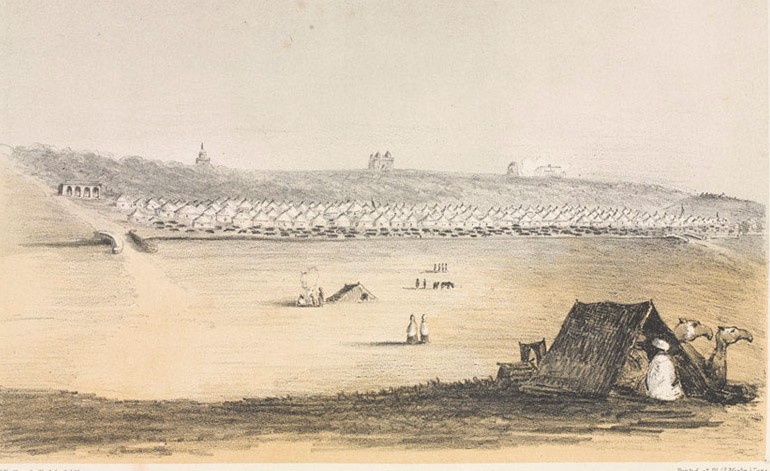
Although much is written about the siege of Delhi, very little exists regarding the living conditions on the Ridge except in fleeting remarks in the accounts left by the men who served there. It is a mixed blessing that those who did write about Delhi were not the privates who made up the bulk of the fighting force; the Gurkhas are amply described by Major Charles Reid, but there are no words from the men themselves. Therefore, we must make do with what we do know, albeit incomplete and fragmented, as described by the officers who served in Delhi.
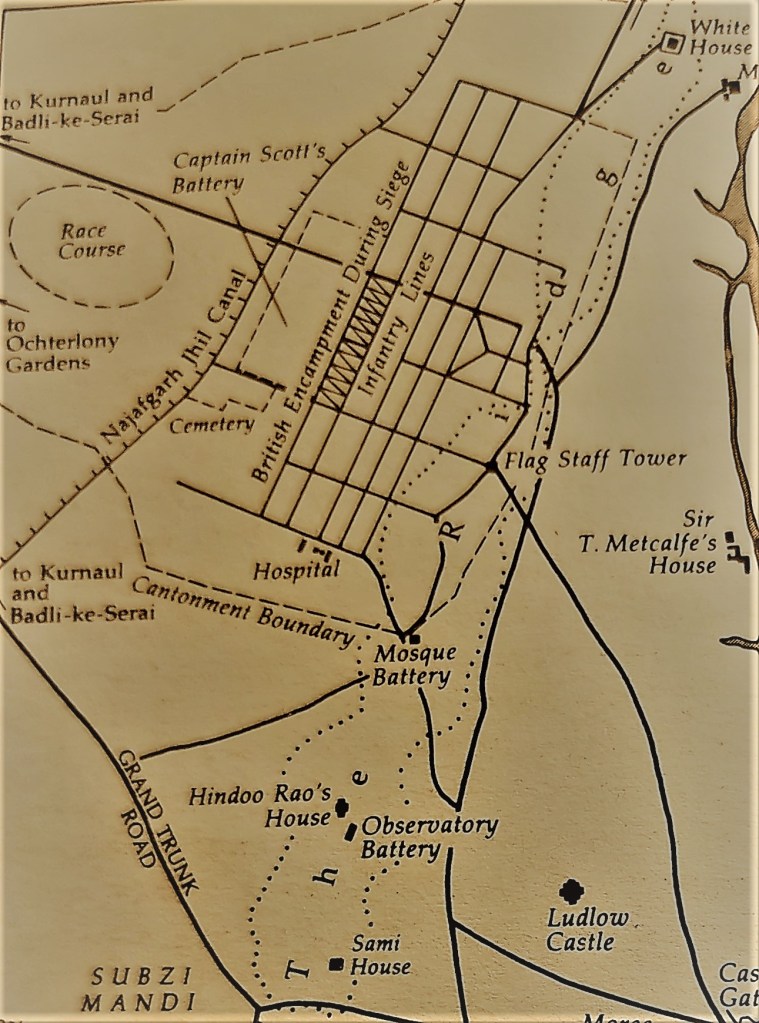
From June until September, the camp was pitched in a hollow on the parade ground of the Delhi cantonments of which little remained. Bounded in the rear by a canal and the front defended by the ridge which overlooked it with the right by protected by an old embankment and high mound, the camp itself would remain relatively unchanged for those months.
Commanding officers regaled themselves with double-poled tents, measuring some thirty by sixteen feet, besides possessing one or two smaller single-poled affairs of fourteen to sixteen feet square, plus awnings and additional tents for the servants and horses. As it was, they were at liberty to provision themselves as they saw fit: the regular soldier, on the other hand, lived in ones that accommodated up to 12 men at a time. Subalterns lived mostly in hill tents – some ten feet square with a double roof but with single walls with an additional strip of canvas over which hung down the side under which their servants found shelter.
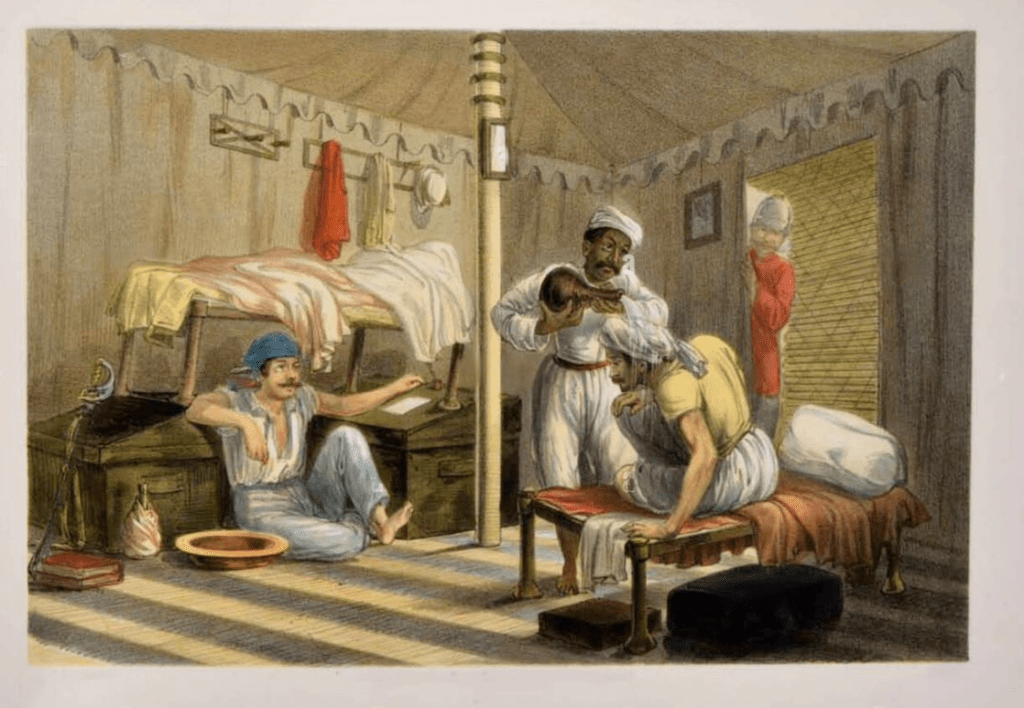
However, in the rush to get to Delhi, not everyone was able to pack their gear – the officers of the 1st Fusiliers chummed together in one large double-poled tent; other men found themselves happy enough in the small bell tents of the common soldiers if they could find one. The officers fortunate enough to furnish their tents did so with the usual accoutrements of floor cloths; chicks or reed curtains at the doors, which kept out the flies but paradoxically also kept out the air, making the already hot tents some degrees worse with temperatures soaring indoors at 118°F. Wrapping one’s head in a soaking wet turban helped at least for a moment, but the heat dried the cloth within minutes, and it was necessary to have it repeatedly drenched to have at least a little relief.
In the first six weeks of the siege, Thomas Seaton recollected that “…night and day no man undressed, except for a few minutes, for the necessary ablutions and change of clothes and this was not always possible. We lay down in our clothes, with arms and accoutrements either on or by our sides ready to slip on the moment the alarm should be sounded.”
Until the first reinforcements arrived, there was little the force could do but defend themselves against the constant attacks by the mutineers – Harriet Tytler (more on her later) recalls the men were so dispirited after the first weeks some threw themselves on the ground and refused to fight; tired and demoralised, leaving it up to the officers to man the guns. All the while, what the barrage of bullets and shells was not able to do, cholera did, and before long, the hospitals were full of sufferers.
The disease was not fully understood in 1857 – the scourge had existed in India for generations, but it was not until the British military campaigns in the early 1800s that it became a problem. A connection between “cholera and conquest” first manifested itself in 1817, concurrent with the war against the Mahratas, when a frightful epidemic reached such proportions that it shook the foundations of the EICo. Something had to be done, but no one knew what.
John Snow linked it to contaminated water in 1854 during an outbreak in London, but the identification of the bacteria itself would not be successful until the work of Robert Koch, who studied outbreaks of the disease in Egypt and India in 1883 and 1884. Until 1890, there were two schools of thought regarding cholera, with one side advocating it as a disease spread by person-to-person contact, while the other party believed it was not communicable but strictly an environmental and atmospheric problem. In India, the second school of thought was predominant. Unfortunately, in practice, it fell somewhere between both as medical officers could, through experience, make an argument for both causes. The argument that cholera was the result of congestion and filth would come to the forefront repeatedly – contaminated water would later prove to be a conduit for the disease, but in the 19th century, the idea of miasma or foul air was still considered the principal cause. Not that this helped anyone since there was no cure.
A globally established method for treating cholera was not established until much later, and most of the remedies in the 19th century were of the kill-or-cure variety. In 1838, a concoction of brandy infused with cloves, cinnamon and peppers and liberally laced with laudanum was considered eminently effective, while in Singapore, the chief medical officer preferred to use “hot water emetics and enemata, aided by dry heat to the surface of the body” as a cure. In 1849, Queen Victoria’s physician touted
” mixing equal parts of camphor, laudanum, turpentine and peppermint,” while Lord Ponsonby preferred dissolving “one part camphor in six parts of spirits of wine.” Surgeon Greenhow (who was in Lucknow during the siege) had his own remedy for cholera, consisting of a pill containing both opium and creosote, which he recommended consuming with congee water and dilute sulphuric acid. He further found that treating patients with tea, beef tea, arrowroot, rice, minced meat and sago aided in recovery. Unlike the general school of thought, Greenhow forbade his patients from drinking alcohol, which, in his estimation, was debilitating rather than curative. Dr Fayrer, working next to Greenhow, seemed completely unable to treat the disease.
Of all these terrifying remedies, the only one which makes sense is that of Charles Perreau, who, in 1849, recommended bruised ginger boiled in a pint of water for 10 minutes with two tablespoons of salt. As cholera kills mainly by severe dehydration, this remedy is not dissimilar to the modern recommendation of drinking clean water mixed with sodium and glucose.
In regard to Delhi, it can only be left to the imagination what sanitary methods had been put into place – living in an age where the connection between human waste and disease had not yet been fully established, it is perhaps a relief we should be spared such details as to where and how the camp relieved itself. The canal was the principal water source for the camp – it was also the bathing place of all the elephants, camels, and horses and was further used to wash clothes. Although there were wells in the cantonments, drawing water from these was thought inadvisable as many officers believed these to be poisoned. Without adequate drainage, much of the camp became a swamp during the monsoons, with water collecting ankle-deep. Eventually, the engineers opened drains to carry the water off, and a concentrated effort was made to bring about some sanitation in the camp. However, very little was done for the animals.
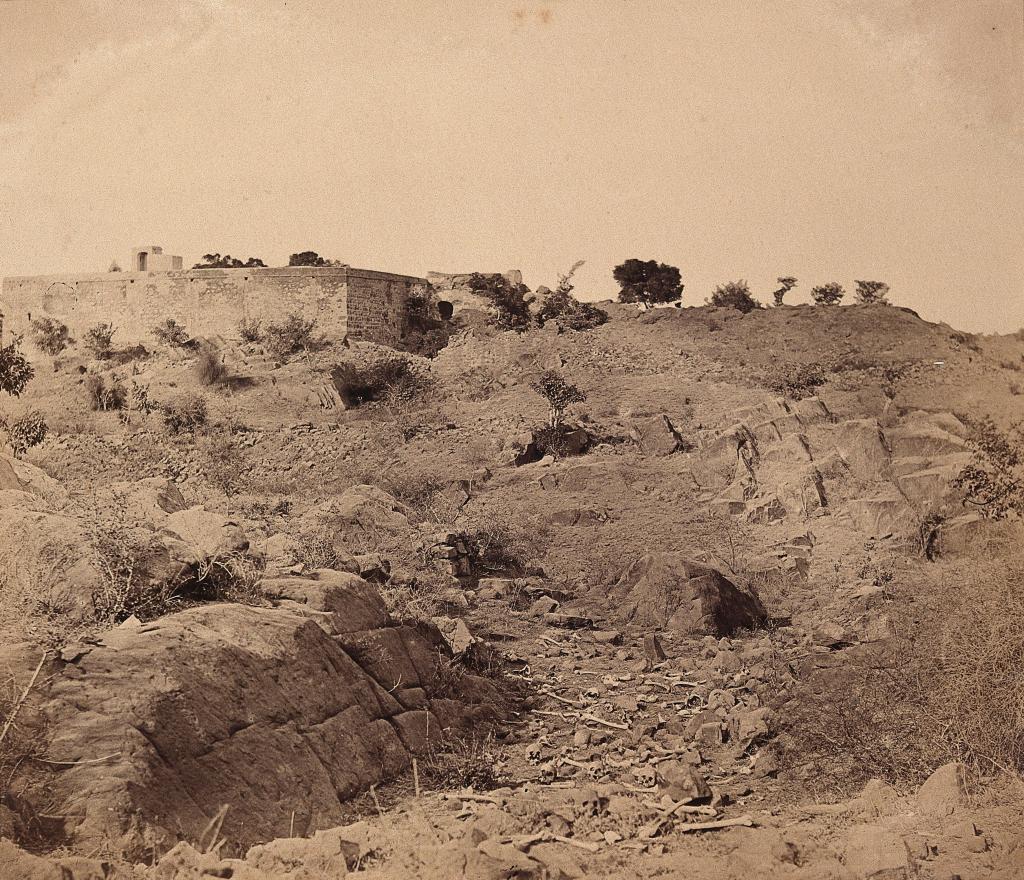
Large convoys of camels and bullock carts were arriving nearly daily on the Ridge, bringing much-needed supplies, while a considerable number of animals were needed at the ready for various purposes. Officers had been allotted a camel or two to carry their belongings to Delhi – these poor animals were left to their own devices as soon as they reached the Ridge. Without adequate shelter and insufficient food, many simply died of exposure and starvation. Removing their carcasses was considered a priority, but only if they fell in a vicinity where it was practicable to drag them away – at one point, elephants were employed to pile up the bodies for burning. Many animals were simply left to be devoured by jackals and birds of prey.
Humans often did not fare any better. While the British took some consideration to bury their own dead, the same courtesy certainly did not extend to the mutineers, whose bodies, unless collected by their comrades, were left to decay where they lay. In temperatures reaching well over 100° F during the day, the incessant rain and the foetid humidity that followed, the sights and smells on the Ridge were, for the want of a better word, sickening. A paragraph describing the Sammy House, in the History of the Bengal European Regiment, describes it thus:
“The constant outpost duty, although it was always undertaken with the utmost alacrity and good humour, was found to be very irksome to the soldiers, those of the 1st Bengal European Fusiliers being constantly on duty at “The Metcalf Stables,” “The Mosque,” and “Flagstaff” pickets; but the most resulting and unwelcome outpost was commonly called ‘The Valley of Death.’ It was a small, old ruined mosque or shrine in the gorge of the valley, in rear of our batteries, and was under a plunging fire from all the enemy’s missiles that passed over them. There was no cover, as it was impossible to enter the building, owing to its being literally crowded with cobras, and on the road where two of our sentries were posted, there were dead camels lying in the last stage of decomposition. A night on this picket, in the thick, muggy atmosphere of the rainy season in July and August, under a heavy fire, was almost too much for the best-intentioned soldier to bear.”
As an inevitable result of the putrid nature of the camp, it is of little surprise the Ridge was beset by a plague of flies.
“The heat was insupportable, the thermometer under the shade of my tent marking 112° F.; and to add to our misery there came upon us a plague of flies, the like of which I verily believe had not been on the earth since Moses in that manner brought down the wrath of God on the Egyptians. They literally darkened the air, descending in myriads and covering everything in our midst. Foul and loathsome they were, and we knew that they owed their existence to, and fattened on, the putrid corpses of dead men and animals which lay rotting and unburied in every direction. The air was tainted with corruption, and the heat was intense.” (Griffiths)
Lord Roberts would recall that the inside of his tent was black with flies. While trying to eat, he would engage in the curious spectacle of waving one hand in front of his mouth while trying to put food into it with the other, occasionally having to rush from the table as he choked on a fly that had evaded even his best efforts and lodged in his throat. He was not alone.
“The common fly was a cause of painful annoyance, commencing at daybreak and ending at dark, when
the mosquitos commenced their depredations. The flies were in millions; they settled on one’s face, hands, head, neck, and ears. I have seen an officer lying asleep with his mouth open, and the flies walking in and out as complacently as possible. It was necessary to keep whirling one hand vigorously around the other while conveying food or drink to the mouth to prevent flies flying in with it.” (Walker)
However, this led to equally interesting past times by turning their flying foes into the object of games.
“When several officers happened to be together on a picket, we have played ‘fly loo,’ which was played as follows: Each player would place a lump of sugar in front of him, covered over with his pocket-handkerchief, and put one rupee into the pool. At a signal, all the handkerchiefs were taken up, and on whose soever lump of sugar a fly settled first won the pool. “ (Walker)
Another entertainment was to lay a quantity of sugar on a table or any other flat surface and surround it with gunpowder. Then, when the sugar was sufficiently black with flies, the gunpowder would be lit, much to the amusement of the officers, but perhaps less so of the Ordnance Department. Another officer found it fun to catch flies in a large cup and then pour boiling water on them. This hardly made any difference to the fly population on the Ridge, and the games continued to be played out at intervals until the end of the siege.
 Mutiny Reflections