By midnight, as the 5th of March turned into the 6th, Robert Napier declared the bridges ready. An hour later, as quietly as possible, without the sound of a trumpet or a bugle, regiment after regiment moved up to the front of the camp.
“When all had assembled, the column advanced. A thick mist from the marshes by the river hung over the land, and the darkness was intense. The rumble of the artillery guns and the light jingle of the steel scabbards as they fell against the stirrup-irons alone betrayed the movement of the troops. The soldiers marched on in profound silence, now making their way through the groves, now toiling across broken ground, now wading through deep water-courses which crossed the ground.”
At four in the morning, the advanced guard of the 2nd Punjab Cavalry reached one of the bridges and began crossing over. Waiting for them on the other side of the Gumti was Sir James Outram, who had marched up from the Alambagh. Preceding him had been Francis Cornwallis Maude.
At 8 pm, the previous evening, with orders now in that the force from the Alambagh was to march to the Dilkusha, Maude prepared his battery, up to its usual strength of six guns, their accompanying wagon and baggage and ordered the advance. Silently, they proceeded eastwards. Maude “had carefully” taken his bearings and found it was not only a lovely starlit night, but the ground was happily level and hard. Using the stars as a guide, he corrected his course slightly southwards to avoid the corners of the Lucknow suburbs and then set them back on the road to the Dilkusha.
After an hour’s marching, a voice rang out in the darkness, “Kon hai?” (Who goes there?) came the challenge, followed by a rattle of arms as the guard rushed out to meet them. Without hesitation, and hoping it was a picket of Punjab Cavalry, Maude replied, “Gora log!” (White people!). He was relieved to find he was right. The Punjabis, about as surprised as Maude, told him he was on the right road, but as a precaution, they organised a guide to lead him to the artillery camp. For tonight, their adventures were over, and they were not going to Lucknow yet.
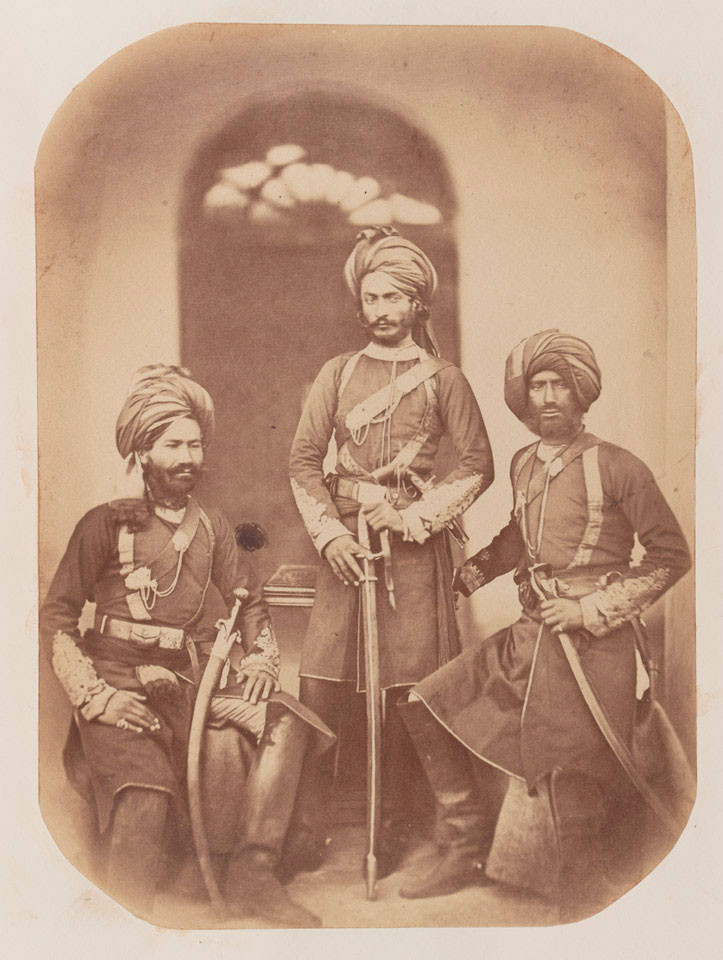
For Sir James Outram, it was a curious departure. He had held the Alambagh for nearly four months, and now, he was leaving it in the hands of Brigadier Franklin and the disappointed detachments of the 5th and the 78th. For him, it was a new chapter in what must have seemed the never-ending saga of Lucknow.
Taking his own advice, which he had given Sir Colin so many months ago, of giving “Lucknow a wide berth,” he found himself now on the other side of the river, waiting for the force he was going to lead into battle. Slowly, they appeared. First came the 2nd Punjab Cavalry, but then, one after another, the rest crossed the bridges of casks, until they were assembled on the opposite bank of the Gumti.
Artillery
Lieutenant-Colonel D’Aguilar’s Troop, R.H.A.
Major Remmington’s and Captain McKinnon’s Troops, Bengal H.A., under Lieutenant-Colonel
P. Turner.
Captains Gibbon and Middleton’s Light Field Batteries, Royal Artillery and Headquarters Field Artillery Brigade.
Headquarters Cavalry Division and of the 1st Cavalry Brigade.
2nd Punjab Cavalry
H.M.’s 2nd Dragoons. (Bays).
H.M.’s 9th Lancers.
Detachments 1st and 5th Punjab Cavalry, under Captains Watson and Stanford
3rd Infantry Division under Brigadier-General R. Walpole.
5th Brigade, Brigadier Douglas , C.B.:
H.M.’s 23rd Fusiliers,
H.M.’s 79th Highlanders,
1st Bengal Fusiliers.
6th Brigade, Brigadier Horsford, C.B.:
2nd Battalion Rifle Brigade, 3rd Battalion Rifle Brigade,
2nd Punjab Infantry.
“There are the Queen’s Bays who look, in their scarlet coats, as if they have come out for the express purpose of attracting all the rays of the sun; there are the 9th Lancers, looking as they ever do, smart, neat and businesslike, with their lances slung lightly over their arms…There are large bodies of Sikh Irregular Cavalry, big whiskered, monster turbaned, and for the most part, slate coloured as to clothes, while each man presents the appearance of an armoury in miniature, what with spear, tulwar and pistols à la discrétion, wherewith he is equipped. There are three troops of Horse Artillery, one whereof is Royal and the other two Benal, all equally ready to gallop over the stiffest line of country you can point out to them, and to blaze away with perfect and deadly precision afterwards…Plumes of Highlanders waving gaily, dark coats of Riflemen, the red uniforms of the Royal Welsh Fusiliers, the blue of the Bengal Fusiliers and the Artillery, and the serviceable karkee-coloured vestments of the Sikh regiment of infantry…”
As regiment after regiment crossed the bridge, those already over, went to their breakfasts. The men take bread out of their haversacks and cut it up into rude slices with their pocket knives; others drink off drams of grog while their officers gather around dhoolies, filled with the contents of their breakfast of legs of mutton and sides of ham. In their circles, the cigar cases come out, and flasks are opened, their contents of whiskey and brandy poured into small glasses. Within a few hours, all of this will be a distant memory and for some, their last sunrise. Amid all the crossing, a singular figure on a white horse suddenly appears – it is Sir Colin Campbell, anxious to the extreme that progress was slow and the rebels would find out what he was up to before Outram could even start. He “pitched into everybody most handsomely,” before disappearing back across the river. Sir Hope Grant watched the proceedings with some amusement, noting that this particular wigging had a good effect and “hastened out passage materially.” The entire force was over the river just before dawn.
With the sun slowly coming up over the horizon, catching the lances of the cavalry in its first rays, the order, “Attention!” breaks the idyllic scene, here on the sides of the Gumti. Men reform in their ranks, and the cavalry mount their horses, all ready for the start. Outram takes his place at the fore, and the advance begins. He had drawn up his force into three lines, with the cavalry leading.
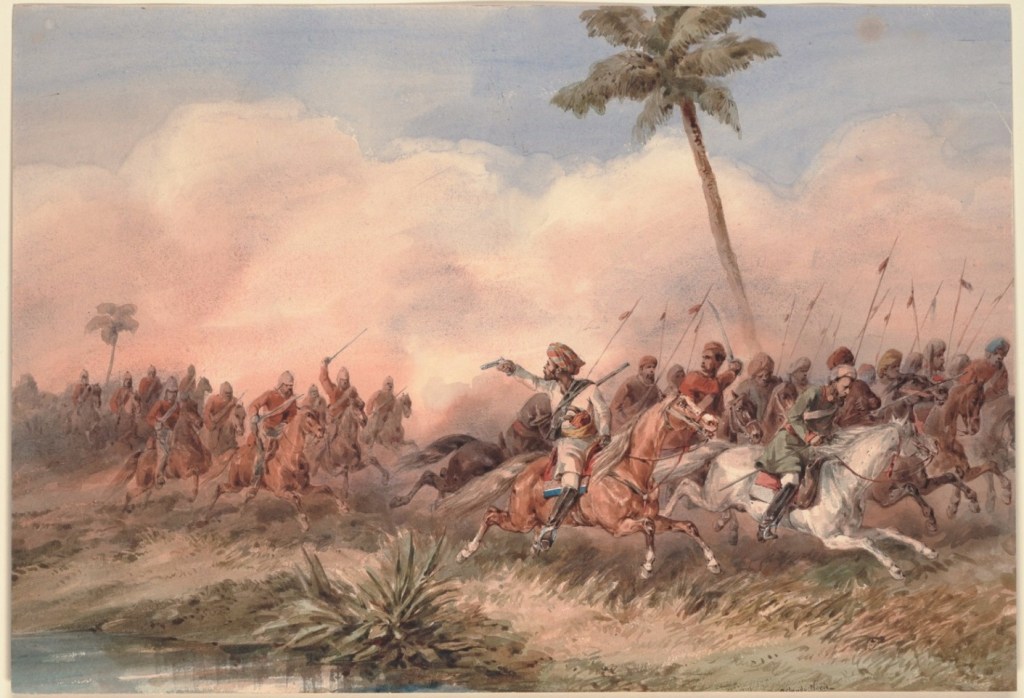
Marching in a northerly direction, it is not long before the rebels appear on his left flank in force, chiefly cavalry troopers. There is no time for pleasantries. The 2nd Punjab Cavalry attack from the right, while Major Smith of the Bays with two squadrons of his regiment, one squadron of the 9th Lancers and D’Aguilar’s troop of Horse Artillery advance from the left. The rebels, after a moment’s hesitation, and obviously not liking what they were seeing, turn and flee. However, the Lancers and the Bays give chase,
“…cutting down all they passed with their long flashing swords. The Bays, who led, were young soldiers
who had never known the excitement of battle, and intoxicated with blood, rode at breakneck speed. In small groups of twos and threes, their ranks broken by the rugged nature of the ground, they reached the infantry posts of the enemy. Percy Smith, their gallant leader, and two troopers were shot dead; several were wounded. Corporal Goad of the Lancers took the body of Major Smith on his back and attempted to carry it away under a shower of bullets; but he was unable to succeed. Then Cornet Sneyd made the same attempt. He also failed. The body had to be left on the field.” Sir Hope Grant, seeing the madness in the charge, quickly halts the 9th Lancers, but the Bays continue onwards, until they too, turn, with breathless horses, back to the main column.
Smith’s mangled corpse would be recovered the next day, with his head and legs severed, and his trunk covered over with sword cuts, and his remains would be buried the same night, by lamplight, in a grove of trees.
The main body had taken no part in the skirmish but halted on some rising ground from where they could clearly see the Horse Artillery at work, firing away at a battery of rebel artillery, ensconced in the grounds of a large yellow coloured building. Neither side made much headway, and Majendie was far from impressed.
“I use the word ‘unsatisfactory’ here in a selfish sense, for the shot which were, or ought to have been, intended for the Horse Artillery, would occasionally insist on plumping in among our poor selves, in by no means an agreeable manner. We were halted and had the supreme satisfaction of standing, or sitting quite still to be shot at for some few minutes—a period not wholly devoid of excitement, as thus: there was a cloud of smoke, then a distant report, then a few moments of comparative silence, then half a dozen cries of ‘Here comes another!’ a small dark speck visible against the blue sky, a rapid hurtling through the air of the approaching missile, a whish-sh-sh-sh which became every moment louder—louder—louder, till it passes you with a sort of scream, and lodges in the ground behind. Hardly has it passed when another puff of smoke, and another distant report, announces the arrival of a fresh iron messenger. It was curious to hear the various speculations while the ball was still in flight, as to where it would fall. ‘Here it comes, straight at us.’ ‘No, it’ll go over us.’ ‘By G-d, it’s into the Highlanders.’ Whish-sh sh-sh-sh-sh-sh. ‘Just cleared them, by Jove !’ And a deep breath of relief is drawn as it falls harmless, tearing up turf, and stones, and dust, and ricocheting away in the distance, carrying dismay and causing confusion among the stragglers and spare horses.”
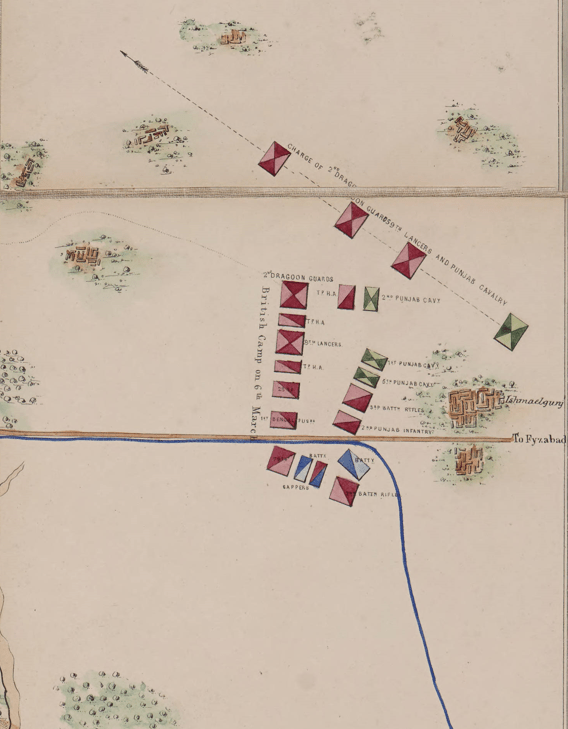
With the rebels dispersed and the day’s work at an end, Outram pitched his camp on the Fyzabad Road, only four miles from Lucknow, in front of the village of Ismailganj, not far from the scene of one of the most disastrous battles fought and lost in the early months of the mutiny, Chinhat.
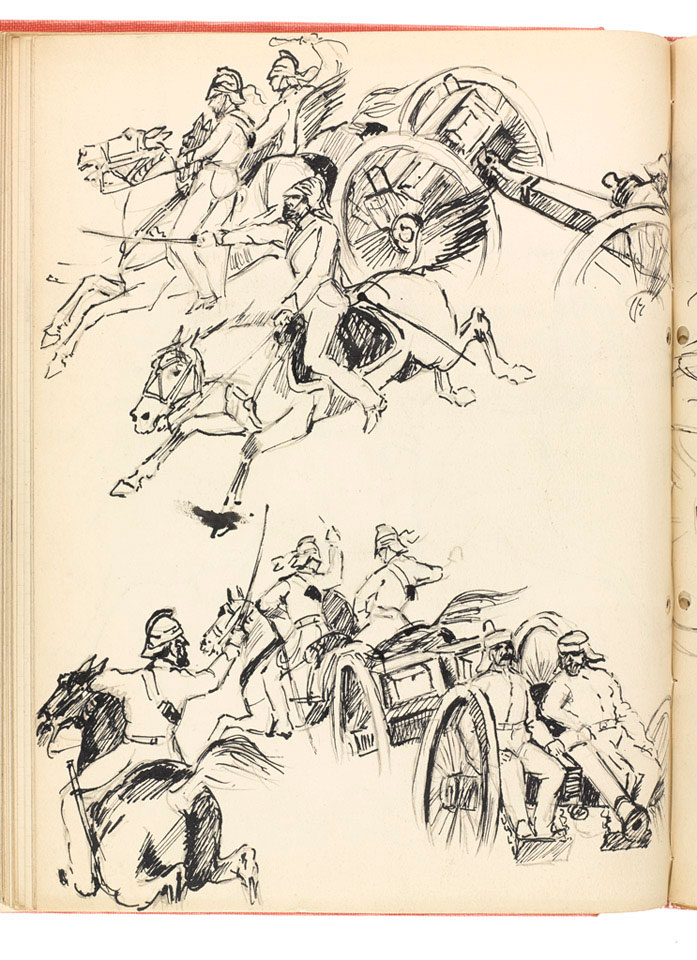
NAM. 1965-03-45-25-156
Outram’s objective was to draw attention away from Sir Colin Campbell, who was watching his movements now with some anxiety. At daylight, the rebels opened fire on the last remaining troops of Outram’s force, but the Naval Brigade quickly put a stop to it. Peel then changed the position of his guns further to the left, to continue a covering fire as needed, but the rebels had had enough. With growing anxiety, they too were now watching Outram. He successfully drove the rebels out of a series of villages and groves before calling a halt – with some relief, Sir Colin Campbell could now proceed with the next phase of his plan. It was slowly dawning on the rebels that they were in a terrible position. The Alambagh was still being held by no meagre force but by detachments of the 5th Fusiliers and the 78th; Sir Colin Campbell had the Dilkusha, and Outram now commanded the other side of the river. All of the defences they had spent months building were slowly but surely looking obsolete. Sir Colin Campbell was coming to Lucknow by the only side they had failed to protect, and the realisation was sobering.
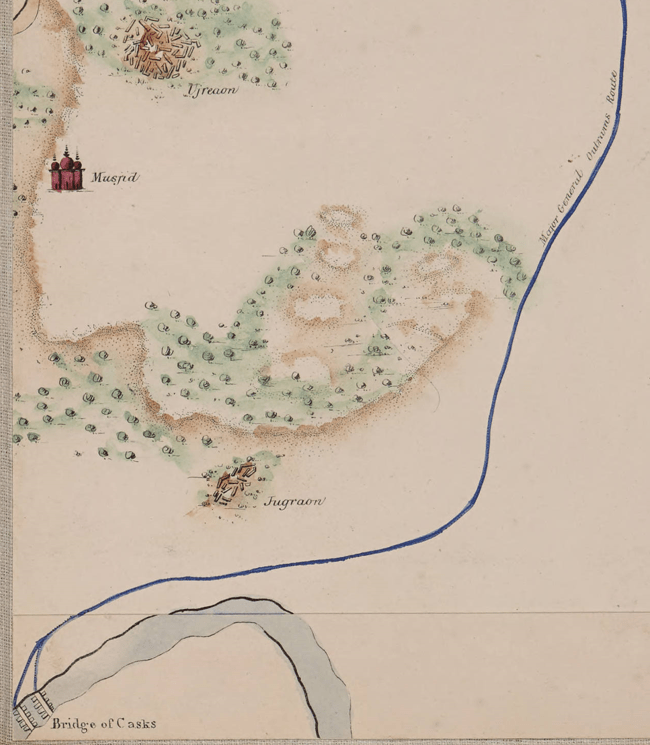
Outram’s objective was to draw attention away from Sir Colin Campbell, who was watching his movements now with some anxiety. At daylight, the rebels opened fire on the last remaining troops of Outram’s force, but the Naval Brigade quickly put a stop to it. Peel then changed the position of his guns further to the left, to continue a covering fire as needed, but the rebels had had enough. With growing anxiety, they too were now watching Outram. He successfully drove the rebels out of a series of villages and groves before calling a halt – with some relief, Sir Colin Campbell could now proceed with the next phase of his plan. It was slowly dawning on the rebels that they were in a terrible position. The Alambagh was still being held by no meagre force but by detachments of the 5th Fusiliers and the 78th; Sir Colin Campbell had the Dilkusha, and Outram now commanded the other side of the river. All of the defences they had spent months building were slowly but surely looking obsolete. Sir Colin Campbell was coming to Lucknow by the only side they had failed to protect, and the realisation was sobering.
The 7th of March
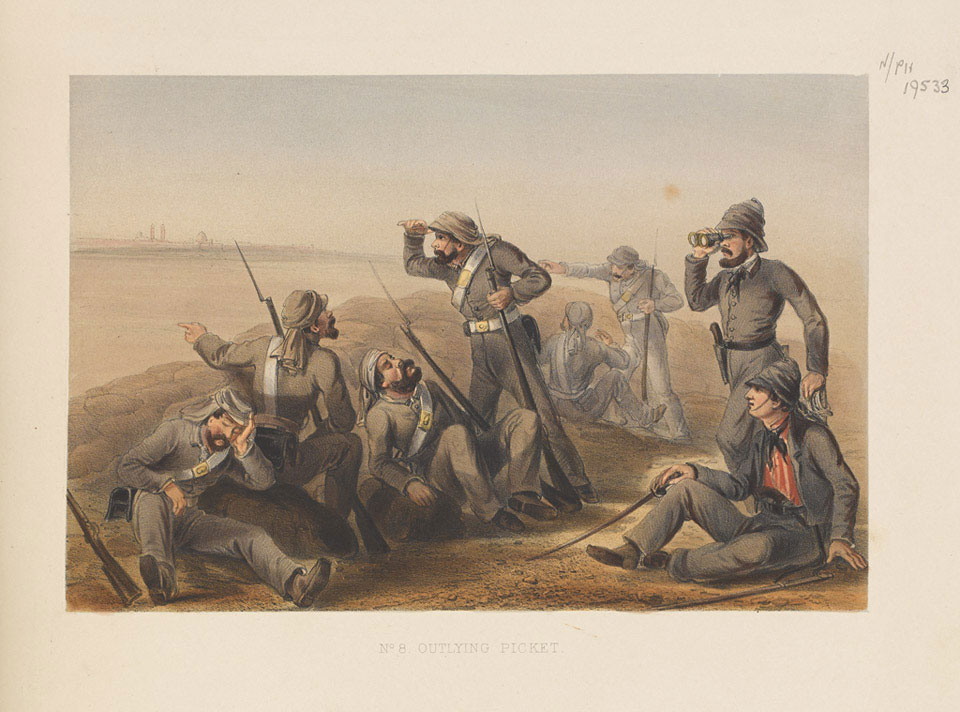
Early in the morning, as his camp slowly woke out of its slumber, the rebels decided they would recoup some of their losses from the day before and launched a swift attack on Outram’s advance pickets. They intended too, to bring several guns into play, which they had hidden under the cover of ravines and clumps of trees to his front. Majendie, who was just making his way to one of the outlying pickets, was surprised by the sharp rattle of musketry becoming louder with every passing second, until the bullets were whizzing around the tents. An orderly, in something of a panic, galloped past, shouting that the men should turn out instantly and move up front as the rebels were attacking the camp.
By the time the camp turned out, however, the entire affair was over.
The picket had not been caught napping, but they had been in a tough spot. Before the first shots were fired, they saw the rebels approaching, a veritable cloud of cavalry, infantry and artillery, all in good order, methodical and organised. With no time to waste, their commander sent off for reinforcements and immediately extended his handful of men in skirmishing order. With quite a dose of bravado, they strode out to meet their foe. It was unfortunate that the rebels suddenly halted in their tracks, and the two sides spent a good moment staring at each other, each side wondering who would fire the first shot.
In the meantime, before Majendie was even aware that an attack was in play, reinforcements were sent up to the picket. Amid this curious stand-off, someone shot first, and the battle was on, but a little too late for the rebels, for from behind the picket, thundered the Horse Artillery onto the field and in the blink of an eye, were sending volley after volley at the rebel line. Then, to their absolute shock, came the cavalry, and these were in the mood for a chase. It was a little too much for the rebels, who now turned and ran. When the cavalry returned, one of the troopers was bearing the body of Major Smith.
Outram immediately ordered the position extended, and the outposts were pushed out another half-mile; if the rebels wanted to play this game again, he would now know about it sooner.
For the rest of the day, his men remained alert, but besides some desultory firing from the pickets, where, from time to time, a rebel turned up in the distance. The artillery kept up a steady fire for a time, “by taking long shots whenever he gave us a chance,” but fairly soon they realised the rebels were sending their own shot back at them instead of the lumps of hammered iron, and they changed quickly to case shot. This proved somewhat discomfiting, and the rebel artillery gave up.
However, not everyone was taking this quite this lightly. As soon as darkness fell over the empty plain with its menacing silence, the firing from the pickets increased until an officer was sent to find out what the noise was all about. Skittish to the highest degree and tired, the men had begun mistaking tree stumps for lurking rebels, and one had even thought the rustling of the wind in the long grass was the stealthy advance of infantry. Another swore a cow was in fact a battery of artillery. Throughout the night, calls of “Stand to Arms” were quickly followed by “Stand Down” until sleep for the rest of the camp was thoroughly disturbed. Things did not improve when suddenly a sharp fire opened in the rear of the camp, followed by the whiz of bullets past the tents or falling at men’s feet. In the pitch darkness, no one could say for sure that the rebels had not indeed managed to get around Outram after all.
Not one to take chances, he immediately ordered the guns brought to the rear and then set to work to figure out what was happening.
“It transpired that our supporting picket, some seven or eight hundred yards behind us, were suffering from nightmare, bad dreams, indigestion or something which deluded them into the idea that it was their bounden duty to fire a volley or two into us, which they accordingly did… matters were put to right with a polite request, that it was all the same to them, they would abstain from repeating the performance.”
The next day, the camp was greeted by the arrival of some siege guns, and in the afternoon, the greater part of the cavalry, horse artillery and Middleton’s field battery were to recross the river, for they were needed in the next stage of the plan. The remainder of the day was spent hauling the guns into place. Anticipation now fell over Outram’s camp, and the next day, the taking of Lucknow would begin for them in earnest.
Sources:
Forrest, G. W. A History of the Indian Mutiny. Vol. 2. Edinburgh & London: William Blackwood & Sons Ltd., 1904.
Grant, Hope. Incidents in the Sepoy War 1857-58, Compiled from the Private Journals of General Sir Hope Grant, K.C.B.. Edited by Henry Knollys. Edinburgh & London: William Blackwood & Sons, 1873.
Jocelyn, Julian R. J. The History of the Royal and Indian Artillery in the Mutiny of 1857. London: John Murray, 1915.
Kaye, John William, and G. B. Malleson. Kaye’s and Malleson’s History of the Indian Mutiny of 1857–58. Edited by G. B. Malleson. Vol. 4. London: W.H. Allen & Co., 1889.
Majendie, Vivian Dering. Up Among the Pandies: Or, A Year’s Service in India. London: Routledge, Warne & Routledge, 1859.
Maude, Francis Cornwallis. Memories of the Mutiny. Vol. 2. London & Sydney: Remington & Co., 1894.
Outram, James. Lieutenant-General Sir James Outram’s Campaign in India, Comprising General Orders and Despatches Relating to the Defence and Relief of the Lucknow Garrison, and the Capture of the City, by the British Forces. London: Smith, Elder & Co., 1860. Printed for private circulation.
 Mutiny Reflections