Christ Church, Lucknow
In Lucknow’s busy Hazratganj, just off the turbulent intersection stands Christ Church, a dilapidated relic in its dusty ill-kempt grounds, surrounded by the noise of traffic outside the sun-bleached garden walls.
If there had been a garden at Christ Church, it is long gone, replaced by dust and scanty patches of grass, a few bushes still gasping in the heat of the Lucknow summer, waiting for a little water to come their way. The building too, like its surroundings, is dying.
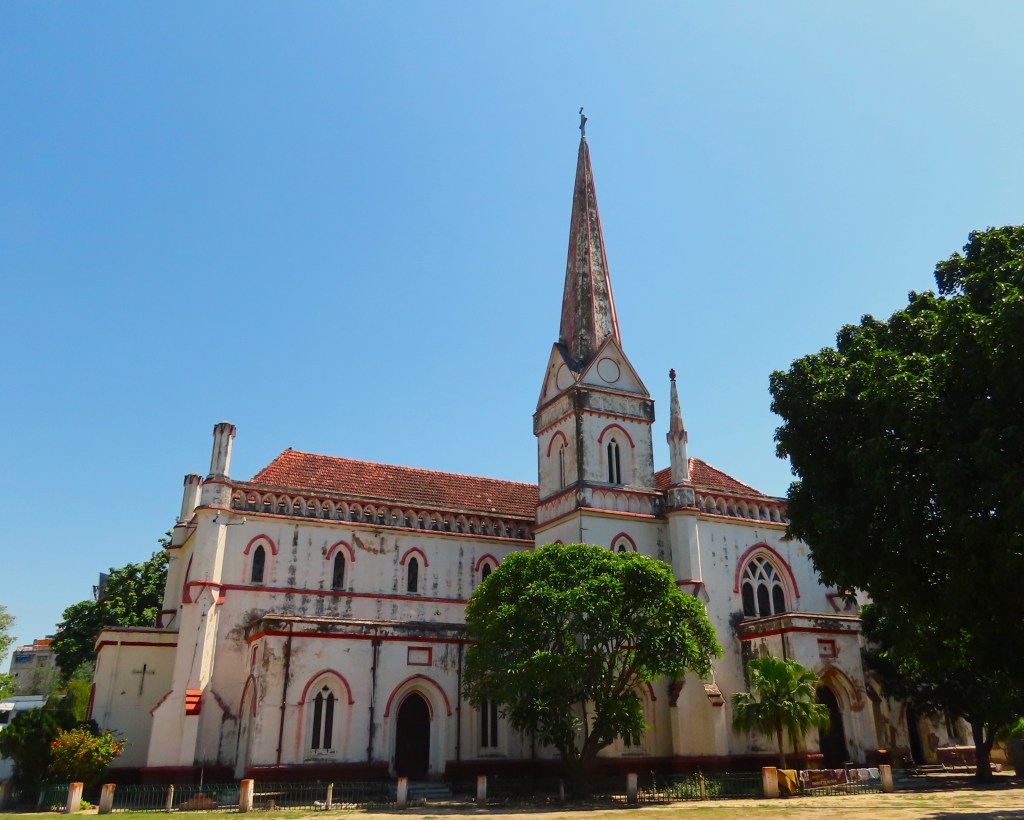
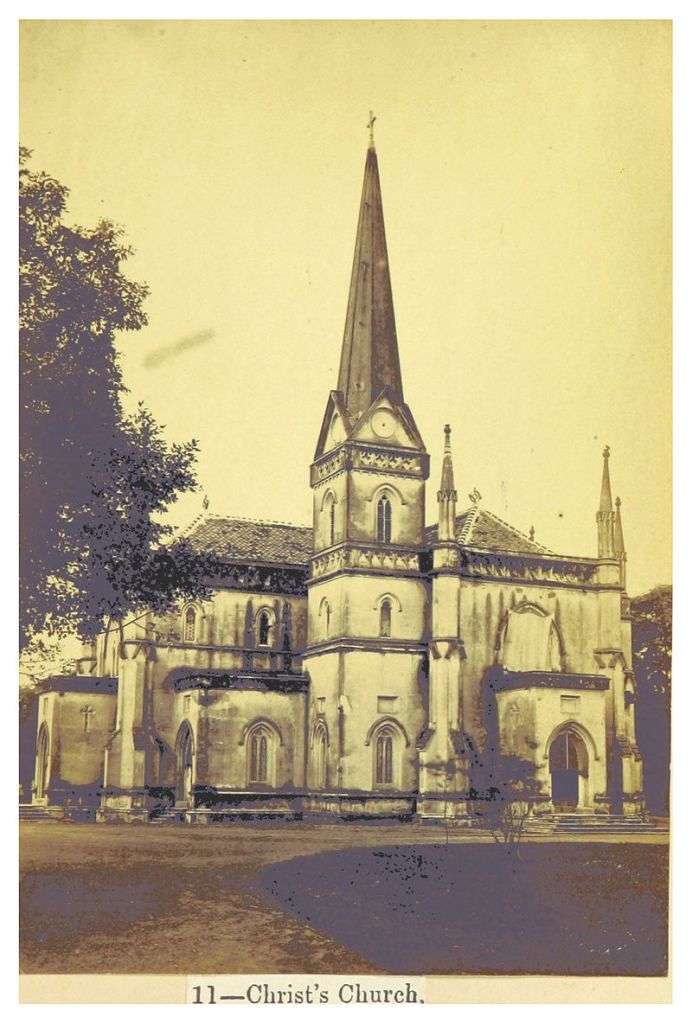
Constructed in 1860 to commemorate those who died during the mutiny, Christ Church was, at one point in its history, a magnificent Gothic-style church, white-washed and carefully cared for, each of its 20 steeples standing proudly under the unrelenting sun. The monsoons and Lucknow have taken their toll.
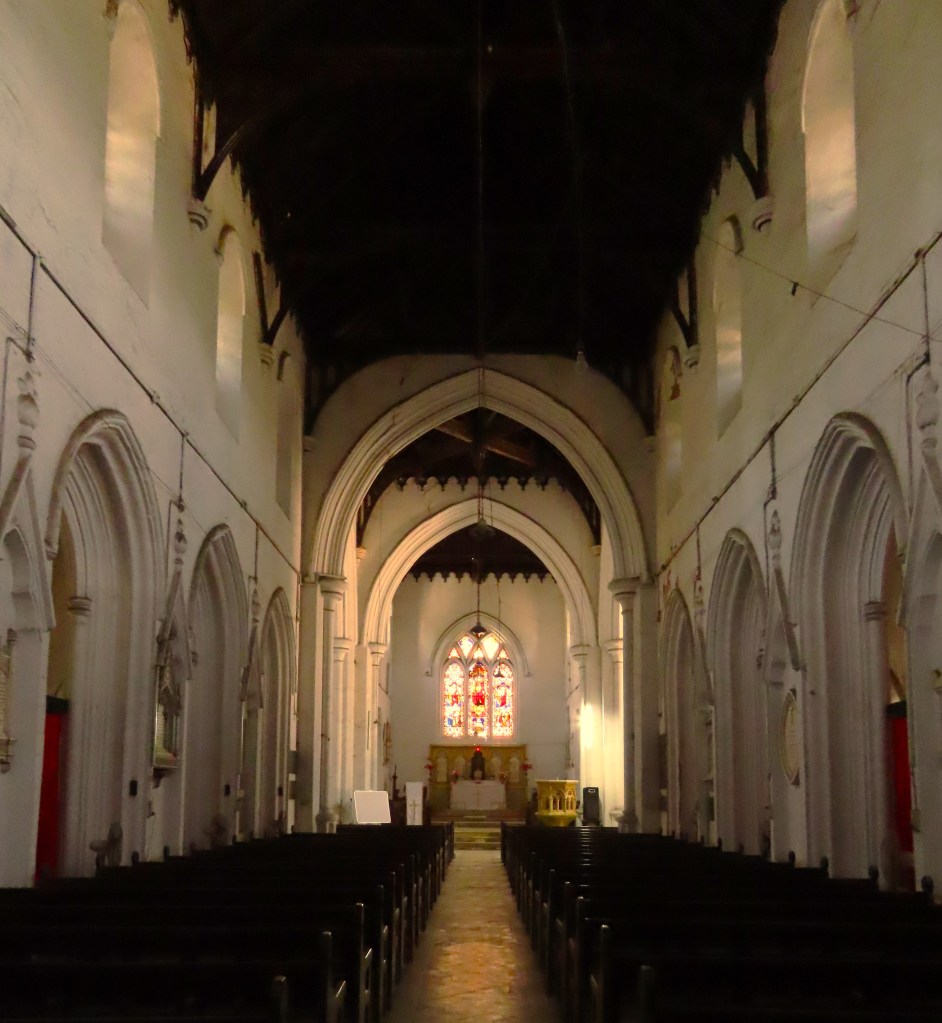
As the exterior suffered from nature and neglect, it can be of little surprise the interior has faired no better. However, despite a blanket of dust under the cold blank white of the flickering tube lights it is still possible to see how magnificent Christ Church was meant to be.
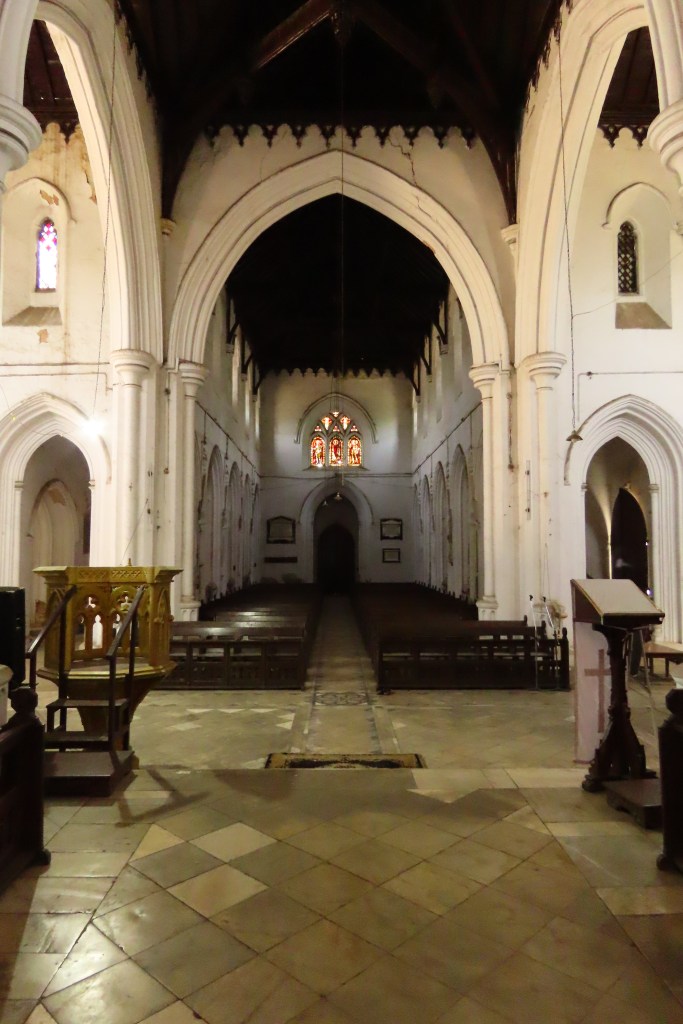
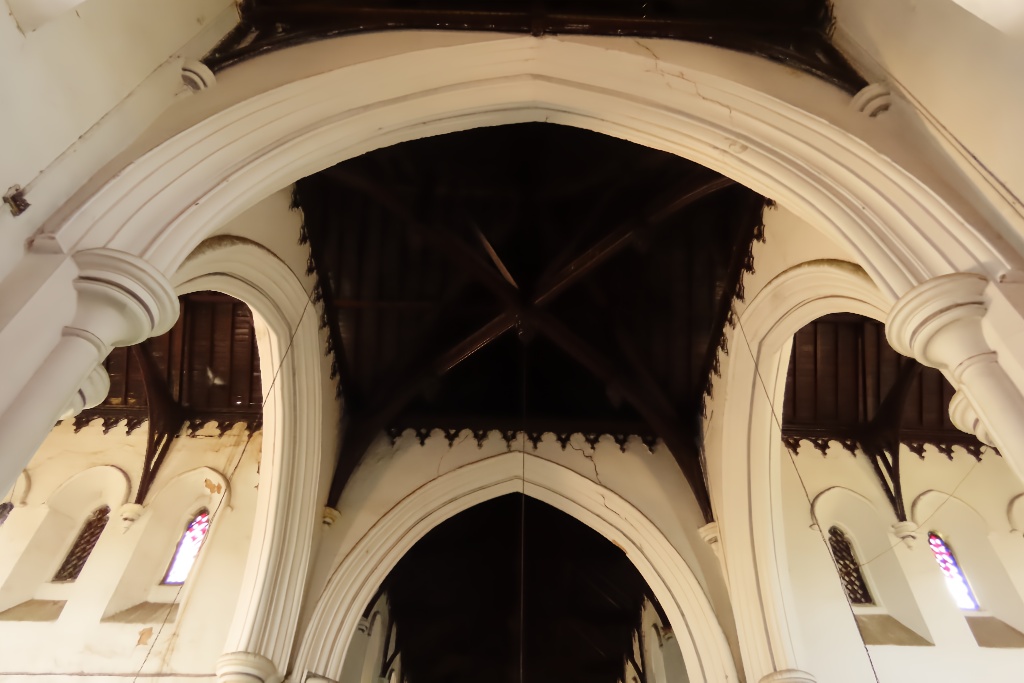
Along the walls are marble plaques, some nearly too faded to read, and brass ones, unpolished and dull. Many of the names, however, are hauntingly familiar.
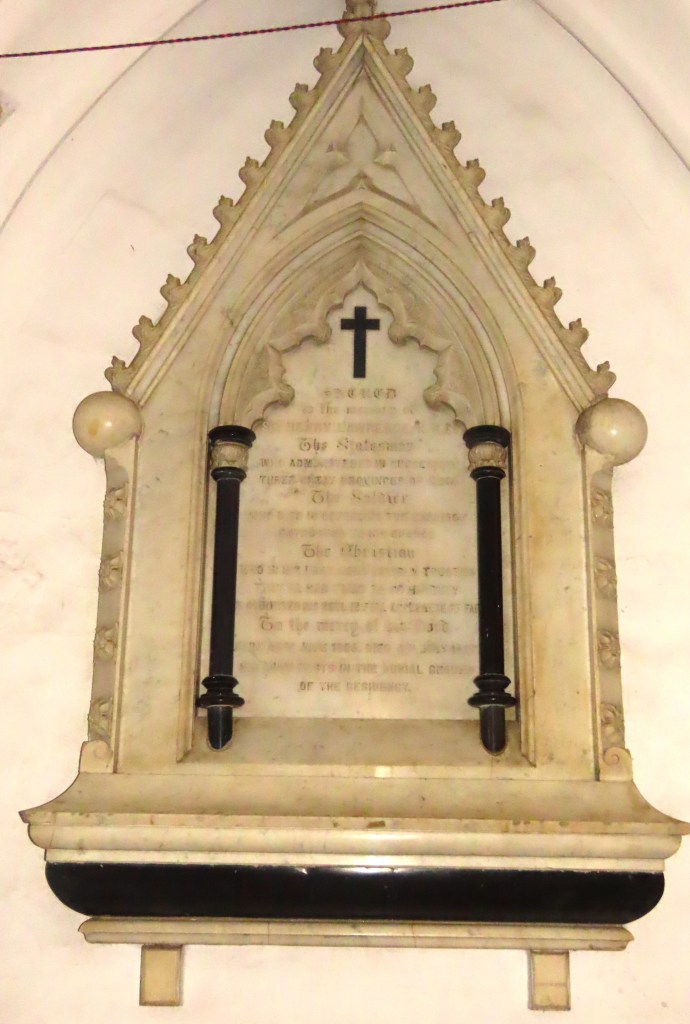
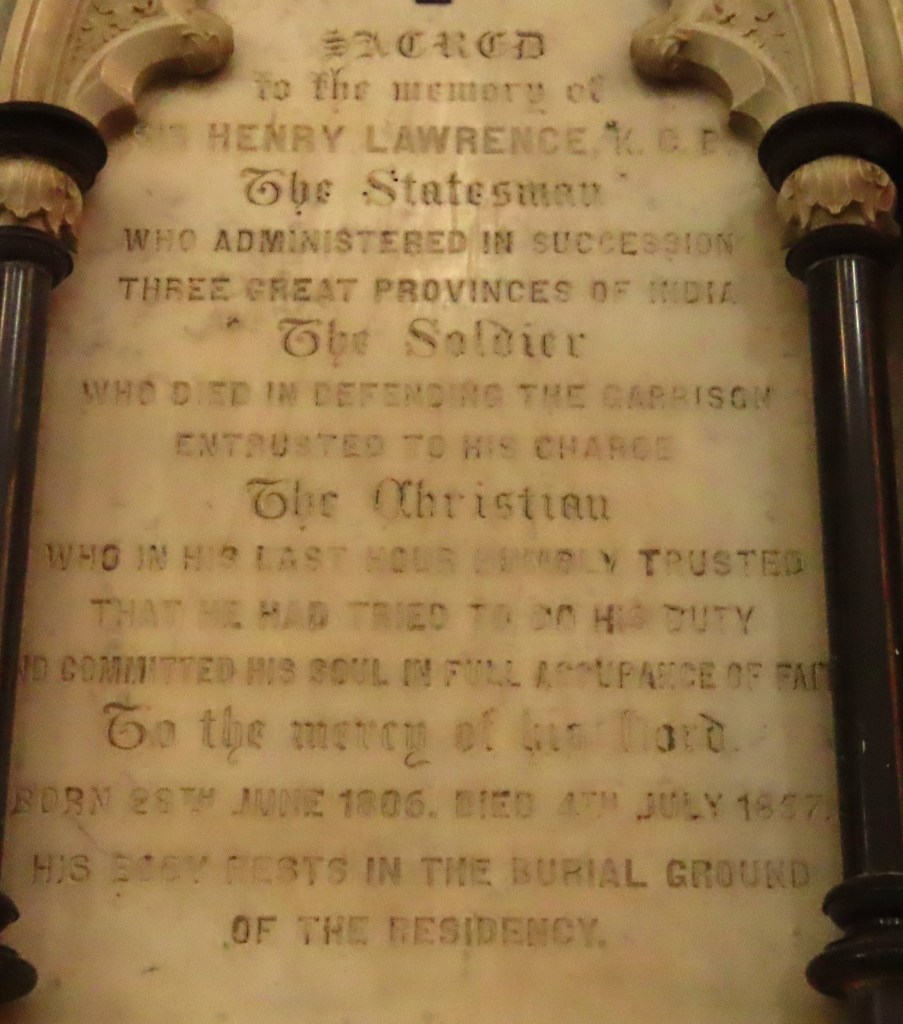
Designed almost like a church of its own, is the memorial to Sir Henry Lawrence. While his grave at the Residency bears testimony to the simplicity of his nature, his commemorators decided he deserved a far wordier epitaph.
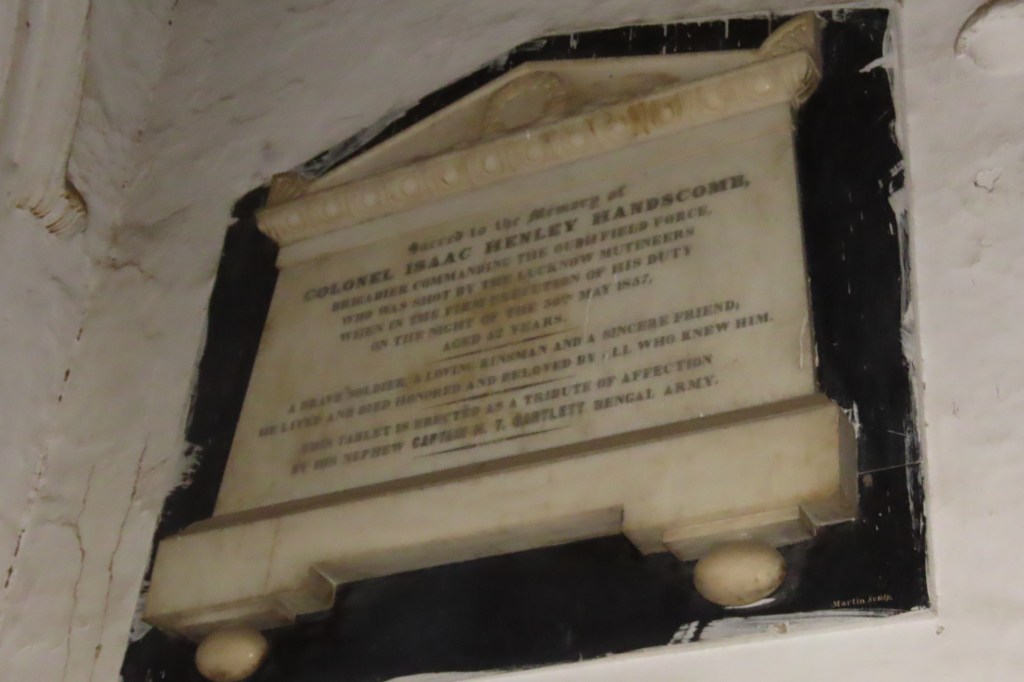
Colonel Isaac Henley Handscombe, was killed by his own men on the 30th of May, 1857. He was
“…was shot dead when imprudently venturing down the lines.” (Julia Inglis, Siege of Lucknow, a Diary, May 31st, 1857) It was, however, somewhat worse than just imprudence.
The first to advance had been Brigadier Handscombe of the 71st. Warned not to approach the lines, he was still determined to meet his men. With him went a company of the 32nd. The night was dark, and save the light from the burning bungalows, only the flashes of the mutineers’ muskets broke through the night. The order to fix bayonets was given and the Europeans prepared to charge. Handscombe hesitated to give the order.
“Do not fire,” he pleaded.” You might kill friends!” Leaving the 32nd behind, Handscombe rode alone into the lines of the 71st hoping above hope he could bring his men to reason – a moment later he fell from his horse, shot dead. (Excerpt from “The Lucknow Residency – a Story of 1857”, as yet unpublished).
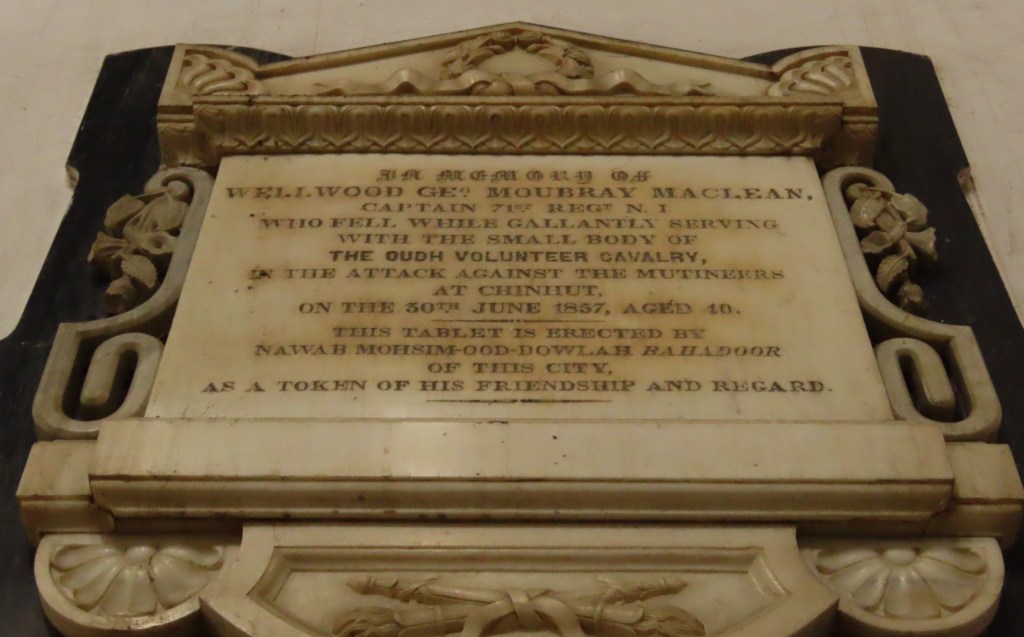
There is but one memorial to Chinhat and it is for Captain Wellwood George Moubray Maclean, of the 71st NI who was killed on the 30th of June the memorial was erected, not by his fellow officers, but by Nawab Mohsim-ood-Dowlah, Bahadoor of the city of Lucknow.
We now enter the siege.
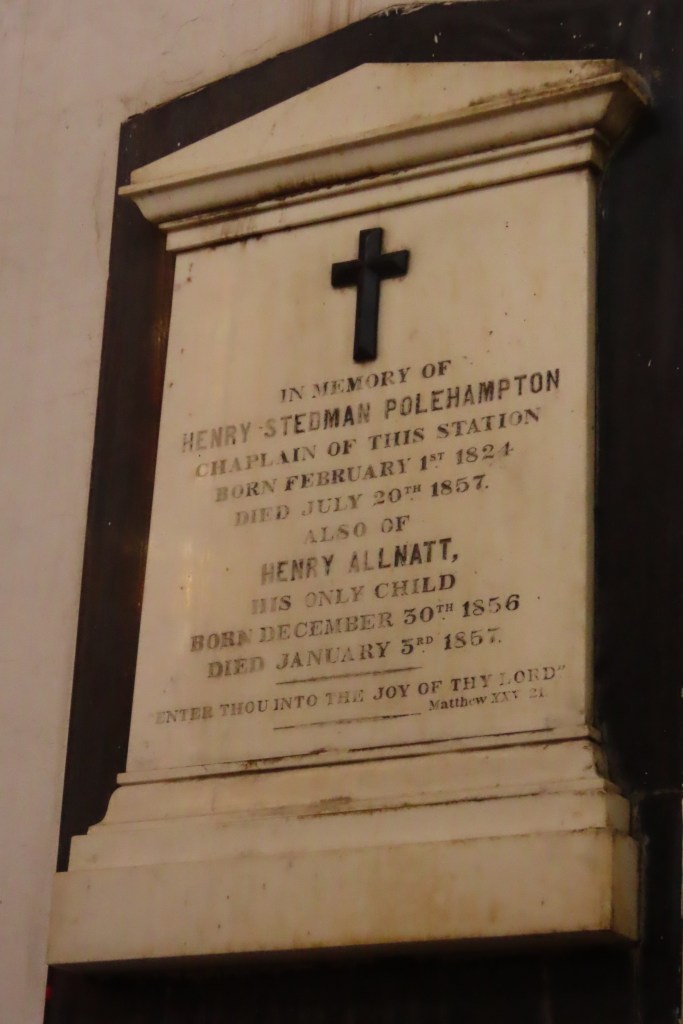
Close by we find the sad memorial Mrs. Polehampton erected for her husband, the unfortunate reverend who succumbed to cholera during the siege having survived a bullet wound to the back. Their baby boy, who lived but a few days, died before the siege commenced.
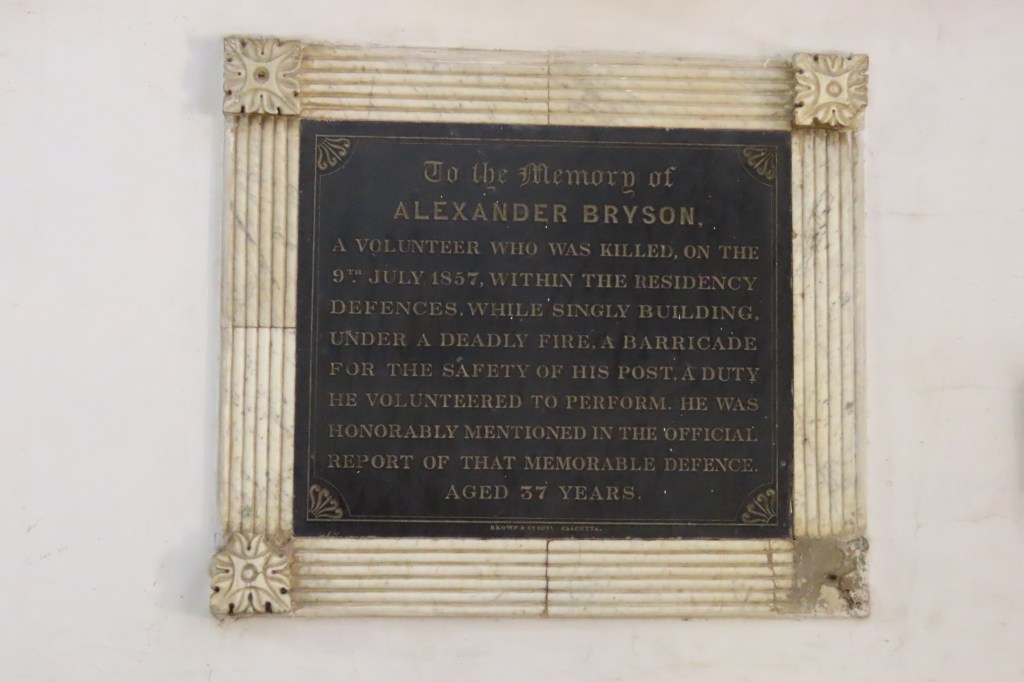
“Poor Bryson, one of my best friends here, shot dead through the head. His poor wife is distracted, and treasures up his last words. He had left her this morning gay and jovial, as he always was, and jestingly told her, when she begged of him not to expose himself too much, that the bullet had not yet been moulded that was to hit him.” (L.E.Ruutz-Rees, “Siege of Lucknow”)
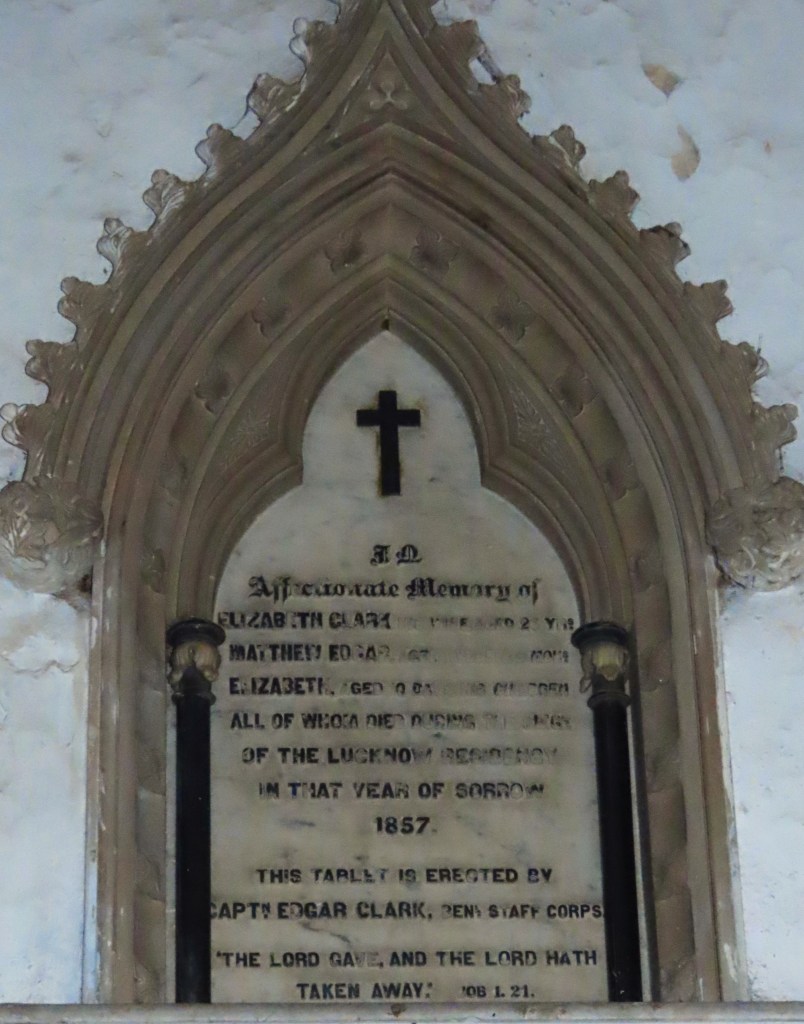
Poor Mrs. Clark. Sent from Gonda together with Kate Bartrum, she arrived at the Residency with her young son, Matthew Edgar. As the wife of an Assistant Commissioner, Mrs. Clark was given rooms in the Residency but as her delivery approached, she chose to join Kate Bartrum at the Begum Kothi, where she gave birth to her daughter on the 20th of July. Mrs Clark survived the delivery but succumbed to exhaustion and smallpox. In her final delirium, she told Kate, ” …she wanted to sit up, and asked me to bring her boxes and pack them up as she was going on a long journey and must have everything prepared. I did what she wished, sorted her things and put them back in the boxes. ” Thank you,” she said, ” now I am quite ready: the doolie is here, but the bearers have not come.” Mrs. Clark died on the 31st of July, her infant daughter, baptized Elizabeth by Reverend Harris as no one had thought to ask the mother what she intended to name her, died on the 2nd of August, a mere 13 days after her birth. Though tenderly cared for by Kate and Mrs. Pitt, Matthew Edgar never rallied and followed his mother and sister to the grave 2 weeks later.
Her husband, Lieutenant Edgar Gibson Clark, after escaping from Gonda, attached himself to the Gurkhas and on the 13th of September wrote to his eldest brother Gordon, that the Residency was still holding out but,
“I may not expect a miracle! And yet without the most marked and most merciful interposition of Providence, how can I expect to see my dear dear Wife and child again. Put yourself in my position in imagination and when we think that if not already in heaven my wife must be daily harass[ed] with anxiety trials and hardships & that in all probability she is seeing her first and only child become thinner and thinner every day and may be rapidly sinking to his grave & when one thinks of this what must his feelings be. If you can imagine them you have some slight idea of my feelings now. My poor child of whom my dear Wife is so fond on whose account I have had many sleepless nights on whose account my dear Wife from continual care and anxiety has nearly made herself very ill may perhaps now at this present moment be no more in ? may only be draging [sic] on a painful existence to ? – hereafter when the place has been relieved and all others are saved I am glad almost that I am not with my wife and Child for I think I should be driven mad by such a sight but still I feel that it would be better to be there and die myself with them rather than to live hereafter not only without them but with the knowledge of what they have undergone – For my poor child I always had gloomy forebodings but of my wife I should have none were it not that I know she expected her confinement the latter end of last month or beginning of this & how can I with any reason expect that when she is in this state with the great anxiety on her mind about her poor child and with the roaring of guns the rattling of musketry & the howling nay yelling of thousands of infernal drums almost daily taking place that she will survive every thing. No! I cannot expect it!”
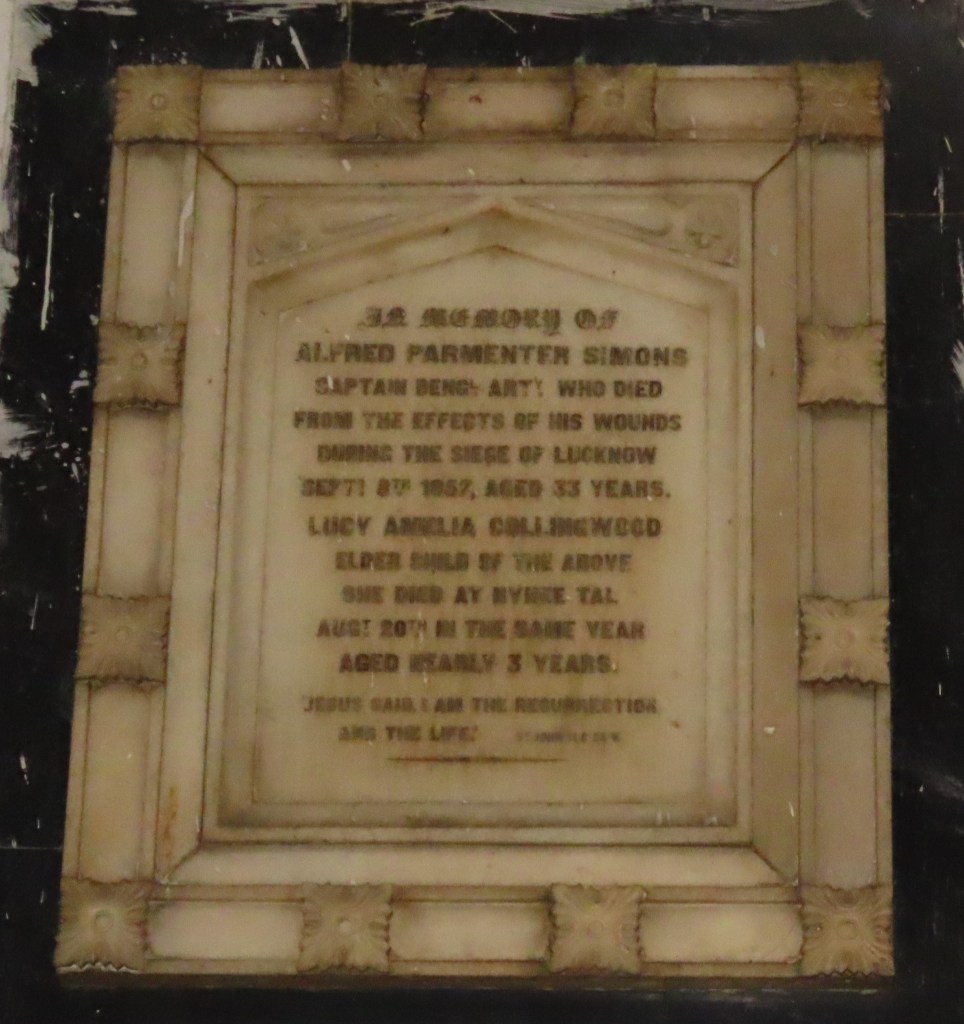
Alfred Parmenter Simons, the son of William Simons, of Hackney Terrace, formerly of the East India House staff, was born on 27 March 1824. He attended Addiscombe, from 1839 till 1841 when he was commissioned 2nd Lieutenant and sailed for India the same year. Initially posted to the Foot Artillery in January 1852 upon his arrival at Calcutta, he joined a detachment in the Upper Provinces and would find himself doing nominal duty at Gorakhpur. In December 1843, he became Lieutenant and in June 1844 was removed to the Horse Artillery, with whom he served in the Sutlej Campaign of 1845-46, being present at the battle of Sobraon. He returned to duty with the Foot Artillery in 1851, but in November he was appointed Adjutant to a detachment of recruits at Dum Dum. Promoted Captain in May 1854, he was given command of 2/4 Field Battery in August 1855, and in March 1857, ‘furnished the prescribed qualification in surveying’.
In June 1857, he was in Lucknow, charged with withdrawing the munitions from the Maachi Bawan to the Residency and then, on the 30th of June, he took part in the Battle of Chinhat. Twice wounded during the battle he still managed to get back to the Residency. Though wounded, Simons would continue serving the artillery during the siege – until, on the 7th of September, he died of the injuries sustained at Chinhat.
Brigadier Inglis mentioned him in his despatch: ‘It only remains for one to bring to the favourable notice of his Lordship in Council the names of those Officers who have most distinguished themselves and afforded me the most valuable assistance in these operations. Many of the best and bravest of these now rest from their labours … Captain Simons, Commandant of Artillery, distinguished himself at Chinhut where he received the two wounds which ended in his death.’ (London Gazette 16 January 1858). Unknown to Simons, his daughter had died at Naini Tal in August.
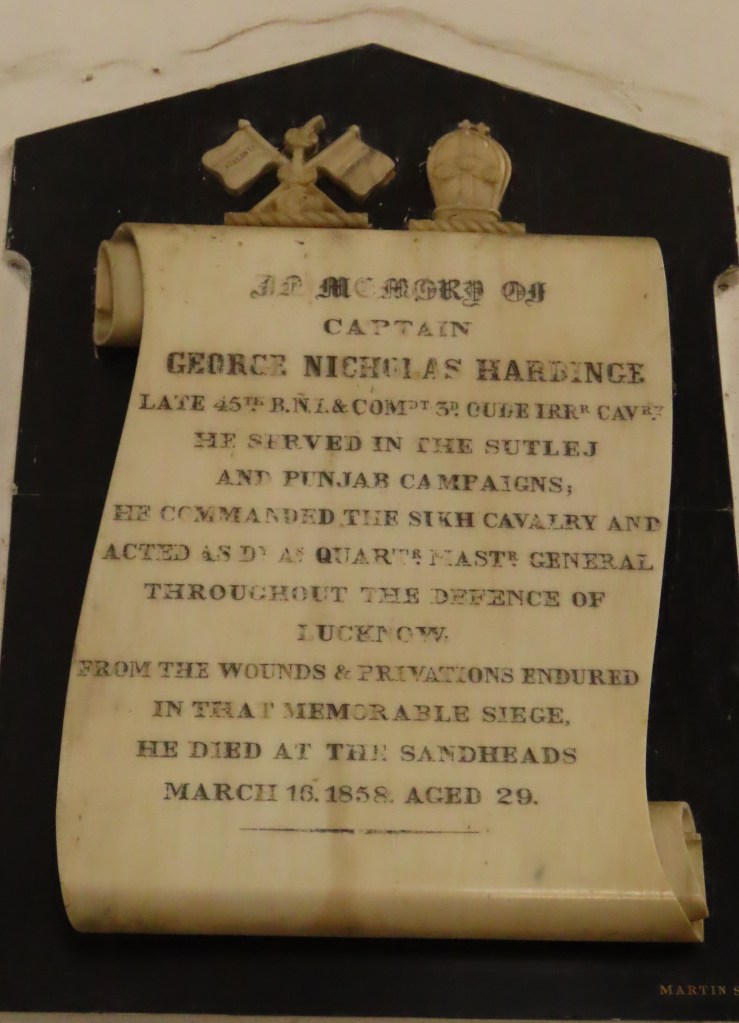
Unlike Simons, Hardinge survived the siege – but notwithstanding his fortunes, he never made it home. In the town of Bidborough, in Kent, another memorial to Captain Hardinge survives and reads thus:
“TO THE MEMORY OF/ MAJOR,/ GEORGE NICHOLAS HARDINGE,/ OF THE BENGAL ARMY,/ WHO SERVED IN THE SUTLEJ AND PUNJAUB CAMPAIGNS,/ AND THROUGHOUT THE DEFENCE OF LUCKNOW:/ FROM THE EFFECTS OF THAT MEMORABLE SIEGE,/ HE DIED ON HIS PASSAGE HOME/ IN MARCH 1858, AGED 29./ HE HAD BEEN FOUR TIMES WOUNDED,/ AND WAS ENTITLED TO THREE MEDALS;/ HE HAD BEEN HONOURABLY MENTIONED BY LORD GOUGH/ AND BRIGADIER INGLIS IN THEIR DESPATCHES, AND/ THE GOVERNOR GENERAL REMARKED IN HIS ORDERS, THAT/ “HE HAD PROVED HIMSELF WORTHY OF HIS SOLDIER’S NAME”./ HIS HEROISM, GENEROSITY, AND CHRISTIAN FORTITUDE,/ SHED A LUSTRE ON HIS LIFE/ AND CAUSED HIM TO BE LOVED BY ALL WHO KNEW HIM./ “HE THAT ENDURETH TO THE END SHALL BE SAVED”
This next one is something of a mystery. Captain Magness had been employed by the Nawabs of Lucknow and had been for some time, his name mentioned in the Tourists Guide to Lucknow – and it is hardly flattering…
“…and, at a private interview, severely remonstrated with the King, Nasir-ud-din Haidar, on his dissolute habits, and threatened to take over the management of the kingdom unless the desired reforms were effected. This was repeated in the beginning of 1835, but the warning was unheeded by the King, whose time was wholly engrossed among the five European associates of his dissipation, viz., the barber, (de Russett, whose son, a merchant of this name, was killed in the Cawnpore Massacre of 1857); tutor (Wright); painter and musician (Mauntz); librarian (Croupley), and Captain Magness.”
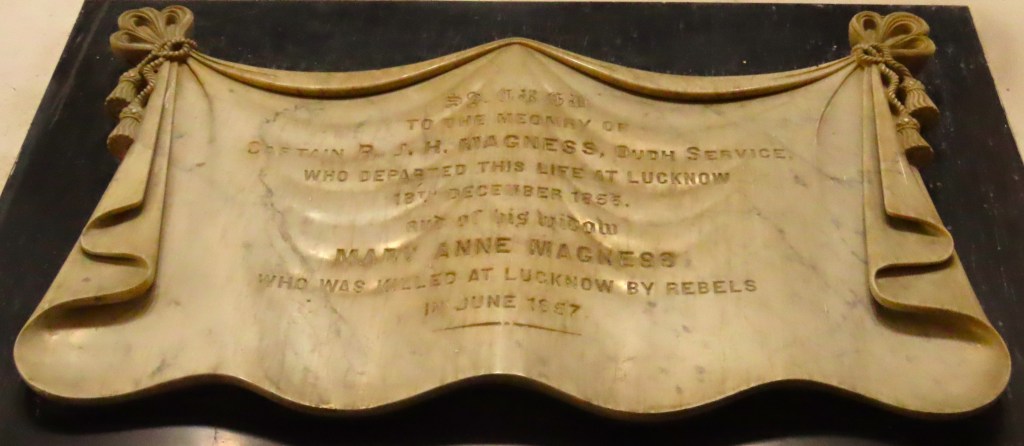
Mrs. Mary Anne Magness is not mentioned in any of the lists of those who were besieged at the Residency: it can only be deduced she was killed in the city. There is another possibility – Mrs. Magness might not have been English enough to deserve a mention. Considering her husband had been in the Nawab’s service, it is likely that prejudice simply might have played its role in her fate.
There are many other plaques, including some for the living:
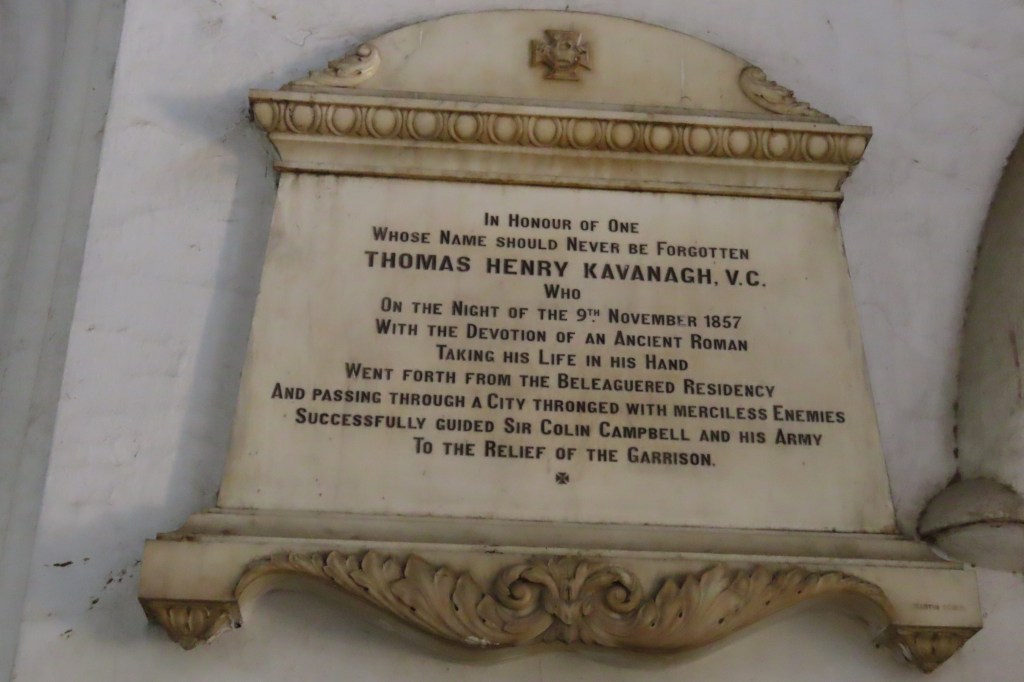
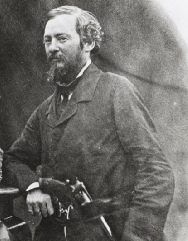
Lucknow Kavanagh would continue to blast his way through the civil service until his untimely death in Gibraltar in November 1882. His wife was the sister of Mr. Alexander Bryson who died during the siege.
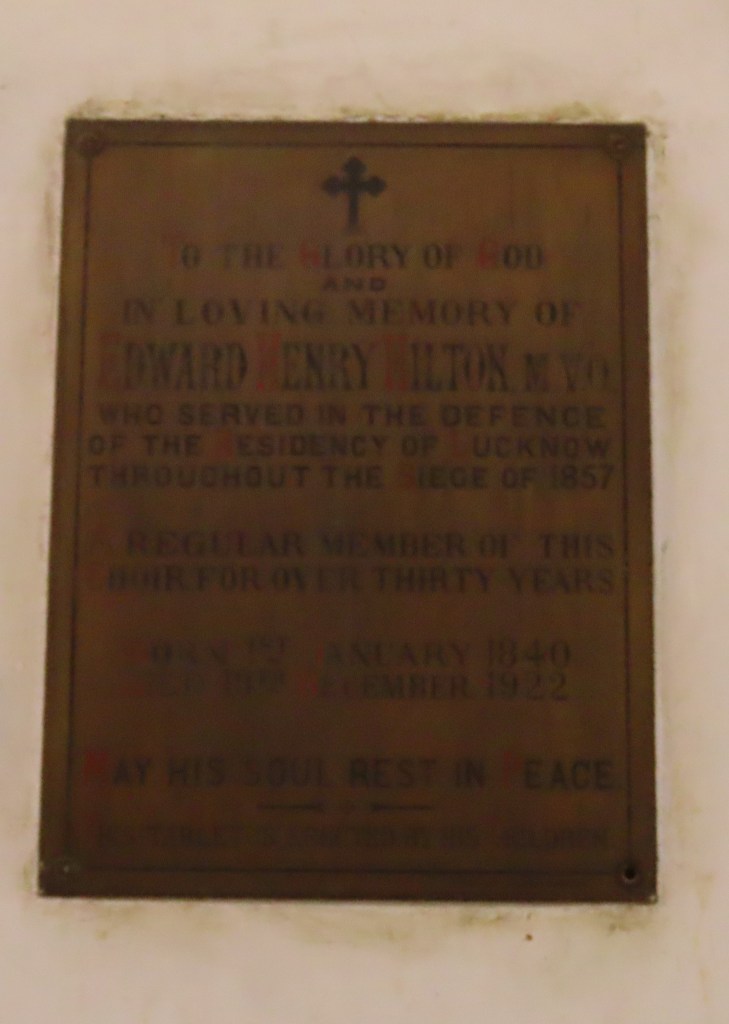
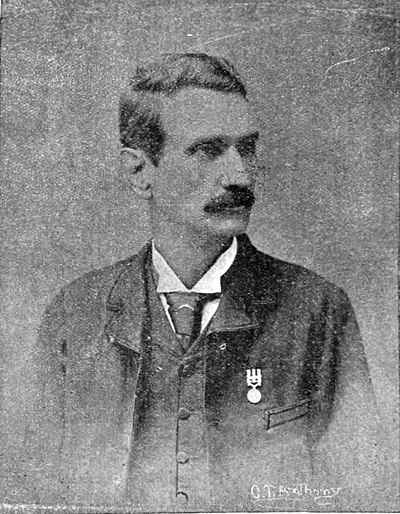
There is a small memorial to one Edward Hilton, author of A Tourist’s Guide to Lucknow and one of the Martiniere Boys. His plaque is sady tarnished but mentions he worshipped at Christ Church for over 30 years until his death in 1922.
And another for one who did not die at Lucknow at all:
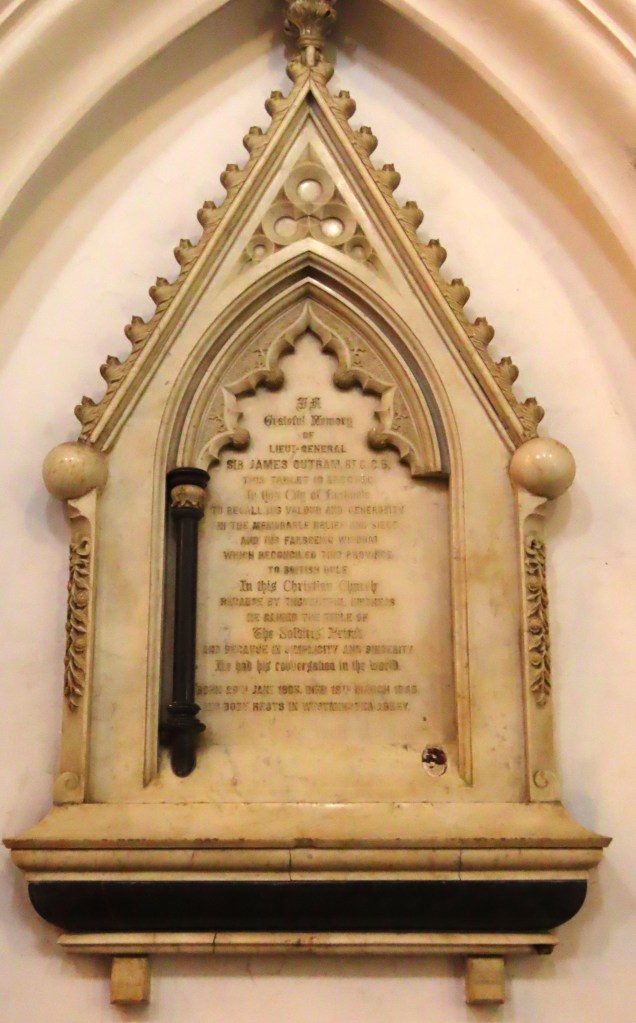
There are plaques for those who served with Outram in the 1st Relief of Lucknow.
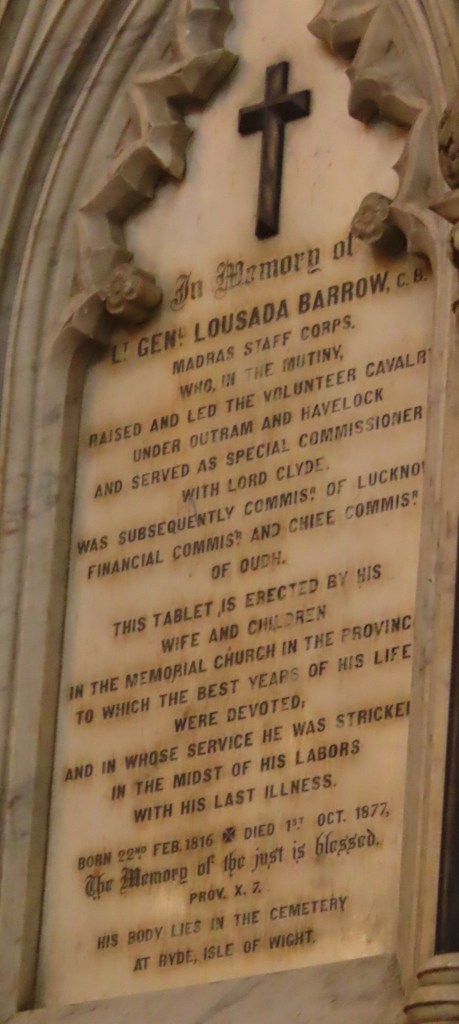
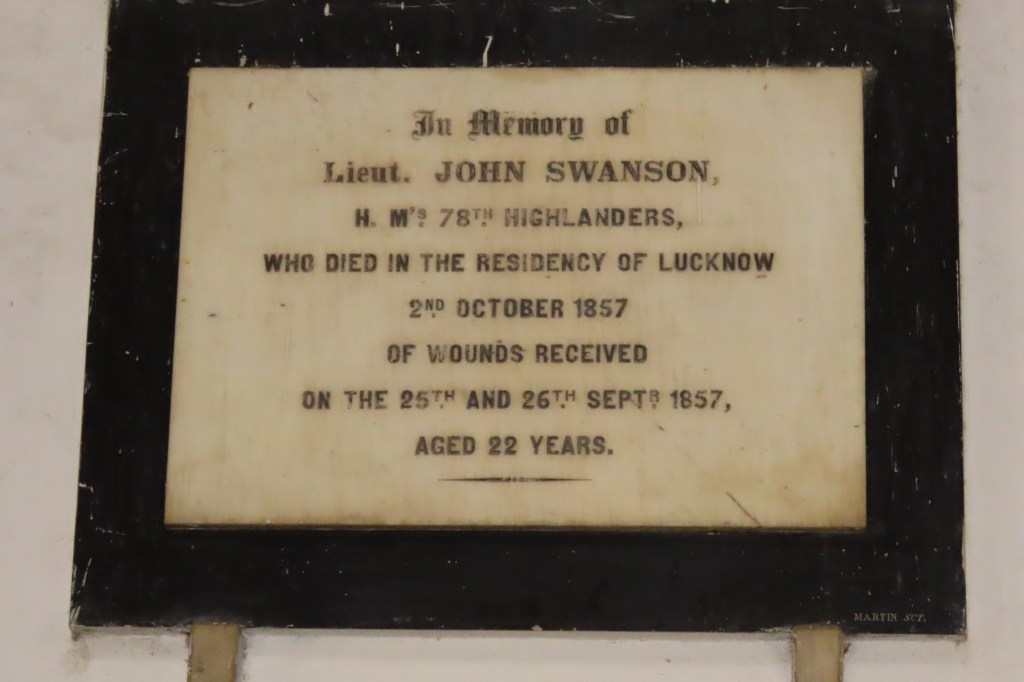
There are memorials to those who served in the 2nd Relief of Lucknow
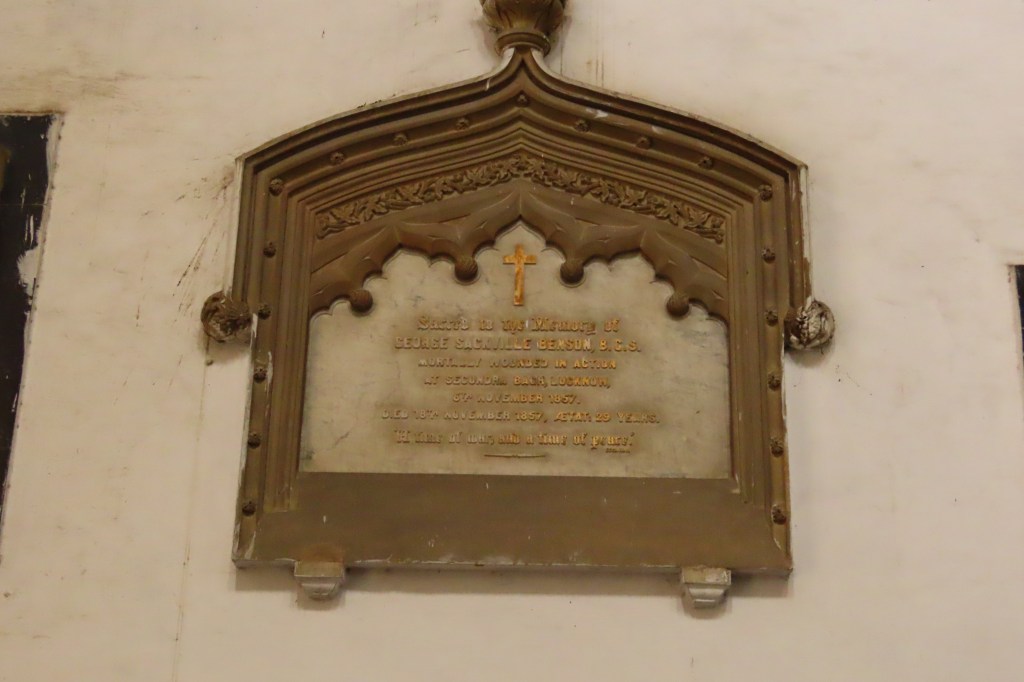
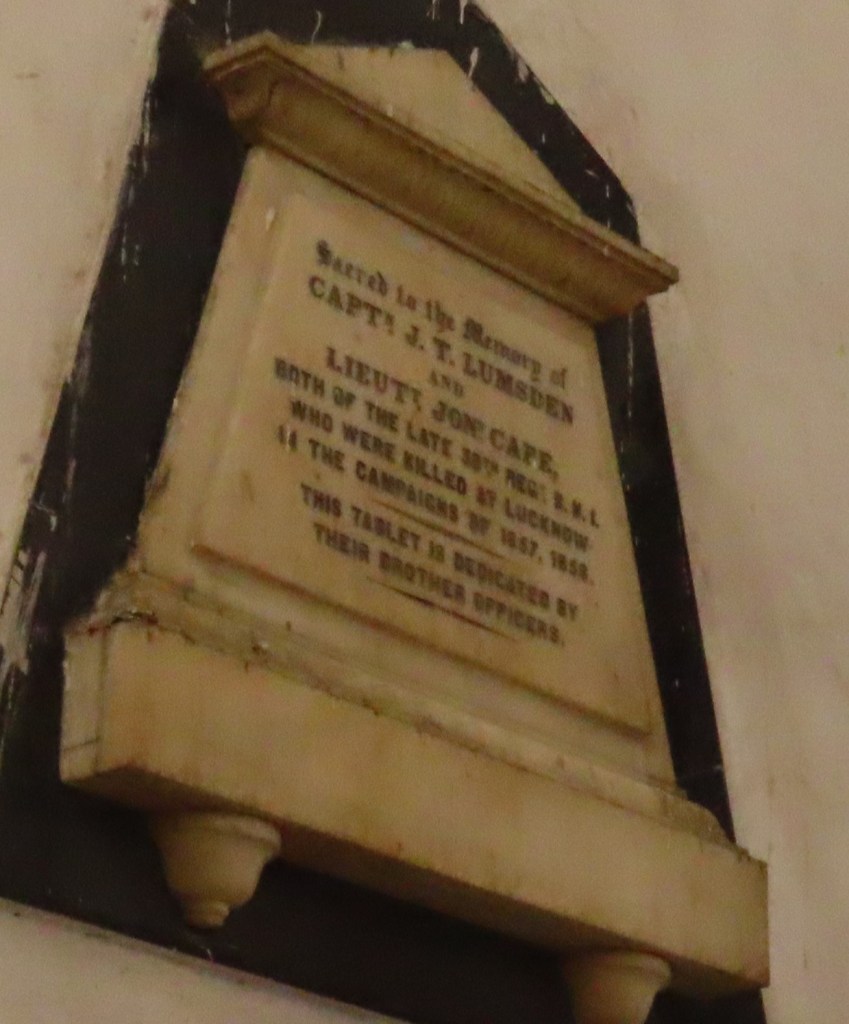
A plaque for one who died in the recapture of Lucknow in 1858 and whose grave slumbers at Dilkusha.
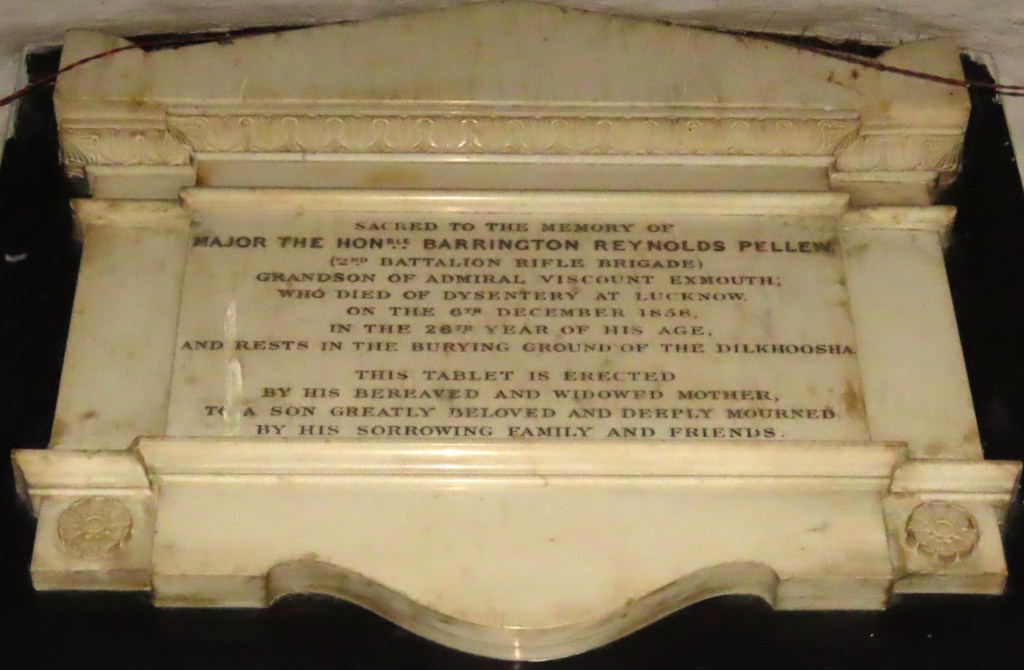
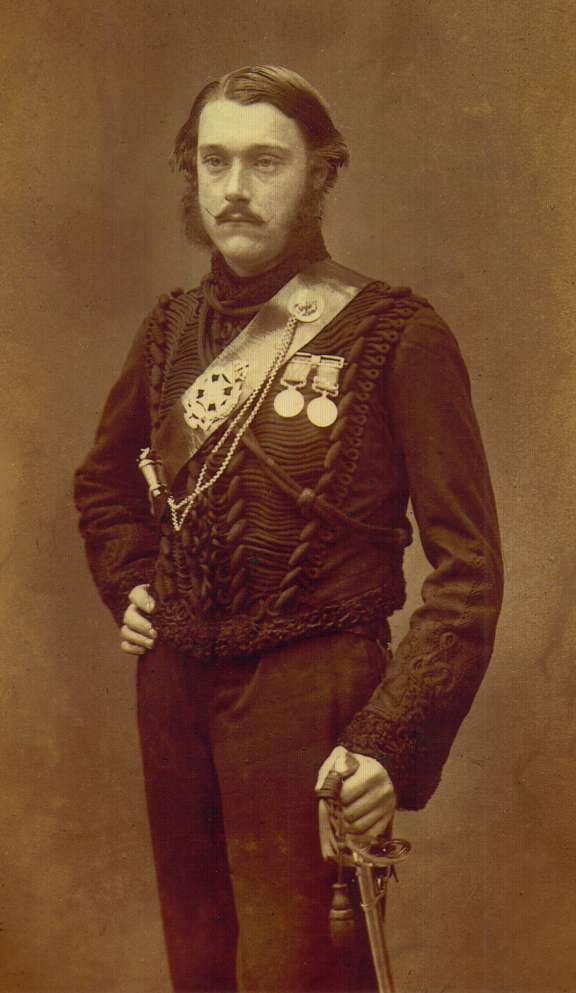
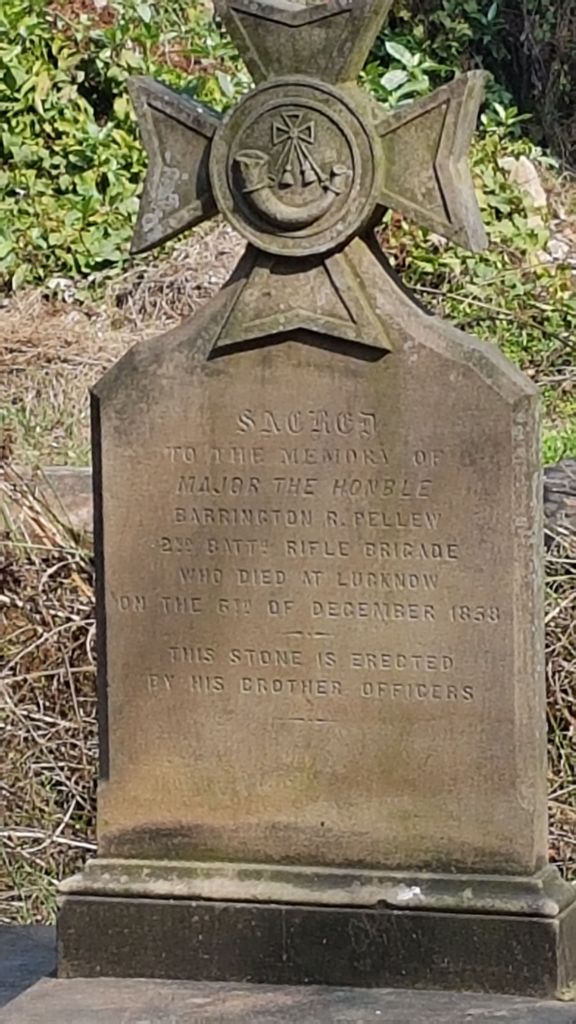
Some of the brass plaques were so badly tarnished they were all but impossible to read. All around, as one walks past the walls, the signs of decay are all too obvious.
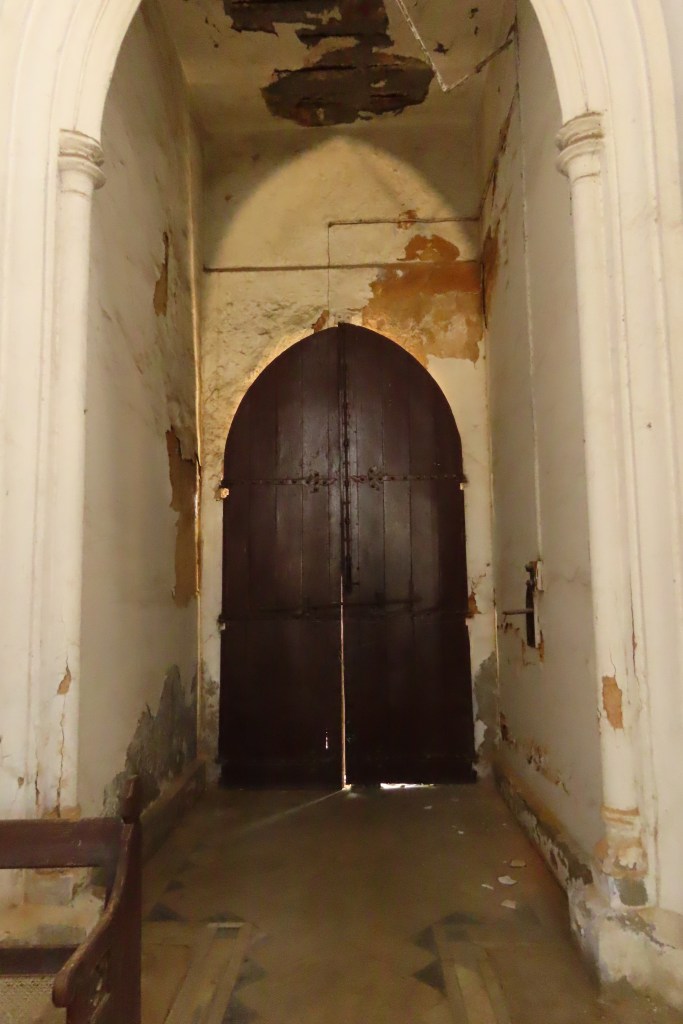
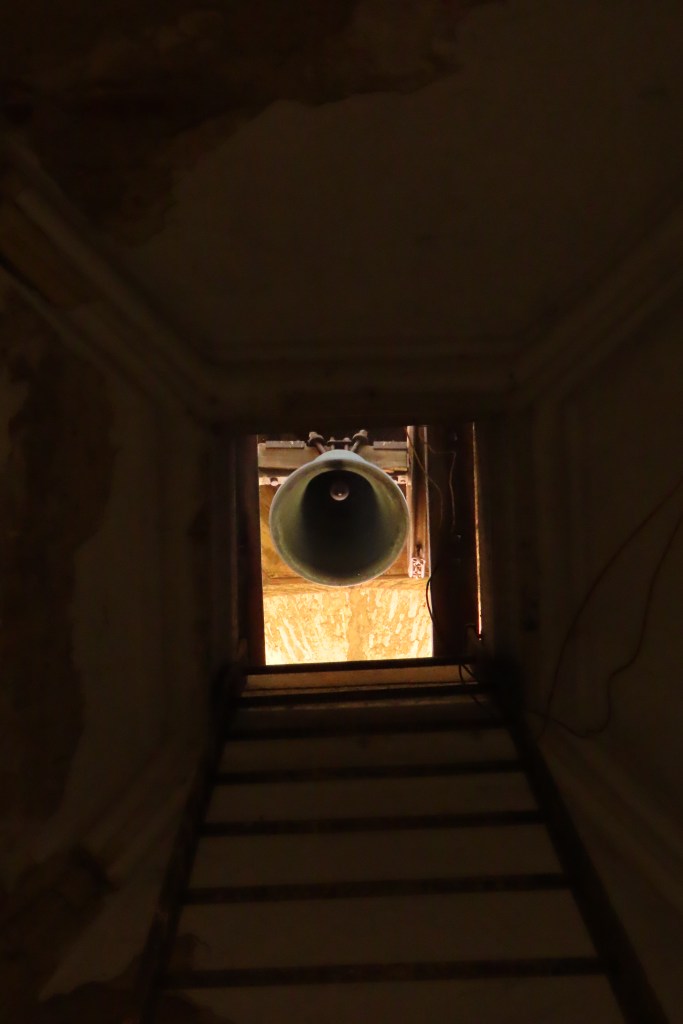
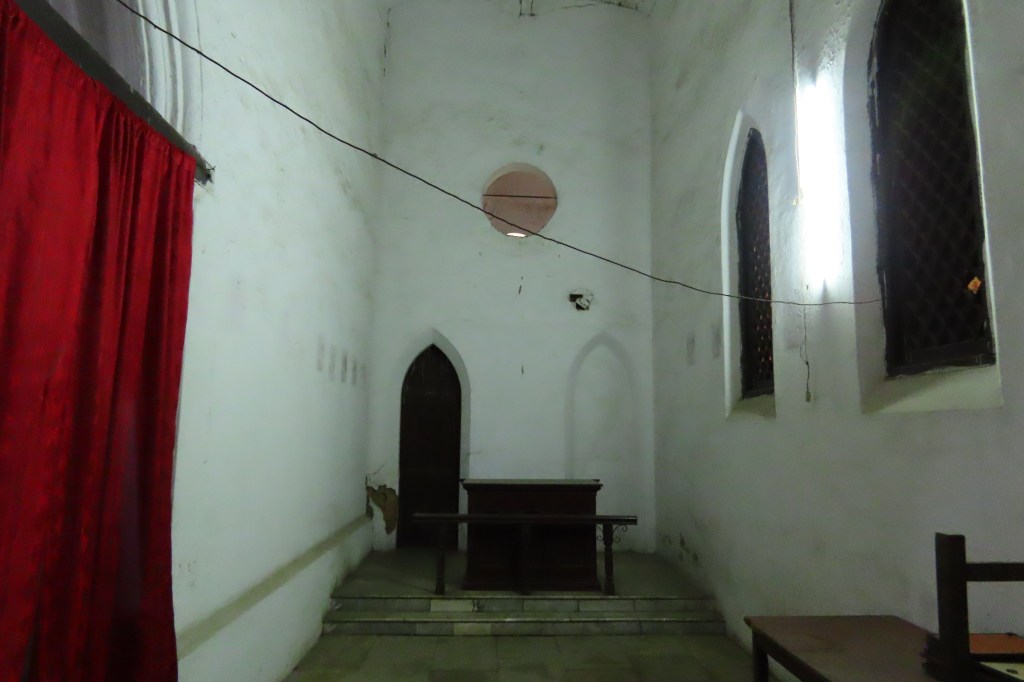
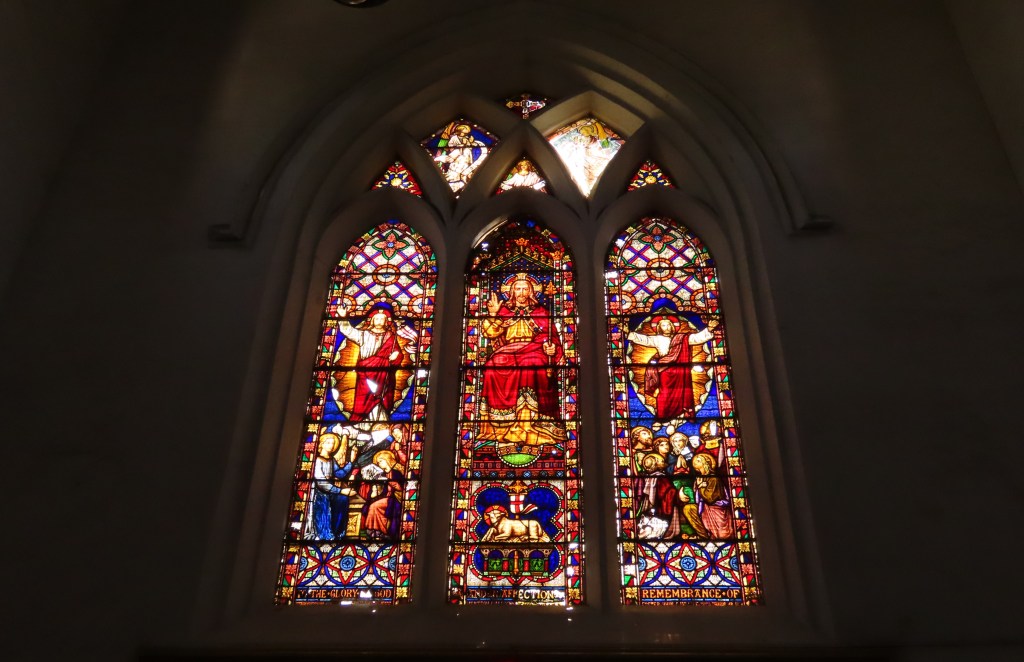
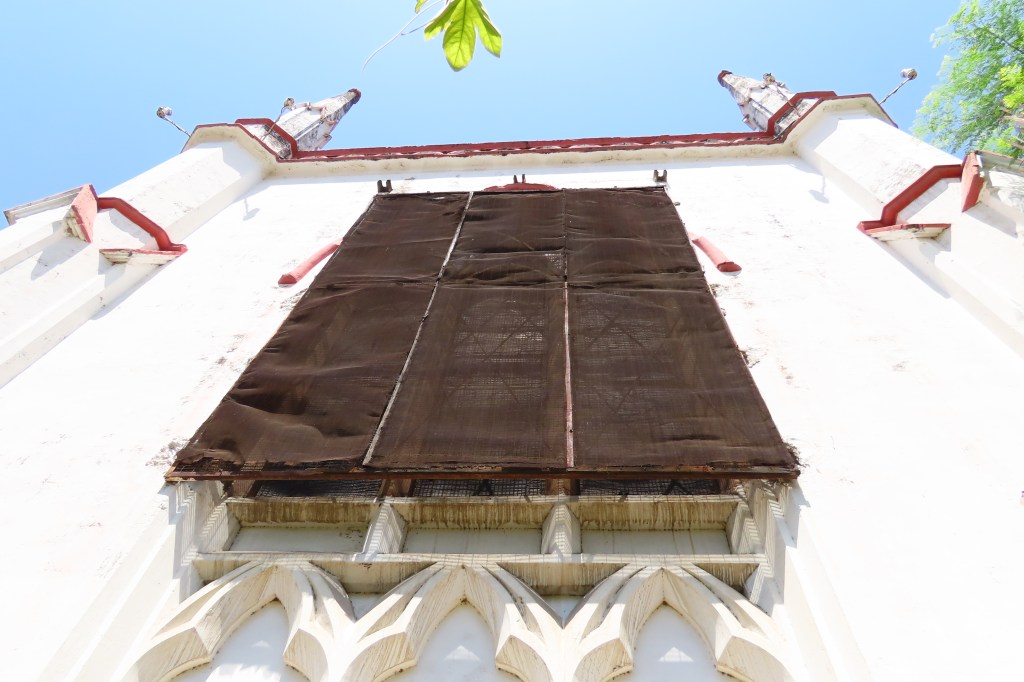
Nor has the outside fared better. This screen is all that protects the stained glass window from the elements.
I spoke to the caretaker as best I could who lives on the grounds with his family. They sleep, all six of them in a cramped anteroom in the church building. His wife cooks in a shed outside.
There are no visitors, he told me and no one, not even the priest or the congregation is interested in the building anymore – would I be so kind and give a donation? The next time I came, he said, he would polish the plaques with Brasso – it ran out months ago. He would also get permission for better lights – even he could see that photographing in semi-darkness is difficult. I left him a donation – whether it went to him or the church, is not relevant, there should be a higher power that could provide more than a bottle of Brasso to Christ Church, Lucknow.
Sources: for the Clark family: https://fibis.ourarchives.online/bin/aps_browse_sources.php?mode=download&fid=5505
 Mutiny Reflections