We left Cawnpore in the hands of Sir Colin Campbell, the Alambagh under the care of Sir James Outram and Lucknow in the hands of the rebels. Hope Grant has chased the rebels off, Bithur has been razed to the ground, the treasure dug up, pulled up and handed over, and Lieutenant Alexander of the 93rd grumbling.
Alexander felt he had much to grumble about.
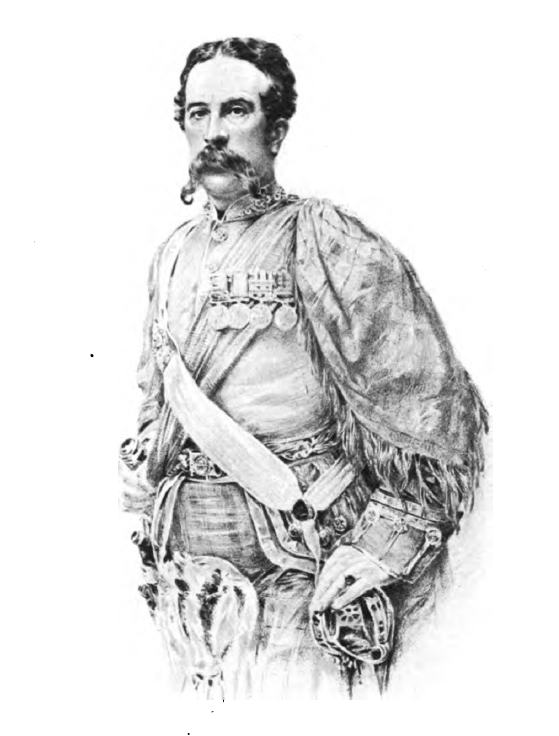
“My countrymen of today will scarcely believe that the Calcutta Government, on behalf of the East India Company, claimed the treasure on the plea that it was what had been carried away from Cawnpore by the mutinous Sepoys when they broke into open rebellion; whereas, in addition to the coin being from native mints, it was notorious that the Government treasure had been promptly divided amongst the rebels, the day the Cawnpore treasury was looted. The plate and other valuables were also claimed as Government property, the troops receiving nothing, except a second lesson in the shabby bad faith of the local Government, plus, on this occasion, twelve days and nights’ hard labour!”
Unfortunately, this would have repercussions, most severely felt in Lucknow in the not-so-distant future, but for now, the treasure, whatever there was of it at Bithur was safely tucked away in someone’s coffers. Alexander, although heartily fed up with this second classmanship, was trying to find a way to spend his time. He spent Christmas Eve in an outlying picket in the ruins of the Nana’s temple — it was hardly the only picket. To ensure no one would even consider making a return, Bithur had strong day and night pickets in the town, while Cawnpore was well encircled by them. The local population was starting to show themselves again and the camp, which had before found it impossible to find servants, was suddenly flooded with them. The villagers were returning to the markets and fresh supplies such as milk, butter, eggs, and vegetables were making a welcome appearance. Officers who had the foresight to bring their hunting guns with them could now be seen traipsing about the countryside chasing the abundant game — deer, hare, geese, ducks, and sundry other fowls now had to worry about their lives, while pig-sticking presented itself for the braver riders. Major Anson found he did not have much appetite for blood sports, but found a good game of cricket did much to raise his flagging spirits.
“I happened to have a good innings, forty-five, and enjoyed the game exceedingly, but there is no pleasure without pain, for I got two severe blows on my right leg, and suffered horribly from cramps in both legs nearly all night. I was obliged to call the bearer in to shampoo them. We had only one innings, and the 9th Lancers have scored 190 to the Artillery’s 140.”
However, he had other worries. The Highlanders had discovered a penchant, in their boredom, not just for a drink but for a little pillaging on the side. He had seen them on the line of march falling out and pillaging some mess or an officer’s hackery, now in Cawnpore, they took a particular delight in raiding Anson’s buggy. It was the symptom of a worse evil.
Mowbray Thomson, recently placed in charge of the new native police force at Cawnpore suddenly had his hands full keeping unruly soldiers in order; it went past pillaging mess carts and devolved into full-scale murder. A tent maker in the bazaar, named Choonee Lal who had never given anyone any offence and throughout the mutiny remained staunchly on the side of the British was basely murdered by two English soldiers for refusing to hand over the money in his shop. As he spoke English very well, he had admonished the soldiers telling them they were the protectors and not oppressors of the poor. He added, without the hint of a threat, that their behaviour would not go down well with their commanding officer. One of the men put his musket to Lal’s chest and pulled the trigger, killing him instantly. Lal’s nephew brought the body to Sherer – the magistrate – and told him the whole terrible story. Sherer’s hands were tied in military matters so he took the case to Windham. Fortunately, Windham set an inquiry in place and assured the men were not only arrested but punished.
For two bullock drivers, things ended even worse.
Sherer and Mr Gregson happened to find themselves one afternoon on the bank of the river at a point where it was overhung with a high ledge. From the ledge above, they could hear the sound of a crowd, an ugly, excited sound, so terrible, that Sherer and Gregson ran up. They found two bullock drivers who worked for the British, being manhandled roughly by a group of sailors and others. The two men were wounded and had come to Cawnpore to seek medical help – instead, they were set upon and accused of being rebels. “No remonstrance or explanation” from either Sherer or Gregson had any effect – and the unhappy men were taken to the edge of the ledge and pitched over, head first.
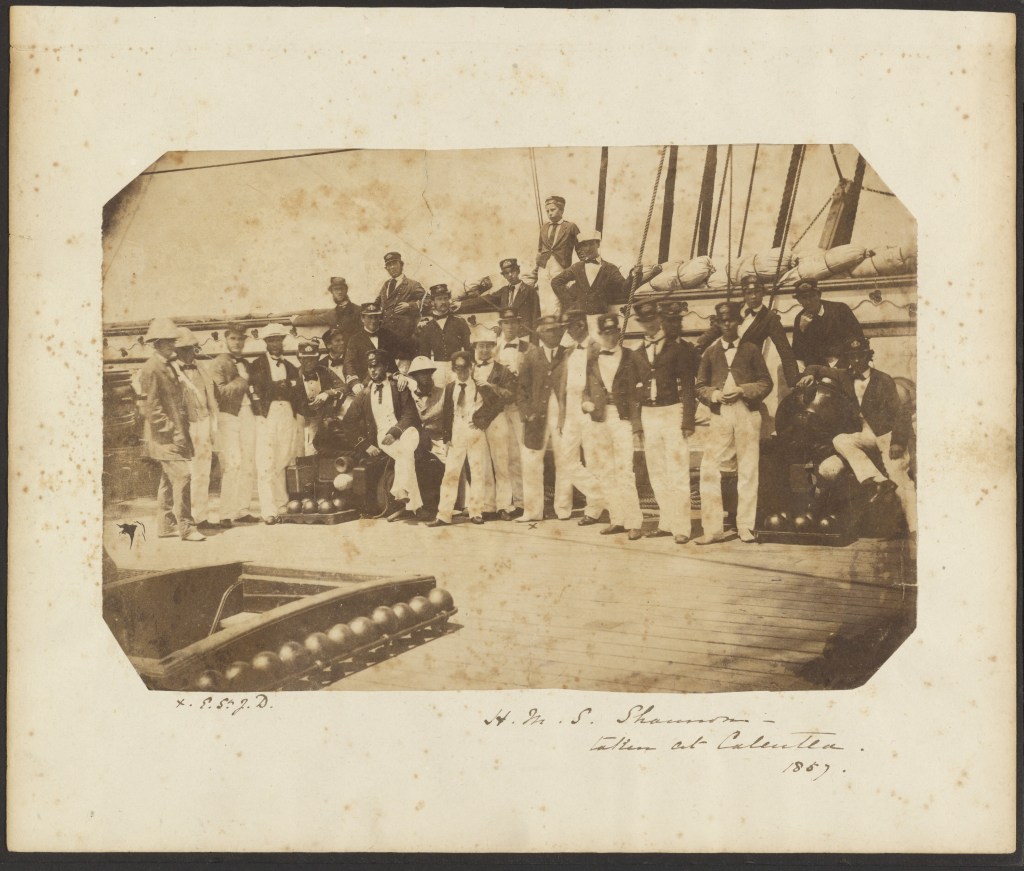
Another man, who had been in the service of Cadet Watson of the “Shannon” until the Campbell retook Cawnpore, was attacked and accused of being a sepoy, simply because in the minds of his attackers, one of whom was an officer, he looked like one as he was tall and wore a moustache. The officer refused to listen to his pleas and would have shot him had he not pulled out a leave certificate Wilson had provided him with to prove his identity.
On the 8th of December, Peel ordered one of his men flogged for stealing money from an officer – it was the first case of flogging in their crew since the Shannon had been commissioned.
All about the town, the soldiers roamed, demanding women give up their jewellery by pointing their rifles at them; local men complained of abuse and threats, others, that their stores were plundered and the soldiers beat them. Following the flogging of the sailor, Sir Colin Campbell ordered the entire camp to muster every half an hour and over the next days, until he finally left Cawnpore roll call was ordered every two hours with two parades a day. The provost marshals were enjoined to keep the unruly men in hand and if necessary, not to spare the rod. After months of being under fire, of living by the skin of their teeth, it seemed as if the soldiers had gone mad. To get an idea of what was happening, we can look at an account from Watson:
December 21st, Monday.- Our routine was altered today, and we had drill at 7 o’clock this morning, and our usual parade at 10 a.m. Spies are continually being caught in our camp, and our sailors have occasionally found out some of them, although a good many are brought up on suspicion, even if they had only been examining our guns and something of that kind, but they are always tried in a sort of way, and if they are innocent never get anything done to them. One of our men traced a native right round the camp and watched and dodged him wherever he went, and as his movements gave him suspicions, he collared him, and the man was proved to be a Sepoy by a magistrate, some of whom are encamped with us.“
Reverend Mackay complains heavily of the behaviour of the men, officers and soldiers alike. He witnessed a young officer hitting a woman with a cudgel because she did not turn the bullocks fast enough for his liking on the march to Bithur, while his servant refused to remain in Cawnpore after being beaten up by soldiers for no reason at all. Had he had any authority, Mackay would have liked to suggest giving the men more coffee and bread and less grog – but there was little he could do. He would have been gratified to know that Brigadier Inglis, left in charge of Cawnpore with the 32nd Regiment, made it a point to torch every single countryside still that brewed cheap alcohol – bought freely by his soldiers – without firing the villages or hanging the inhabitants. Shortly after Campbell’s departure, under a new and more just leadership, Cawnpore began to settle down but decades later, travellers to the city would still remark on its melancholy atmosphere.
The Plan
Sir Colin Campbell, hampered by a lack of carriage, could not leave Cawnpore as yet, but that did not prevent him from sending others in the advance. He had been using the time to mature his plans and his first port of call, as soon as he could get out of Cawnpore would be to march on Fatehgarh. As it was midway between Allahabad and Delhi, capturing it would give the British complete control once again over the Doab. He would then be free to move on Rohlikhand before returning to take Lucknow. Flying columns, operating in “minor places on the left bank of the Yamuna” and to the east of the Allahabad, would hopefully prove sufficient to stamp out the last embers of insurrections.
News of Seaton’s march from Aligarh had made Sir Colin’s movements towards Fatehgarheasier. He directed Walpole to sweep the Kalpi road via Akbarpur to Etawah and Mainpuri, threatening not just the Kalpi rebels but also clearing them from the districts dependent on Agra. Provided everything went to plan, Walpole would then meet Seaton at Mainpuri and with their united forces would then march on Fatehgarh to join with Campbell’s force.
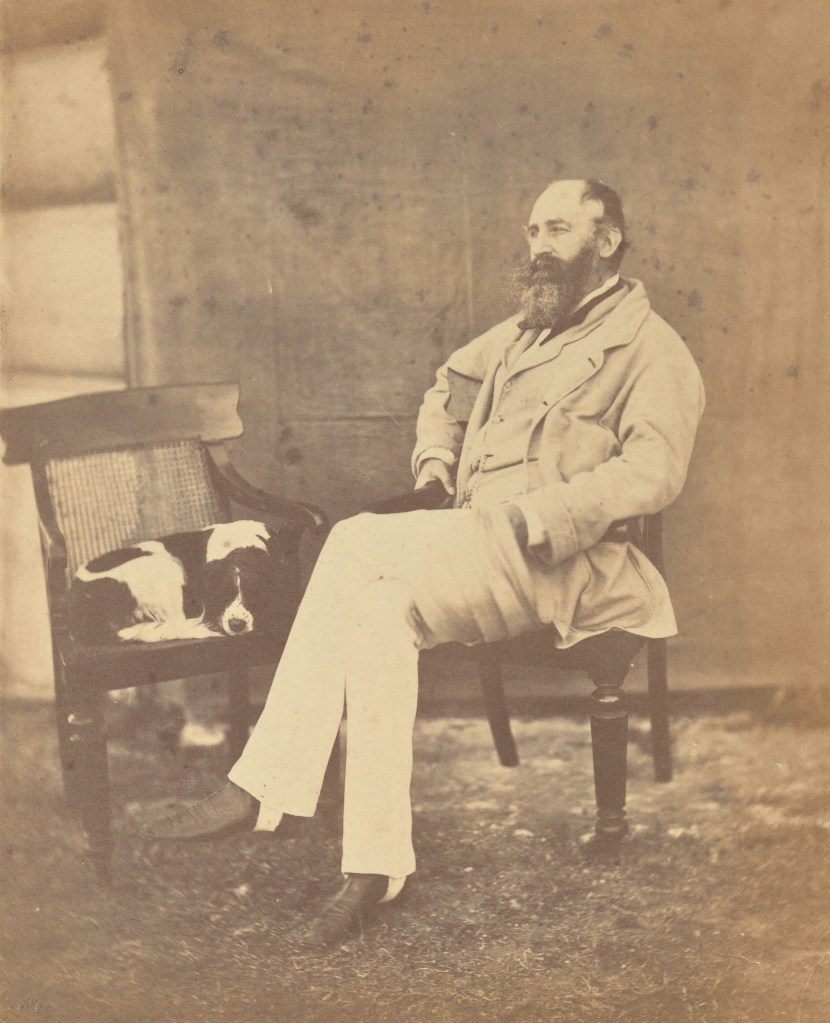
Accordingly, on the 18th of December at 10 in the morning, Walpole left Cawnpore with a detachment of HM 38th Foot, the 2nd and 3rd Rifle Brigade, Bourchier’s battery, Blunt’s troop of horse artillery and one company of sappers. It was, in Bourchier’s estimation, after all the men had experienced until now, a regular “holiday excursion.” Except for a few sepoys “who were caught and hung in the villages,” the villagers themselves were well-disposed — the recent “settling” had had the desired effect, and the population flocked to see the troops on the march. At the second march at Akbarpur, Bourchier found out, in his talks with the local people, that the town had only suffered some molestation from the Nana’s cavalry, but on the whole, they had been able to defend themselves and their property. Meanwhile, the march continued. Sports had taken the place of fighting, and it was “a real blessing to be beyond the reach of round shot and musketry, to enjoy heaven’s fresh air in peace and quietness.” In the morning, the force marched off with all their bands playing; in the evening, the officers relaxed in camp “listening to the last new opera airs just out from home.” For a full 10 days, until they reached Etawah, it was a relief to report that nothing particular happened.
Etawah presented the same bleak picture as Cawnpore. Devoid of European troops at the beginning of the mutiny, it had been held for a short time by that intrepid civil officer, Mr. Hume, until he had been forced to scarper for Agra. The church, the government buildings and all the bungalows were in ruins and the rebels had had the presence of mind, at least most of them, to leave the night before Walpole arrived. A few, however, were determined to hold on and had thus barricaded themselves in a walled enclosure, amply suited for defence. For three hours, they managed to keep Walpole’s brigade at bay, wounding several men with their muskets. The position could have been stormed, but the brigadier was desperate to avoid any loss of life, at least so early on this small campaign. As such, his men resorted to throwing hand grenades and bundles of straw were set alight to smoke them out, but to no avail. At last, it was resolved, quite drastically, to blow the place up. No one appears to have thought about ordering the men inside to surrender — but if the adage of Nicholson was still in play, the men in Walpole’s brigade believed the punishment for mutiny was death.
As such, Satchley of the Engineers and Bourchier constructed a mine on the roof using gun cartridges. The subsequent explosion caused the roof to collapse, burying the men below. Unfortunately, the men had no time to save their women and children from the unexpected blast, and they shared their sad fate. There were in all no more than 20 men in the building, and their bodies, along with those of three women and a few children, were dragged out of the rubble dead. Before the force left, the almost standard kangaroo court and the subsequent hanging were visited on several men believed to be implicated in the mutiny.
With assurances from the Nawab that he would now be able to hold his own against any straggling mutineers who might cross Etawah, Walpole moved on. Curiously, they had one staunch ally in the form of the native postmaster — he had for weeks surreptitiously been intercepting all the letters that would otherwise have passed through Etawah and meant for Campbell’s force, guarding them from the rebels by hiding them under the packsaddles of his donkeys.
There was another reason for leaving Etawah in a hurry.
As Bourchier puts it, “At Etawah we were within the clutches of the Agra Government, who apparently were in as anxious a state as when we left them on the 14th of October….a Cossid came into camp with a note from a high functionary at Agra, saying, that they were without information; that they had heard of dire disasters at Cawnpore, and if the British rule was gone, &c.: in fact, any information was better than nothing. The Cossid, with his tongue in his cheek, added, ‘But mind, the Sahib told me if affairs were not so bad not to show the note, as they would be so laughed at.’ He guessed wisely: they were well laughed at.”
The bleating from Agra this time was from the chief commissioner, demanding Walpole leave nearly his entire force at Etawah for Agra’s protection — Walpole, however, had his orders from a higher authority, namely, Sir Colin Campbell, and he had no mind to be on the receiving end of one of his commander’s famous tirades. He wisely chose to leave Agra to their own devices and moved on. Without any further incident, on the 30th of December Walpole marched into Mainpuri, to find Colonel Seaton had already left and was on his way to Bewar, 15 miles (ca. 24 km) distant on the road to Fatehgarh. The two forces finally met on the 3rd of January.
Sir Colin Campbell Leaves Cawnpore
Finally, with enough carriages on hand, everything was set for Sir Colin Campbell to leave Cawnpore. In Windham’s place, Brigadier Inglis remained behind with the 32nd and the headquarters of the 64th amply provided with artillery, if needs must. Sir James Outram continued to hold the Alambagh and as far as could be ascertained, Cawnpore was safe.
December 24th, Thursday.
This morning at six o’clock, we struck tents and set off again on the Grand Trunk Road. The noise going on when you are woke up in the morning of a march is most confusing. What with tent pegs being knocked out, camels grunting out their most wretched dismal sounds, something between a rattle, a moan, and a grunt, elephants trumpeting, cavalry turning out and saddling, horses galloping about, bullocks being harnessed in the guns, and the shouts and yells of their drivers; then if I don’t look sharp and get up, and if my tent mates (Lascelles and Mr. Bowman) happen to be very active, down comes the tent about one’s ears, and one has to bundle out, yourself and possessions, the best way you can. Then sometimes if your camel happens to be overloaded he soon lets you know it, either by refusing to get up or by capsizing everything off his back as soon as he is up. As soon as they begin to strike tents, Lascelles and I always have to go and attend on the Captain, so the servants pack the camels under Mr. Bowman’s superintendence, and often if I have to come back to our tent for anything, or pass it on a message, I see him belabouring the natives with a stick, and all our baggage in beautiful confusion on the ground. We got to the end of our march after several halts at intervals, at about half-past one p.m., having marched 13 miles. The men having been encamped for so long, were rather knocked up, so the captain intends to have more marching exercise when we are next encamped for any length of time, as it is quite impossible to keep the men in training without it .” (Watson)
With Walpole clearing the left, Sir Colin Campbell now proceeded with easy marches in the direction of Fatehgarh – he had Walpole ahead of him, clearing the left flank while he cleared his right as he marched. Christmas Day he halted at Chobipur to wait for Brigadier Grant to join from Bithur with his guns and cavalry. At the same time, Brigadier Adrian Hope and his brigade were sent off to search the ferries and ghats across the Ganges and to destroy as many boats as possible.
“December 25th, Friday.
After parade today, we had church being Christmas Day. At 12 o’clock our petty officers with the band, and some of our men, marched round our tents with some large looted flags, &c. , and made as much a day of it as they could, and had a double allowance of grog, commonly called on board ” splicing the main brace. ” In the evening our tent dined with Lieut. Young’s, and we had a very good cosy little Christmas dinner. The captain had asked us to dine with him, but Sir Colin had pressed him so much to go with him that he could not refuse. The captain’s steward made us a very smart plum pudding, and Lieut. Young’s servant, a native named Tippoo, made one against him, and I think his was the best.” (Watson)
Reverend Mackay’ chose Revelations iii:20 as part of his sermon for Christmas Day: “Behold, I stand at the door, and knock: if any man hear my voice, and open the door, I will come in to him and will sup with him, and he with me.” After the lawlessness at Cawnpore, perhaps he felt the men needed to be reminded of salvation. Only Anson appears to have enjoyed his preaching – no one else makes any mention of it for their Christmas recollections. From time to time the day was broken by the music of the regimental bands and in the evening, those “queer sailor soldiers” made a large effigy of the Nana Sahib, stuck him on a pole, lit candles around his hat and put a trident in his hand.
The next day they moved on, with every mile moving further away from Cawnpore. And yet the spirit of the place appeared to follow them – on the 28th of December, at Miranki Serai someone stole the 9th Lancer’s mess silver, never to be found again. The same day, Sir Colin sent Windham and a brigade to destroy a small rebel fort and halted for the next two days to allow Brigadier Hope’s brigade to return from their mission at the river.
December 29th, Tuesday.
This afternoon General Wyndham returned with his force. Our portion of the expedition under Lieutenant Young also returned to camp. They had a regular shooting and hanging expedition, which they described as very good fun, but they met with no resistance. They hung the chief of the village, who had assisted the enemy a great deal, and also despatched a good many other fellows in the same way. The fort they blew up, having found it deserted by the enemy. They must have gained intelligence of our sending out a force against them, as they hardly left anything behind them.” (Watson)
The next day, the camp was in a state of excitement. His arrival at 4 in the morning was a startling surprise and the name on everyone’s lips was Hodson. Like so many of his exploits, it is a thrilling tale.
What happened next will be told in:
https://mutinyreflections.wordpress.com/category/fatehgarh-1858/
Sources:
Anson, O. H. S. G. With H.M. 9th Lancers during the Indian Mutiny: The Letters of Brevet-Major O.H.S.G. Anson. Edited by Harcourt S. Anson. London: W. H. Allen & Co., 1896.
Bourchier, George. Eight Months Campaign Against the Bengal Sepoy Army During the Mutiny of 1857. London: Smith, Elder, and Co., 1858.
Forbes, Archibald. Colin Campbell, Lord Clyde. London: Macmillan and Co., 1895.
Forrest, G. W. A History of the Indian Mutiny: Reviewed and Illustrated from Original Documents. Vol. 2. Edinburgh: William Blackwood and Sons, 1904.
Gordon-Alexander, William. Recollections of a Highland Subaltern: During the Campaigns of the 93rd Highlanders in India, under Colin Campbell, Lord Clyde, in 1857, 1858 and 1859. London: Edward Arnold, 1898.
Grant, Hope. Incidents in the Sepoy War, 1857-58: Compiled from the Private Journals of General Sir Hope Grant. Edited by Henry Knollys. Edinburgh: William Blackwood and Sons, 1873.
Mackay, James [Rev. John]. From London to Lucknow: With Memoranda of Mutinies, Marches, Flights, Fights, and Forays. 2 vols. London: James Nisbet & Co., 1860.
Malleson, G. B. History of the Indian Mutiny, 1857–1858, Commencing from the Close of the Second Volume of Sir John Kaye’s History of the Sepoy War. Vol. 2. London: Wm. H. Allen & Co., 1879.
Sherer, J. W. Daily Life During the Indian Mutiny: Personal Experiences of 1857. London: S. Sonnenschein & Co., 1910.
Verney, Edmund Hope. The Shannon’s Brigade in India: Being some Account of Sir William Peel’s Naval Brigade in the Indian Campaign of 1857-1858. London: Saunders, Otley, and Co., 1862.
Watson, Edward Spencer. Naval Cadet with HMS Shannon’s Brigade in India: The Journal of Edward Spencer Watson. London: London Stamp Exchange, 1988. (Note: Facsimile edition of his active campaign manuscript initiated on August 18, 1857)
 Mutiny Reflections