Banda to Nagode and Rewa from the 14th of June
June of 1857 had broken, not with the accustomed rains but with the devil’s wind, lowing its way across the entirety of northern India. As Sherer would soon find out, there was no safety in Banda.
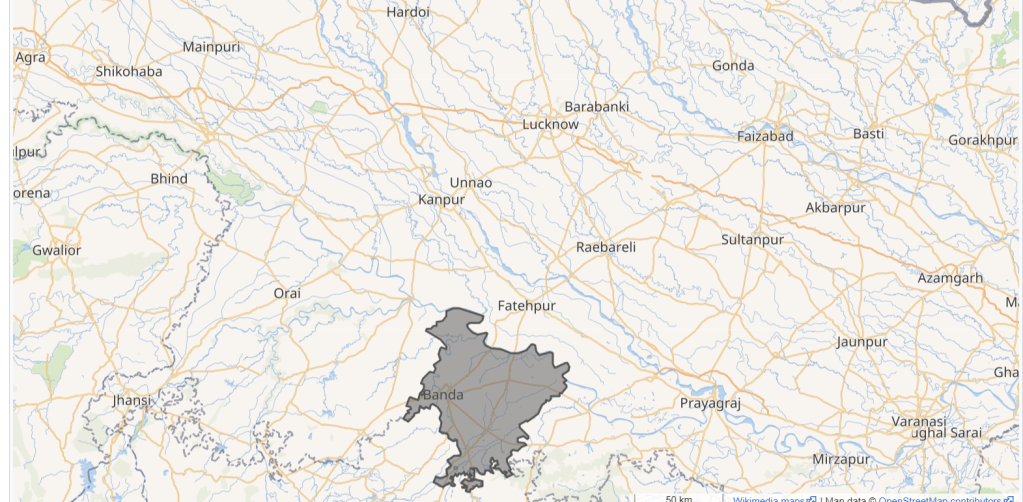
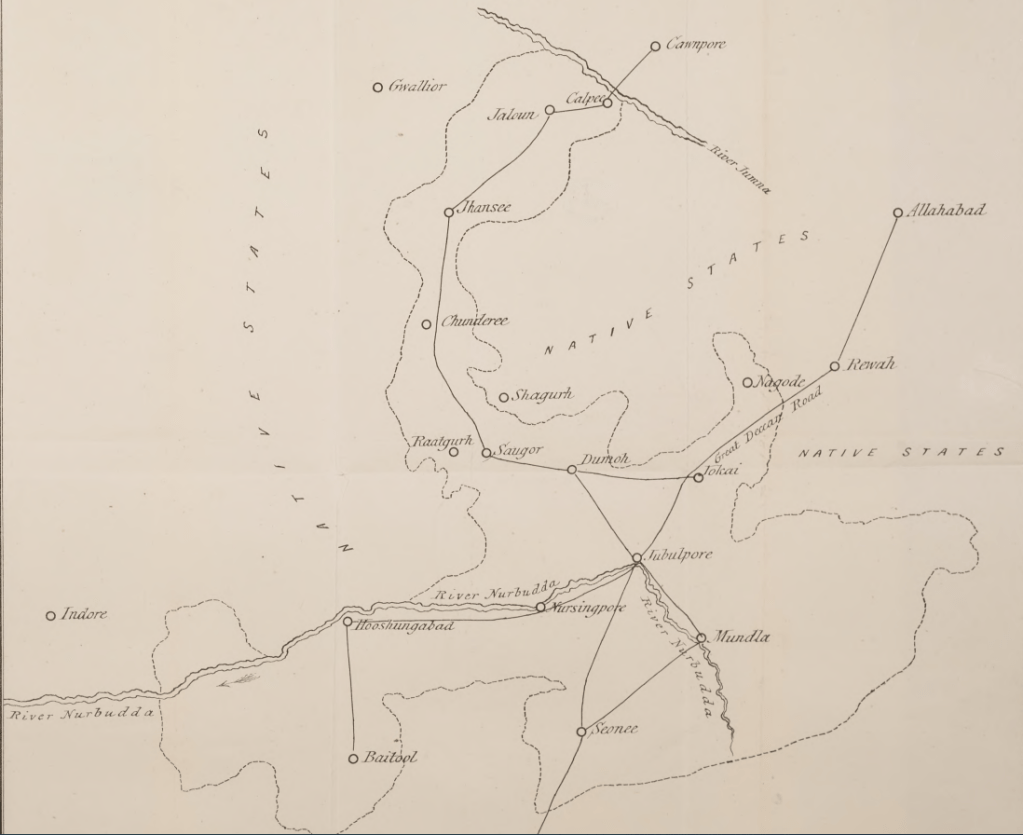
The district of Banda covered an area of no less than 3060 square miles and a population of 600’000. Purely agricultural, it was renowned for producing the finest cotton in India. Bounded on the north and north-east by Jamuna, to the west by the Ken River and the state of Gaurihar and the district of Hamirpur, the south-east by the states of Pannah, Charkhari and Rewa, while Allahabad district lay to the east. The principal town, likewise called Banda, lay 95 miles from Allahabad and another 190 from Agra. The magistrate F. O. Mayne, by all accounts an active and shrewd man, was under no illusions – he was aware that imposition of the British rules of land assessment had forced his district to the brink of starvation, and the landowners and petty chiefs were far from content. The Nawab had titular power only – and in the face of overwhelming odds, Mayne doubted he would be able to stand.
Nor was Mayne pleased with Sherer’s arrival. To assist their journey, the deputy collector whom Mayne had sent to the river to guard the Bridge of Boats had been obliged to leave his post and escort the Fatehpur party to Banda. As such, Mayne had lost his only eyes across the country; however, it is doubtful if the deputy collector could have resisted an attack by determined mutineers without losing his life. Mayne had three companies of the very doubtful 1st BNI to support him whose headquarters happened to be in Cawnpore.
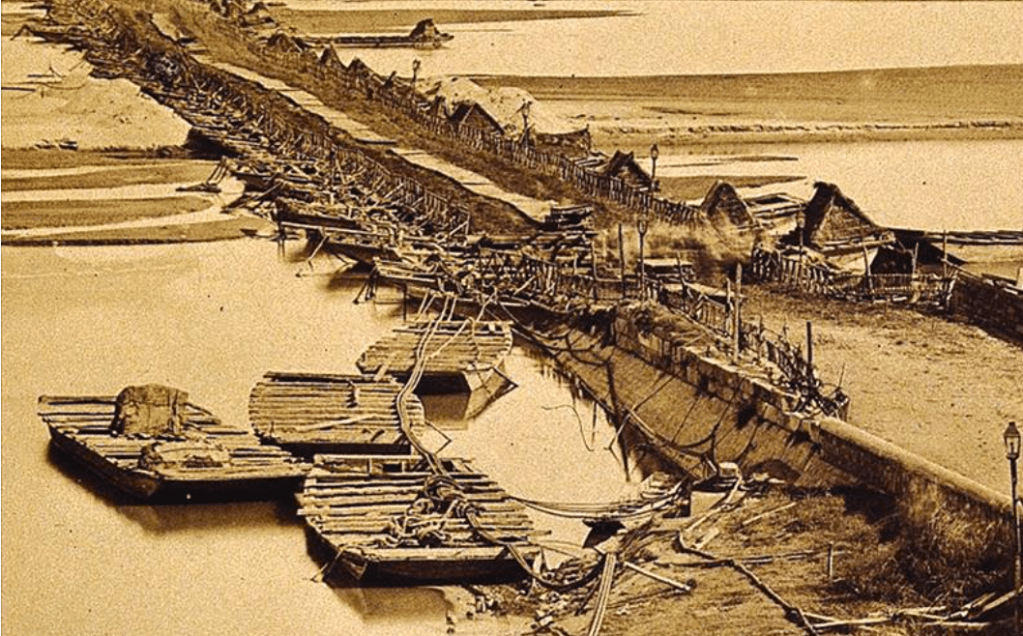
Not for a moment did Mayne take the situation in Banda for granted. As far as he could, he strengthened his police force in outlying stations, set a guard of loyal men at the ferry crossings over the Jamuna in the hope of keeping badmashes out of his district, and sent patrols of horsemen along all the major roads in and out of the town. The Raja of Ajaigarh from the neighbouring district of Bundelkund could be persuaded to send support in the form of men and horses. All Mayne could do was play for time.
The influx of a varied lot of “adventurers, goal-birds and men bent of stirring up disorder” flocked relentlessly into the district and Mayne, knowing full well his days as Magistrate were probably numbered, he employed the sepoys of the 1st BNI firstly against the intruders and then sent, under the charge of a detachment of the same regiment, some of the Banda treasury to various, safer stations scattered in the vicinity. The move worked, and for a moment, Mayne stayed the tide of mutiny in Banda.
Apprised of the sighting of a body of horse approaching Banda from the direction of the Bridge of Boats at Chillahtara, some 22 miles distant, but unaware of their identity, Mayne sent the ladies of the station into the Nawab’s protection, fearing the worst. A few of the townspeople, rejoicing in the idea that perhaps reinforcements were coming to them in the form of mutineers from Fatehpur, rose in insurrection and plundered the town. It was all Mayne could do, with his faithful police force, to restore order. By evening, it became clear it was not mutineers but the fugitives from Fatehpur.
It is no surprise then, considering the tumult they were bringing with them, that Mayne was not too pleased with the arrival of the fugitives. Allowing them a night’s rest, the next evening, he sent out a part of the Fatehpur party to patrol the city on horseback while others were sent to guard the palace. On the third night, however, a fire broke out in Banda – undoubtedly arson – but one of the officers, Fraser, managed to explain it away as spontaneous combustion, caused by the unseasonable dry weather. It was not perhaps the most satisfactory explanation but it sufficed to restore a little confidence of the nervous townspeople. Lieutenant Bennett, however, was not happy. The bungalow was situated in the lines of the 1st BNI, and it was obvious one of his men was an arsonist. Mayne concurred, and it was thought prudent to move from his house in Banda to the palace of the Nawab. Sherer provides us with a very picturesque description of their new quarters:
“You entered under a handsome gateway, and then found a large enclosure, on one side of which was one of those picturesque buildings based on Mahomedan architecture, but not devoid of incongruities and hybrid additions. There was one large hall, sufficiently enclosed, and provided with means of cooling the air, lofty and spacious, full of all kinds of old furniture, crockery, ornaments, and rubbish of different kinds. This was our saloon. Men slept in the verandah around this place, and the two ladies in little inside apartments. The imagery of that Palace was easy enough to take in at the time; but it has not been so easy to get rid of again, and I suppose it will remain in one’s mind, as long as life lasts, connected with the ideas of suspense, anxiety, and mental trouble. The nights were fatiguing, for, in addition to the heat and mosquitoes, there was constant disturbance. Chowkeedars came and bawled, sentries kept shouting out, and patrols of sowars frequently rode by. Memory recalls most vividly the ring of the hoofs, the jingle of the bridles, and the excited voices asking for and giving the passwords.”
Nawab Ali Bahadur II was 25 years old in 1857. Brought up with all the indulgences of a prince and spoiled by elderly female relations, he had grown up under the watchful eye of the British, unable to hold power beyond his own fort and his spendings were scrutinised. If he resented the British, he certainly never showed them anything but his best intentions.
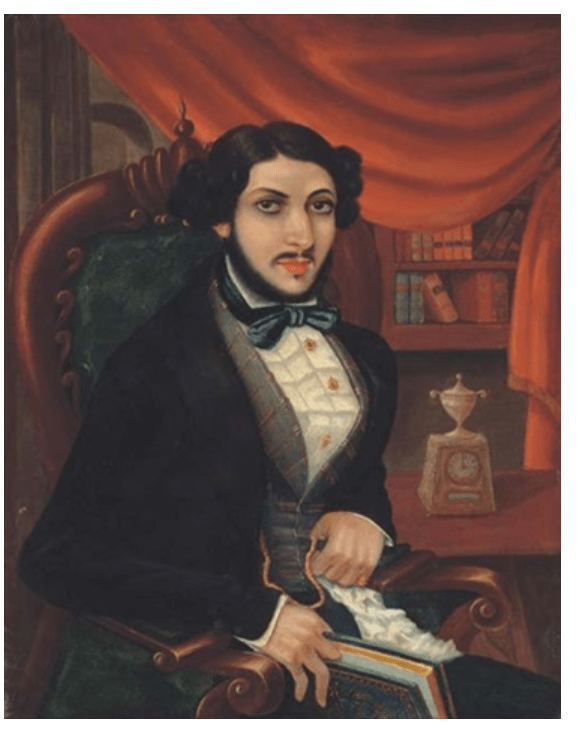
1858. Company school, oil on canvas. Unknown artist.
In the Nawab’s pay were two Eurasians – a young, handsome man named Bruce who managed the villages and a “stout, dark man”, Captain Shepherd, in command of the Palace Guards. Unbeknownst to them, they would soon have no benefactor to protect them.
The Disarming of the 1st Regiment, Bengal Native Infantry
The news came to Banda on the 14th of June that the 1st BNI at Cawnpore had indeed mutinied. With no loyalty left in their regimental home, the sepoys in Banda no longer bothered to show they were anything but in agreement with their brothers in arms. Mayne had been trying up to this point to secure some kind of refuge for the party of Europeans, provisioning an old, dilapidated fort on the other side of the River Ken with some idea of holding it until reinforcements should arrive. It was perhaps an honourable idea to remain at his station, but it could hardly be thought possible. As he made his arrangements, he thought of providing the fort with the two old guns located at the jail, and Mayne sent carts and men to the jail to remove them. The Subedar sent back to Mayne his direct reply, “The Subahdar Sahib says No.” Scarcely able to hide his agitation, Mayne went to the Nawab. The request was simple – would the Nawab assist in compelling the sepoys to give up the guns? The Nawab replied he would do all he could and spent the rest of the morning making his plans. The sepoys had already sent their European officers packing, and these now came over to the palace, unharmed but certainly put out by the dismissal. The Nawab was certainly relishing his new found authority.
As part of his plans, Captain Shepherd was dressed in his full uniform – what alarmed Sherer however was the ever-flowing quantity of sherry the poor, nerve-wracked man was consuming. The rest of the men were told off for their various duties. The Nawab had 25 sowars of the Palace Guard under his command and 50 Sepoys. Mayne and Webster, his compeer, were to accompany the disarming party; Lieutenant Bennett and Captain Shepherd would command the sepoys. As Captain Shepherd had fallen asleep, another man was sent in his place. The rest of the men were to remain in the Palace while the Nawab would take charge of his cavalry guard himself.
He got himself up in a red chupkun, wore a sword on each side, and was greatly amused at his position. ‘This is strange! Fancy me in battle! Of course, I have often knocked over things in the jungle, for sport, but I never killed a cat in anger, and now imagine! —killing a man!’ I believe he was quite sincere and had no idea of what was going to happen…
With the arms for the sepoys piled up in the courtyard, the small force was ready to march to meet the 1st BNI. The idea was to go to the jail and request the guns – if the guard handed them over, it would be over quickly, but any sign of resistance and they would attempt to take the guns by force.
Although Lieutenant John Stratton Bennett was not a despised officer, he certainly had less sway with his men than he thought he had.
The Nuwab got on his horse, and put himself at the head of the sowars, who were all drawn up in a line by the gate. Mayne said: ‘We are all ready now’, and Bennett, who was a very tall man, stepped forward and gave the order: ‘Unpile aims.’Not a man stirred! Bennett turned to the Sepoy next to him and, saying: ‘Do you hear the command?’ pushed him forward. An old Jemadar of the guard immediately drew his sword. ‘What!’ he cried, ‘is a Sepoy to be struck like a coolie?’ Then, complete confusion reigned for a few minutes. The men all rushed to their arms amidst loud cries of ‘Deen! Deen!'(the Faith!) and ran tumultuously out of the gateway. The sowars hesitated for a moment; but one of them setting the example of decamping, they all galloped out of the enclosure, leaving the Nuwab on horseback—by himself.
Dumbfounded, the Nawab dismounted and came up to Mayne. He spoke quietly and as one quite shocked. ‘This is no place for you any longer,’ he said, ‘When my own servants disobey me, I am powerless. I recommend you to go to Nagode. Stay here, if you like, tonight. The Palace is at your disposal, but I say again, I cannot trust my people any longer.‘ Then his attendants thronged around the poor royal and bundled him off with all haste into the palace. His future now was uncertain.
For Mayne, it was clear they could not stay even a night in Banda. Their expulsion, coming so suddenly, had left them with neither time nor means to plan an escape. Hastily, a phaeton for the two ladies was organised while a dogcart and a buggy were brought together for their sundry belongings. Sherer mounted his horse; following Mayne were a few remaining loyal sowars. The sun was going down as they passed through the gateway, scarcely knowing which direction to go.
Henry Edmund Cockrell at Karwi
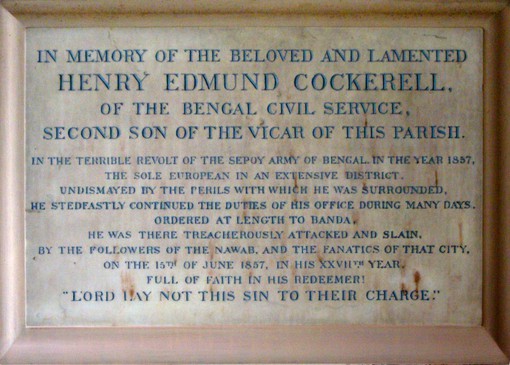
As the only European in the small outpost of Karwi, Joint Magistrate Henry Edmund Cockrell had been but four years in the service of the EICo. It was perhaps his inexperience that proved to be his greatest impediment. Mayne, worried that Cockrell was alone, had repeatedly entreated him in a series of letters to hasten to Banda. Cockrell, however, felt honour-bound to keep to his post. Finally, Mayne, in one last effort to convince him of his folly of remaining in Karwi, sent a small escort to conduct Cockrell to Banda. Compelled, though still reluctant to go, Cockrell finally set off. Unfortunately, he left Karwi too late. Arriving at the palace gates in Banda the morning after Mayne and the others had left, he entered the courtyard expecting to find his friends. Instead, he was attacked by the Nawab’s guard and murdered. As Memorials of Old Haileybury notes sardonically, “His pluck, and what he unselfishly considered his duty, cost him his life.”

With all of his authority gone, the Nawab could only watch in horror as his loyal subjects, Bruce and Shepherd, were dragged, with their families, out of the palace and put to death the same morning as Cockrell was killed. The same fate was meted out to any Christian found in Banda. As such, Cockrell was not the only civilian to lose his life to duty – the men at Hamirpur fared no better.
Ali Khan Bahadur II would become a reluctant rebel. Mayne, upon leaving, had entrusted Banda station to the Nawab’s power, handing him all authority. As long as the sepoys stayed out of Banda, the Nawab had little problem keeping control of the immediate area. With some semblance of authority restored, he was able to protect several European fugitives who came seeking shelter in Banda over the next weeks. As British rule vanished and the revolt continued to spread, the Nawab found it increasingly difficult to hold his neutral stance. His position was weak, and his power was not absolute. What faced him was not a revolt; it was anarchy. He did his best to form a government and establish some rule of law, but it was clear that he was powerless – something he communicated to Mayne over the next months. The Nawab held out as long as he could, but in April 1858, he was drawn reluctantly into the rebellion. Forced into battle against the army of General Whitlock, the Nawab was defeated.
Following the mutiny, his conduct was taken into consideration and the help he provided to European fugitives was not overlooked; nevertheless, the Nawab was deprived of his estates and sent on an annual pension into exile in Indore. In his despair at his now outcast position, he turned to Sherer for help, but Sherer was unable to help the unfortunate royal. The Nawab died in Indore in 1873. As Sherer writes with some sadness, “Not being a hero, he did not exhibit heroic conduct; but I believe, if he had been left to follow his own wishes, he would not have rebelled. Worse men had better fortune.“
The Descent into Anarchy
Mayne and his party were cast adrift. Although they would get away from Banda without opposition, they had no real goal in mind and no idea which direction would lead to safety. As luck would have it, the phaeton crashed off the side of the road, driven by the judge who was having trouble managing the horse. The carriage flew into a ditch and threw out its occupants. One of them, Mrs. Webster, took the worst of the blow, breaking her collar bone. Hopelessly ruined, the phaeton had to be discarded where it lay. Two of the sowars who had thus far accompanied Mayne took advantage of the distraction and bolted into the growing darkness. The other two kept at the front of the small cavalcade, found it impossible to ride past Mayne and kept to the party. Distributing the occupants of the phaeton among the other vehicles, they moved on further into the countryside.
Suddenly, behind them, the sky turned red “…and then, from the spreading glow, shafts of fire shot up into the air, and the illumination extended to the zenith…” The men of the 1st BNI and the population of Banda had set fire to the bungalows and the public buildings. The blaze followed them through the night, and it was dawn before it finally died down. Calling a halt at a pond to cool the horses, they were startled by the approach of a party of sepoys. They were the men of the 1st BNI returning to Banda, having delivered some treasure to Nagode. What happened next was singular. The Jemadar saluted Bennett, and, as if explaining his position, said: ‘We are returning to Banda, Sahib: and you?’ Bennett answered he was going to Nagode. ‘Shall you be back soon?’ the other asked, as coolly as could be. Bennett replied that his movements were uncertain. The Jemadar then saluted again and went on. There were three officers of the 1st BNI with the party – it was fortunate the sepoys were not interested in murder as it would have been easy work.
Positioned as they were on a long slope, Sherer looked out over the countryside, and as far as he could see, the villagers were “scampering over the country…doing mischief in each others’ villages, and occasionally having a turn up with lathees or quarterstaves open…All that we then witnessed was Witches Sabbath of untaught, needy, unprincipled village roughs – not a political demonstration at all…” With the removal of any recognisable law, it was open season for mayhem.

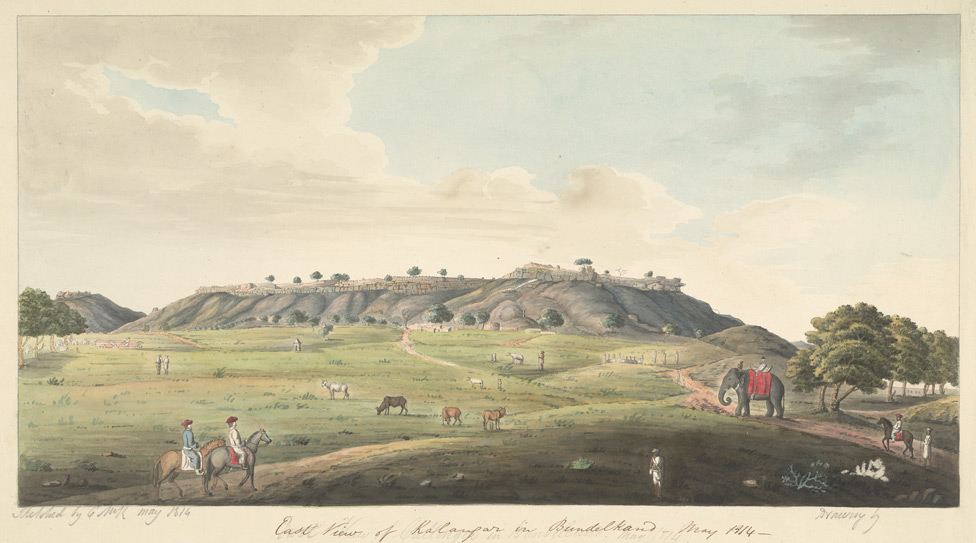
Having made up their minds now to go to Nagode, which lay some 109 miles from Banda, the party progressed through the countryside, stopping at Kalinjar at noon to rest at the police station, located in the middle of the village. Mayne sent off a hasty note to Major Ellis, the Political Agent at Nagode, with a fervent appeal for aid. Although no one was openly hostile to them, the sweetmeat sellers refused to serve the fugitives who, in their turn, simply put some money down and helped themselves to a “reasonable quantity.” Resting through the heat of the day, they were treated to the sight of an uncomfortable and “curious demonstration.. the native merchants, money lenders and so on had apparently hired men to watch and guard their houses, made them parade in a procession past our thana. They did not say anything, so the idea evidently was to upbraid us for our loss of authority…” Whatever it meant, the party made ready to leave as soon as the sun started to set. Keeping the ruins of Kalinjar Fort to their left, the party wound their way slowly towards Nagode.
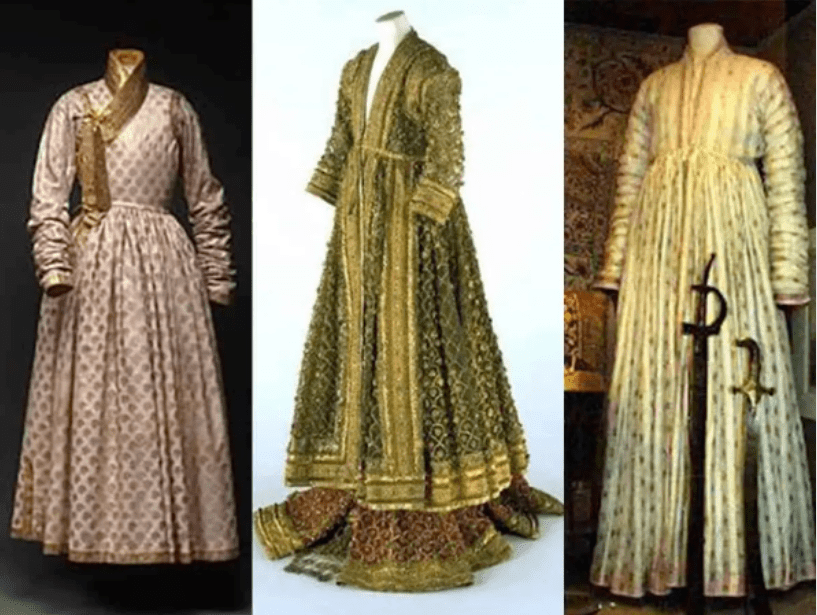
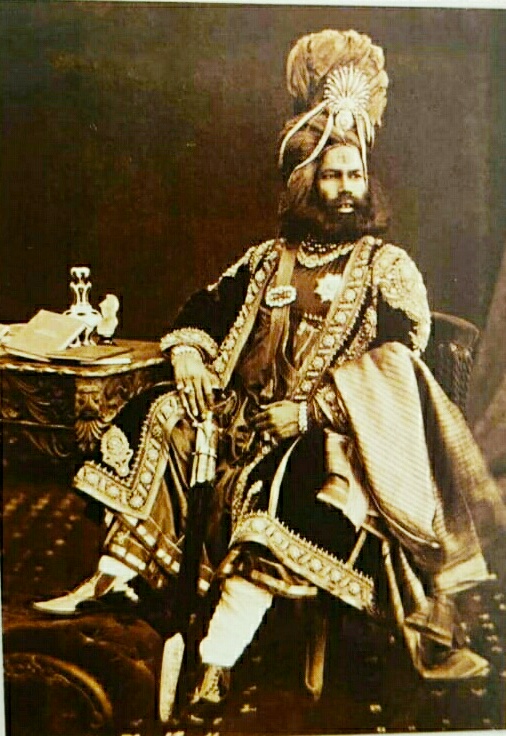
They had now entered the territory of the Raja of Panna in the Bundelkhand Agency. In the early part of the 19th century, Panna became one of the princely states of British India and held control over Nagode and Sohawal. Raja Nirpat Singh would prove to be one of the EICo’s most loyal allies in 1857. For his fidelity, he was given a khilhat (a ceremonial robe) worth Rs. 20,000 and administrative power over the Samaria pargana. In 1862, he was given the right of adoption, while further on in 1869 was granted the title of Maharaja as a personal distinction and addressed as “His Highness.” He was further accorded an 11-gun salute status.
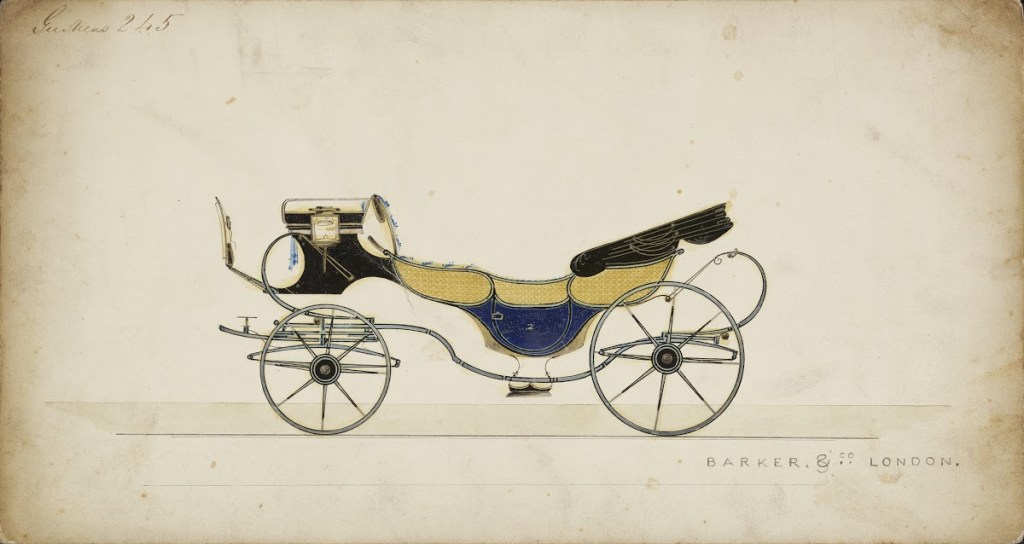
Understanding Mayne’s plight, Major Ellis sent out a barouche for the ladies one stage away from his station. Offered seats, Mayne and Sherer gratefully dismounted their horses and joined the ladies. After so many weary days in the saddle, it was like falling into the lap of luxury.
Arriving in Nagode, the fugitives were shocked to find people running through the streets, most excitedly, some with their belongings under their arms and dragging their children behind them. The shopkeepers were hurriedly closing up their stalls. Standing in the middle of the road was a tall middle-aged man wearing a sola topi but lacking a coat. He was armed as far to the teeth as he could be, and in his hand, he held a sword. Coming up to the carriage, he gruffly introduced himself.
‘You are some of the party from Banda?’ he asked. ‘Yes, this is Mayne, and these are the ladies.’
‘Major Ellis will put up some, and I others. I am Cole, Assistant Agent.‘
Instructions given, the party rode on their way, all except Sherer. Anxious to make himself useful, he quickly got out of the carriage and followed Cole. Explaining vaguely that the town was in some sort of a panic, Cole failed to mention that the town had been thrown into a frenzy by rumours – once again, the fugitives, as in Banda, had been mistaken for a band of mutinied sepoys. The war-like stance of the Raja only served to panic the inhabitants further, and Cole intended to stay as close by as possible in case he was needed.
The two men made their way to the palace of the Raja. After giving the appropriate passwords, they were admitted through the archway – startled, Sherer realised the front of the entrance was manned by two guns, one being a 6 calibre, and standing next to them, with port fires lit, were servants of the Raja. Introductions over, the Raja himself led Sherer to a small, darkened room, kept delightfully cool by a softly humming thermantidote. Supplied with a cold sherbert for refreshment, Sherer sat down on the soft couch – and fell asleep. It was Cole who woke him up when evening had set in. Invited back to Cole’s house for dinner, Sherer met up with the rest of the Fatehpur party – a distant place which could be now in another land. Mrs. Cole catered to their wants and needs, providing them all with a place to sleep and for the first time since leaving Banda, a decent dinner. He also met Major Ellis.
Major R.W.W. Ellis, as Political Agent, had already spent several years in Bundelkhand. He was well acquainted with the area he managed and in subsequence had taken an active interest in the history and legends of the district. As a scholar, he had accumulated over 30 years an extensive collection of valuable books and manuscripts, which he kept in a well-appointed library room in his house. It would be his misfortune, on the only night when he left his house in the coming months to visit the Raja, that his house was burned to the ground and with it, his library.
Duty
As we have seen before, duty was paramount. Even though surrounded by an unsettled country, chased from pillar to post, or just fleeing for their lives, officers of the army and civilians alike kept to the code of duty. To leave their post or regiment, even in times of extreme danger, was a punishable offence. In the case of Mr. Cockrell, it was this allegiance to duty that cost his life. So it comes as no surprise when Sherer and Macnaghten decided to leave Nagode to be closer to their Commissioner. It was not out of a longing to see the man but to report their conduct to him directly and offer their continued, loyal services. The officers who had left the 1st BNI, albeit under duress, were placed “nominally under arrest to enable them to account for their absence from their corps.” Although it was for show ultimately, it saved the officers from the very real possibility of a court-martial and dismissal from the service. Sir Henry Lawrence had taken it on himself to send a circular to the men in the various stations in Oudh – “Should Mutiny break out, or appear inevitable, you are liberty to consult your own safety.” With this missive, there could be no disciplinary action taken against anyone who left their station – unfortunately, Sir Henry could only speak for Oudh. Sherer and Macnaghten did not answer to Sir Henry but to Mr. Chester at Allahabad.
Major Ellis, hearing that Sherer and Macnaghten were planning to leave, found himself compelled to write Sherer an official letter, stating he would be able to use their services in Nagode, and he implicitly forbade them from leaving. The two men, in their turn, were obliged to reply, in the same official form, that they, by leaving were not trying to escape duty, but simply to put themselves at the beck and call of their own Commissioner and they felt sure, “Major Ellis did not wish to transfer officers from one part of the country to another, without definite authority for the purpose.” It was a valid argument, and Major Ellis let them go. Not that they left alone. Most of the Fatehpur party went along, as did Mrs. Webster and, for some of the way, F.O. Mayne. Though it might have been a loss for Ellis, it was perhaps a blessing in disguise. They left behind a tolerably peaceful station and the 50th BNI. The only regiment in 1857 that did not mutiny at the onset, they would keep their loyalty until September.
Willoughby Osbourne at Rewa
The second-largest princely state in the Baghelkhand Agency and the third-largest in the Central India Agency, spanning an area of 13’000 square miles, the Political Agent of Rewa, John William Willoughby Osbourne, as the only European appointed to the court, was very busy.
Although serving with the 24th Regiment, Madras Native Infantry, Osbourne had opted for civilian postings. First officiating in 1855 as the Executive Engineer in the Mhow Division and while still an ensign- with obvious talents – Osbourne bagged the office of Commissioner of the Settlement of Boundary Disputes in Central India in February 1856, a position he held until October 1856. He was then deputed on behalf of the Government to the court of the Maharajah of Rewa to act as Political Agent to his court. A month later, he was promoted to Lieutenant. In 1857, Osbourne was 24 years old.
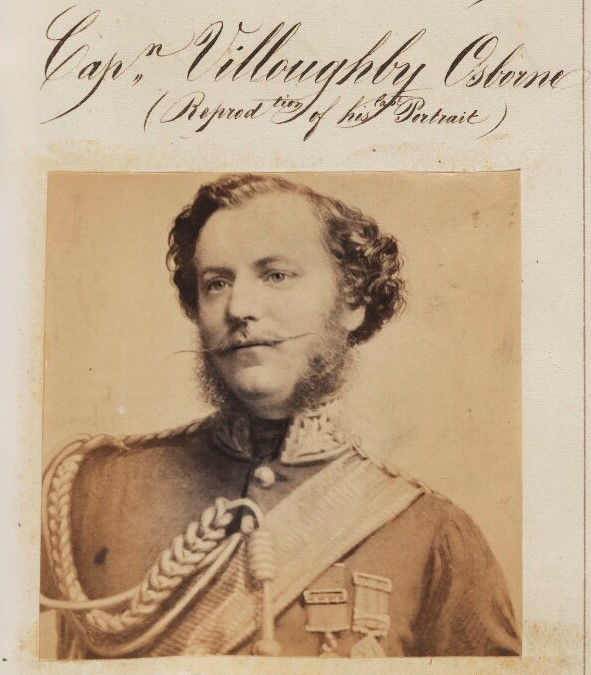
NPG Ax56923
© National Portrait Gallery, London
When Sherer met this remarkable young man, he was ” —looking indeed younger than he really was—well dressed, jaunty and amusing, who gave no sort of impression of being in any responsible position, and did the honours of the bungalow as if the poaching of eggs and the currying of fowls were on the whole as important duties as life presented.” Nothing could be farther from the truth.
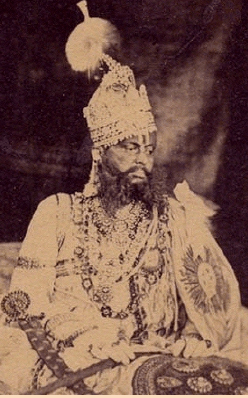
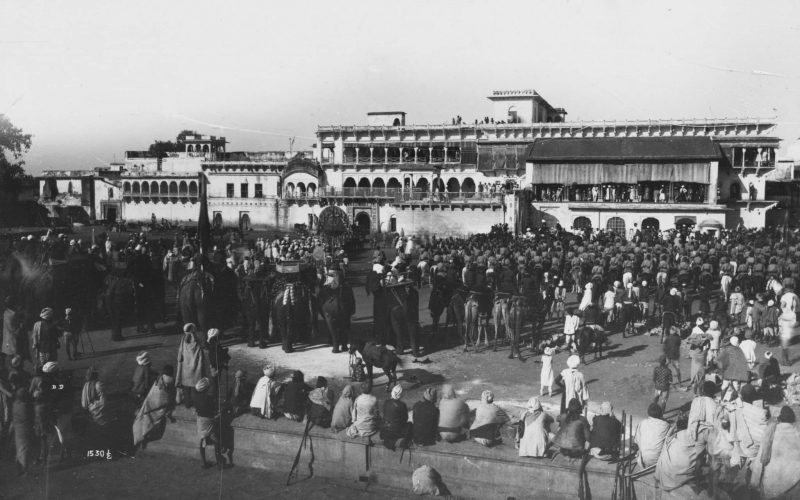
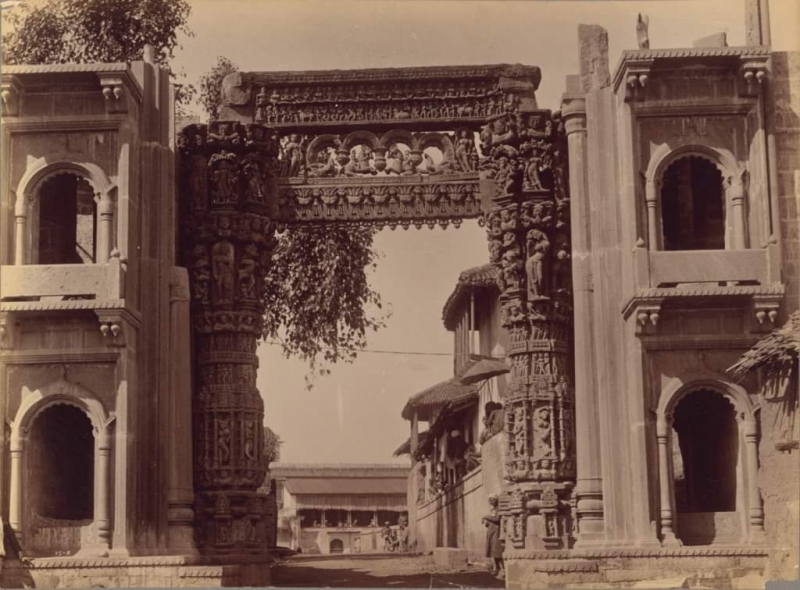
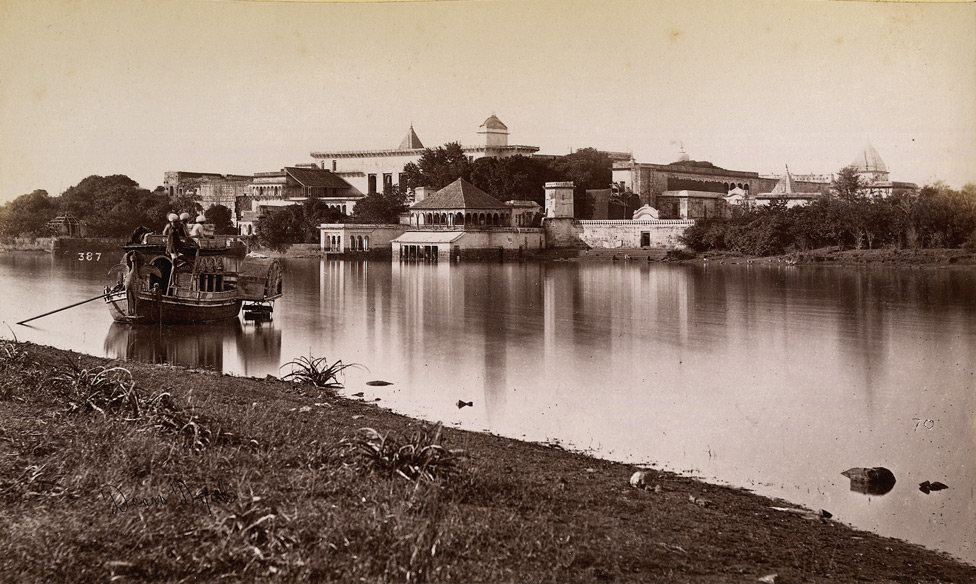
Shortly before the arrival of Sherer, Osbourne had succeeded in convincing the Rewa Raja it would be in his personal interest to support the British. Willing to understand the reason, on the 8th of June, the Raja offered the British Government the use of 2000 of his personal troops. The offer was accepted, and the troops were sent out into the surrounding countryside to prevent the Bundelkhand insurgents from communicating with any mutineers north of the Jumna River. However, Osbourne was left on his own to wrestle with the local zamindars, using every tactic he could to keep them quiet. As a result, he ingeniously utilised a mail cart with which he could traverse the territory quickly, and he gave the impression he knew what was happening everywhere. It also ensured he could keep the lines of communication open between Calcutta and Central India, the Deccan and Bombay.
On one occasion, while passing through a village, “….a man in authority, took the opportunity of calling him what may be translated as a ‘blackguard Feringhee,’ or ‘Frank.’ An ill-fated speech! Osborne stopped the cart, descended, seized the Brahmin, tied him behind with the horse’s heel ropes, and started again. After a long run of some miles, the breathless one was relieved at an uncomfortable distance from his home, with the recommendation to be more circumspect in his language for the future.”
This was just one sample of Osbourne’s will and he used it freely even when in the presence of the Raja. Having been present at a Darbar given for the local gentry by the Raja, Osbourne sat through a speech given by one Saddar Ameen, in which he used the most inflammatory language against the British Government. On Osbourne’s insistence, the Raja conceded to jail the nobleman, much to his surprise. Osbourne knew, in his singular position, he could not allow even the vaguest murmur of disagreement.
The Raja, by no means the staunchest ally and was in fact a timid man who abhorred conflict. The incessant death threats he had been receiving were only surmounted by the pressure he was under from the moulvies to break with Osbourne and join the rebels. When in August, the rumours reached his ears that the Dinapore mutineers and, under Kunwar Singh, were starting their march toward Rewa, the Raja, dreadfully alarmed, begged Osbourne to flee. The Raja, for his part, hurried off to a secure hill fortress to wait out the storm. Left alone, the industrious young man turned his attention to the peasantry in the district. Finding them unwilling to entertain the mutineers in their country, Osbourne convinced them to stand on the defensive – his plan worked. Kunwar Singh and his mutineers turned from Rewa and went to Bundelkhand instead.
By some miracle, Osbourne was still holding his ground on the 15th of September 1857, when news reached him of the mutinies of the 50th at Nagode and the 52nd at Jabalpur. It was the spark the rebellious elements at Rewa needed, and they now openly talked about murdering Osbourne. Composed as ever, Osbourne wrote to the Government, informing them of his impending death and then coolly continued about his duties. It would be another three weeks before there was any serious attempt on his life.
” Osborne heard that his office was to be attacked. Collecting about 100 men around him, he calmly awaited the issue. Early in the afternoon, some 2500 budmashes (native hooligans) thronged round the office, but, finding to their astonishment that the sahib was prepared to resist them, stopped short, hovered about for a few hours, and finally slunk off. From that moment Osborne’s attitude was changed. He no longer stood on the defensive …”
Osbourne assisted in raising a force of irregular infantry called the Rewah Levies, in which he held the field rank of Captain, who were placed under the military command of Colonel Hinde from December onwards. Osbourne then would go on to personally participate in no less than 9 separate actions. His service record states,
“He was engaged in the operations against the 3-gun fort of Kunchundpoore and present at its capture on 7 December 1857; Joorah on the 17 December; the fortified town of Myhere on 28 December; the 22-gun fort of Myhere on 3 January 1858; Jokehaie on 19 January; the 3-gun fort of Kunwarrah on 21 January; the 13-gun fort of Bigiragoogurh on 24 January (wounded); the fort of Jigneehut on 22 May; the action at Kurrereah on 2 January 1859 (wounded); and at Kentee on 5 March 1859 ….”
The Rewah Levies captured 42 guns and took many prisoners, including several rebel leaders. One of these prisoners took objection to his plight and attempted to kill Osbourne with a sword he had concealed under his clothes – the gallant intervention of Sirdar Davy Singh saved Osbourne’s life. He threw himself between the would-be assassin and Osbourne and warded off the sword blow with his own sword, which in consequence shattered, leaving the Sirdar severely wounded. It would seem that Osbourne was a better-liked officer than many of his compatriots. On another occasion, at the action at Kurrereah on the 2nd of January 1859, Private Henry Addison of the H.M. 43rd Regiment, seeing Osbourne on the ground and surrounded by mutineers, Addison rushed to protect the officer. While fighting off the attackers, Addison covered Osbourne, and besides receiving two dangerous wounds, he lost his leg. For his exceptional heroism, Addison was recommended for the Victoria Cross in a dispatch from Lieutenant-Colonel F. Gottreux,
“Commanding Field Detachment, to the Assistant Adjutant General Saugor Field Division on January 15, 1859:
Whilst in the neighbourhood of Kurrereah… chasing retreating mutineers… Lieutenant Osborne, Political Agent of Rewah, was wounded by a sword cut on the right hand. He was at the time he was attacked, closely followed by three men of the 43rd Light Infantry, two men of the artillery being a few paces in front of him. Private Henry Addison, of the 43rd Light Infantry, seeing him attacked and on the ground, rushed forward to defend and cover him in a most gallant manner. In doing this, I much regret having to record that he received two very severe sword cuts, one on the left leg which rendered immediate amputation of the limb above the knee necessary, and another causing compound fracture of the left forearm. The heroism displayed by Private Addison in thus placing himself between Lieutenant Osborne and his assailant at the critical juncture he did, thereby saving that officer’s life, may, I hope, be deemed worthy of the Victoria Cross, for which honour I earnestly beg to recommend him.”
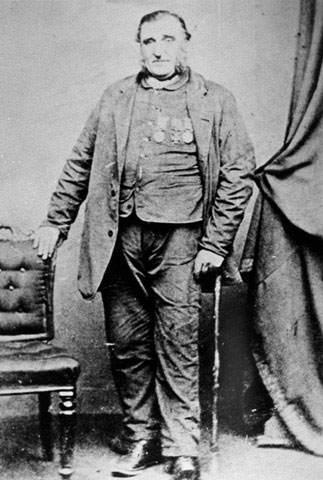
Not that Osbourne forgot Henry Addison. Out of sheer gratitude for Addison’s selfless act of valour which saved his life, he arranged for him to be paid a pension of £20 a year for the rest of his life.
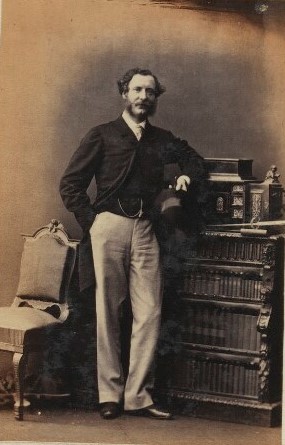
NPG Ax55133
© National Portrait Gallery, London
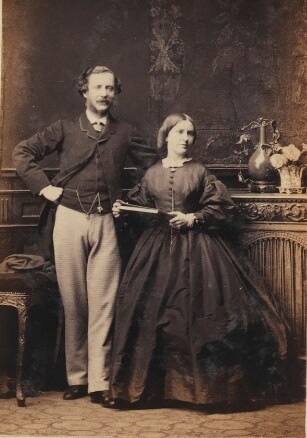
As for John William Willoughby Osbourne, he would be mentioned serval times in despatches during the mutiny and would not only receive the Mutiny Medal with the clasp for Central India but would be made Companion of the Order of the Bath, Civil Division. In 1858, he served as an honorary ADC to the Governor-General of India, but as his record above shows, he went back to active service. In 1861, he returned to Madras.
His career however continued to rise, for by 1862 he was Political Agent at Bhopal and then once again an honorary ADC to the Viceroy and Governor-General in 1864. Raised to the rank of Major in 1870 and Lieutenant-Colonel in 1876, he then proceeded as Resident and Political Agent to the Eastern States of Rajputana. He ended his career in 1883 as Resident and Political Agent to Gwalior with the rank of Colonel.
Unfortunately, it would seem his health was not of the best nature, and barely 2 months after he retired, Colonel Osbourne died, aged only 49, five months short of his 50th birthday. He left behind his wife Emma (neé Shoubridge) and six children. What he had accomplished in those few months in Rewa however, would remain one of the least celebrated incidents of 1857. He was after all just doing his duty.
NPG Ax57596
© National Portrait Gallery, London
In the next chapter we will conclude the journey of Mr. Sherer and his misadventures.
Sources:
Sherer, John W. Daily Life During the Indian Mutiny: Personal Experiences of 1857. London: Swan Sonnenschein & Co., 1910.
Holmes, T. Rice. A History of the Indian Mutiny: And of the Disturbances Which Accompanied It Among the Civil Population. 5th ed. London: Macmillan and Co., 1904.
Kaye, Sir John William, and Colonel G. B. Malleson. Kaye’s and Malleson’s History of the Indian Mutiny of 1857–58. Vol. 3. Cabinet Edition. London: W. H. Allen & Co., 1889.
———. Kaye’s and Malleson’s History of the Indian Mutiny of 1857–58. Vol. 5. New Impression. London: Longmans, Green, and Co., 1907
Links:
https://www.indianrajputs.com/view/panna#present-ruler
https://www.indianrajputs.com/view/rewah
https://historywiki.therai.org.uk/index.php?title=John_William_Willoughby_Osborne
http://www.royalark.net/India/salute.htm
https://vcgca.org/our-people/profile/286/Henry–ADDISON
https://military-history.fandom.com/wiki/Henry_Addison
 Mutiny Reflections