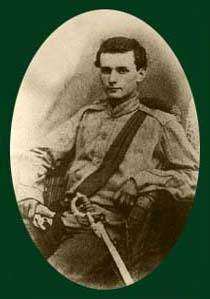
Born in 1837 in Bhagalpur, Bihar, India, Francis David Millet Brown was the son of George Francis Brown, the Officiating Commissioner of Revenue and his wife, Catherine Jemima (née Gane).
Francis was the second generation of Browns to be born in India — his father was the son of Reverend David Brown, an English chaplain in Bengal and the founder of the Calcutta Bible Society. The chaplain had arrived in India in 1785 and was very active in various fields, having been selected by Maquis Wellesley to fill the post of Provost at Fort William in Calcutta Under the stern tutelage of Brown, young cadets arriving in India were superintended and regulated “in their general morals and conduct,” and given “advice and admonition,” instructed and confirmed in the “principles of the Christian Religion according to the Church of England.” Perhaps to the relief of the cadets, the post of Provost was abolished, and Brown could turn his attention to the more sermonizing aspects of his reverendship. In 1803, he made his home in the Danish enclave of Serampore (then called Frederiksnagore) to escape the disapproving eyes of the EICo, who were rather put out by missionaries in general, although they left Brown’s Bible Society intact. However, under the approving eyes of the Danish Lutherans, Aldeen House, as his family home was called, became a meeting point for Baptist missionaries and evangelical Anglican chaplains in Bengal.
Reverend David Brown believed that to understand this foreign land, he needed to speak its languages: to understand Hinduism, he learned Sanskrit, and then added on as many local languages as his short life allowed him. This trait was passed in the family, but only one son used it to his full capacity.
The Brown Family in India
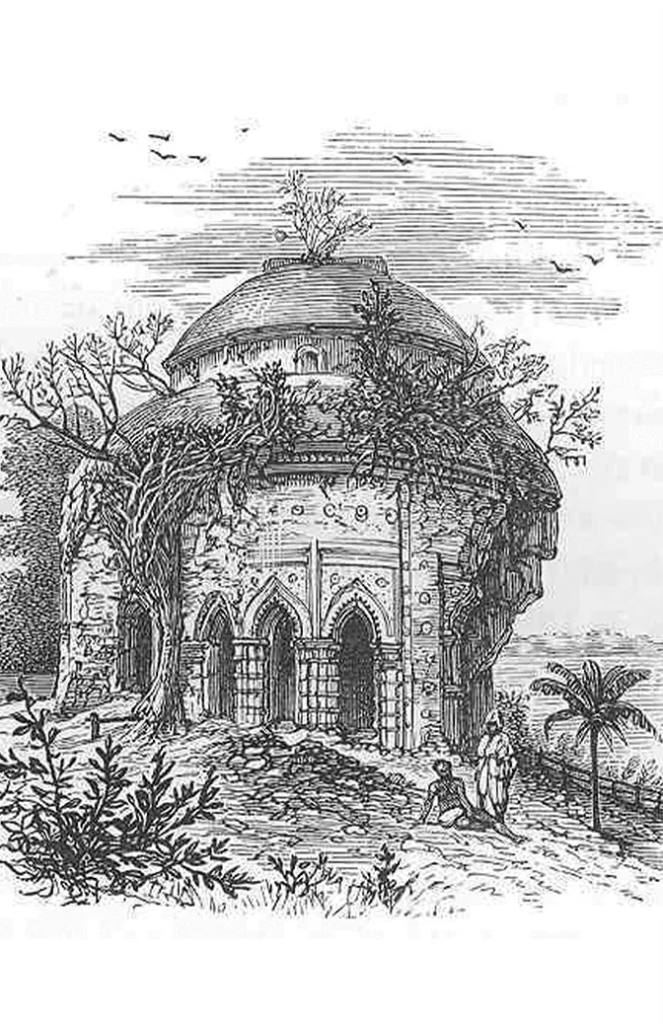
On the grounds of Aldeen House stood an abandoned Hindu temple, which its first resident, Henry Martyn, who had come out to India to “burn out for God.” He asked Brown for a quiet place to live and above all to pray – and Brown, obviously thinking nothing of it, gave Martyn the ruined temple. Martyn wrote, My habitation assigned to me by Mr. B. is a Pagoda in his grounds, on the edge of the river. Thither I retired at night and really felt something like superstitious dread, at being in a place once inhabited as it were by devils.” The local population it would appear had no complaints, as the pagoda had long since fallen out of use; a new temple had been constructed in its place at a far less precarious position, further away from the riverbank, in 1764. The pagoda became Martyn’s personal oratory, where he held prayers and discussion circles and even performed a marriage. Curiously enough, the Browns did not retain Aldeen House after the chaplain died and the pagoda, now abandoned by Henry Martyn, for a short time, became the Pagoda Rum Distillery. The house was taken over by another scion of religion, William Carey, who, with two other missionaries, Joshua Marshman and Willam Ward, briefly converted the house into a college in 1818.
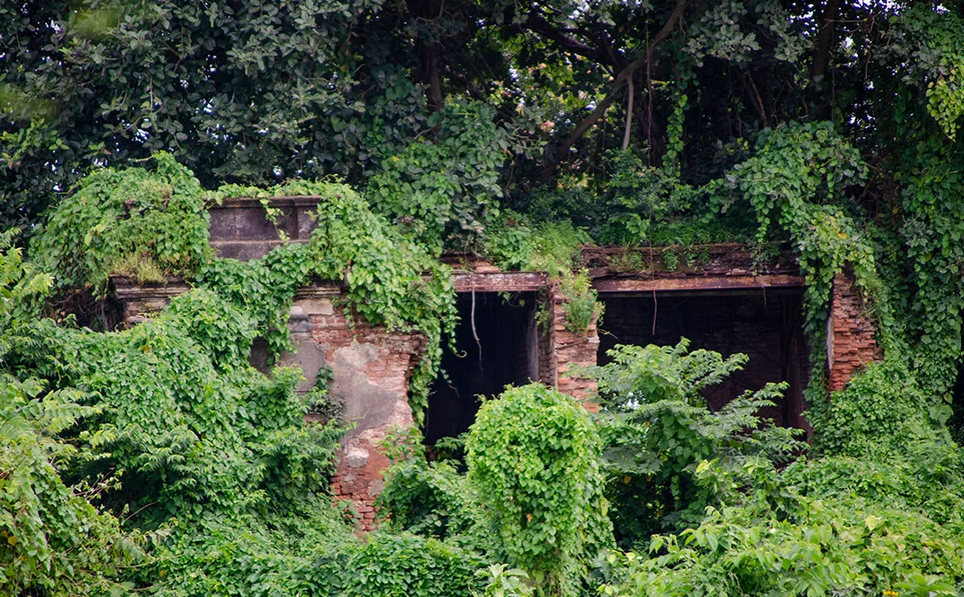
The first 37 mostly European students could brush up their languages — Sanskrit, Persian and Arabic — while studiously delving into astronomy, geology, and botany. They were the first students of Serampore College, now in its 200th year. The ruins of the pagoda and Aldeen House today form a part of the Serampore Waterworks; while the pagoda was repaired, the house is rapidly disappearing.
Reverend David Brown, suffering from ill-health, tried the age-old remedy to restore it, and embarked on a sea voyage on the good ship, the Dover Castle, bound for Madras. The trip had hardly any benefits for Brown, who found himself shipwrecked, swiftly rescued and back in Calcutta. He died at the house of John Herbert Harington, president of the Calcutta Bible Society, in Chowringhee in June 1812.
The reverend had been as prolific in his preaching as he had been in his marriages. His first wife, a Miss Robinson of Hull died in 1794, but he wasted little time and remarried, in 1796 a Miss Frances Cowley, the daughter of one Hannah Cowley, the playwright and poetess. Hannah’s husband, Thomas, a captain for the EICo, had moved to India in 1783 but had left his wife and children in London — he died in 1797, without ever returning to England. Dutifully, Frances remained in India with her husband and in the course of their union, blessed him with 9 children, one of whom would be the father of the VC hero. However, after the reverend’s death, the grieving Frances, with the assistance from the EICo, returned to England in 1813 with her children, where she died, in Hope Square, Bristol, in April, 1822. By this time, most of her children were well settled.
 Mutiny Reflections
The photograph of Harriette Wilberforce Bird suggests she was determined.
LikeLiked by 1 person
It is always interesting to find photographs of people we write about. Although I have not done much about the Birds as yet, there is so much more to discover and explore. She came from very out-spoken people, I wonder what her life would have been, had she and Peploe been allowed to have a future.
LikeLike